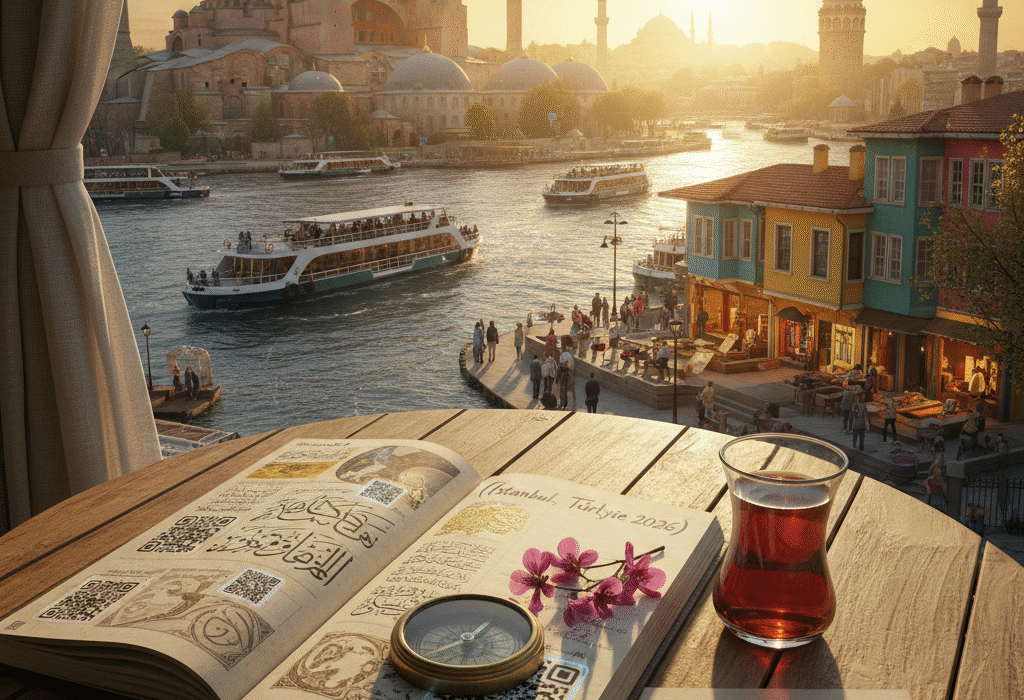
Istanbul, Türkiye 2026: Your Ultimate Travel Guide to the City Where Continents, Cultures, and Centuries Meet.
Posted in :

Introduction: Istanbul 2026 Between the richness of history and the allure of sustainable modernity.
Our article explores a significant and captivating European destination: Istanbul, Turkey. This European gem is distinguished by its remarkable blend of religions and was once the seat of one of the greatest empires, the Ottoman Empire. All of this has shaped a civilization that has endured for 2,500 years. The city’s strategic location, serving as the link between Europe and Asia via the Bosphorus Strait, is a testament to its rich history. This jewel is adorned with Byzantine mosaics beneath Ottoman domes. A visit to Istanbul guarantees a wealth of wonderful experiences.
In this journey (Istanbul, Türkiye 2026), we go beyond simply describing the city’s historical landmarks. We delve into the remarkable blend of developments under government supervision, which preserve the city’s authentic character and historical heritage while implementing numerous sustainable initiatives and environmental protection measures. All of this ensures that Istanbul remains an indispensable global destination. The city center has become pedestrian-friendly thanks to the tourism authorities’ organization of numerous heritage tours and museum experiences enhanced by artificial intelligence.
In this article, we will provide you with a comprehensive and detailed guide to the trip (Istanbul, Türkiye 2026) that addresses the cultural and logistical aspects and enables you to explore this wonderful city. This guide is based on information for the period 2025 issued by the Turkish Ministry of Culture and Tourism and UNESCO. We will explain the famous landmarks, hidden squares, authentic experiences, and modern neighborhoods. All of this is designed specifically for the traveler who seeks authenticity, comfort, and splendor.
1. Urban transformation in Istanbul: infrastructure, sustainability, digitalization, and heritage preservation
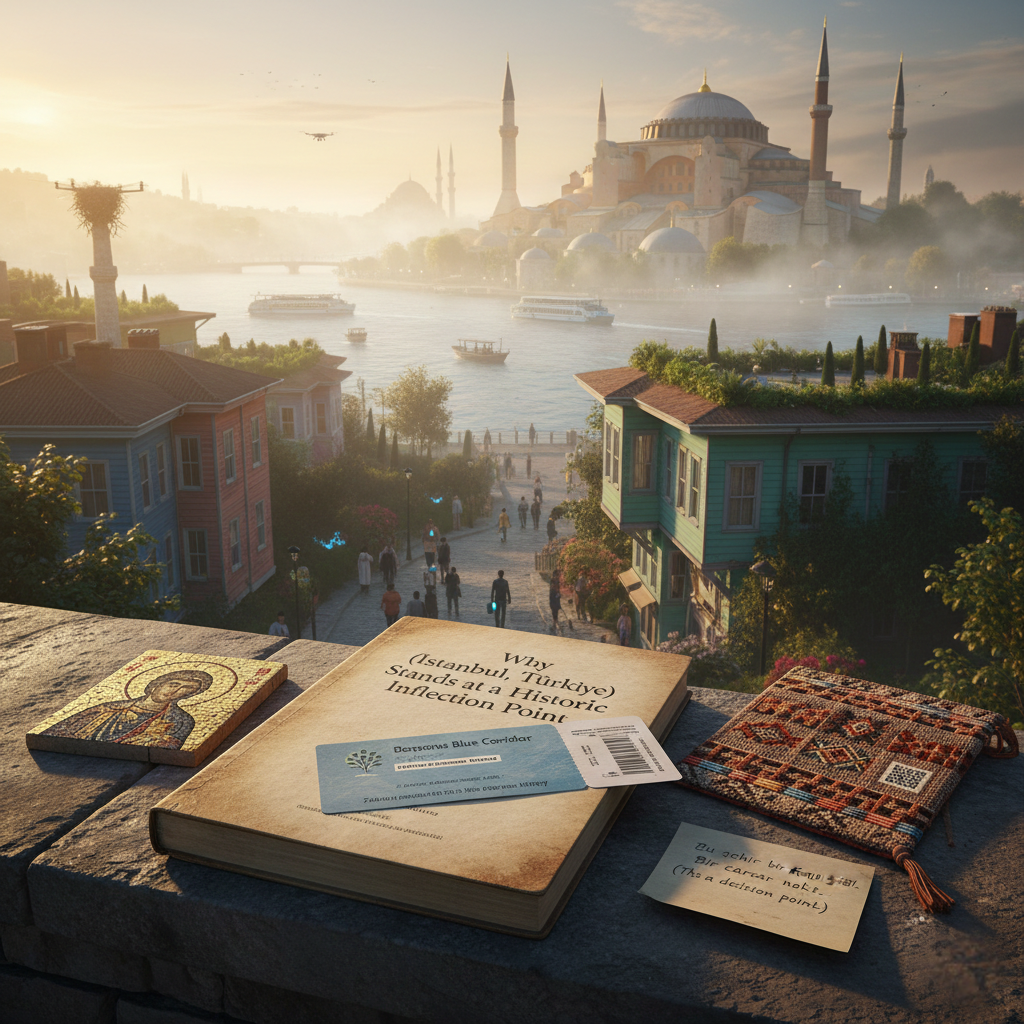
This Turkish gem always stands out for its beauty and splendor, boasting a truly magnificent infrastructure. This is evident in its numerous crossings and bridges. It continues to evolve, and the proof of that is :
- First: regarding infrastructure, the Karaköy area of Galata Port was transformed into a pedestrian cultural center, opening in 2023. Car traffic was reduced, and historical warehouses were restored.
- Second: in terms of sustainability, one million trees were planted as part of the Istanbul Green 2030 program. More bicycle paths were created, and ferries were electrified.
- Third: in terms of digital transformation, a digital card called the Istanbul Museums Card was launched. This card provides visitors with guided tours using augmented reality technology and allows holders to bypass queues when visiting historical sites such as Topkapi Palace and Hagia Sophia.
- Fourth: In terms of preserving cultural heritage, the government, in cooperation with UNESCO, carried out several restoration works in the Zirik Mosque and in the mosaics of the Chora Church. This church was opened in 2024, but in the form of a museum (UNESCO Türkiye, 2025).
“Istanbul doesn’t choose between past and future—it weaves them together.”
— Prof. Ayşe Yılmaz, Istanbul University, 2025
This intentional evolution makes Istanbul Türkiye 2026 not just a destination, but a dialogue across time.
2. The Three Faces of Istanbul: Historic Peninsula, Beyoğlu, and Asian Side
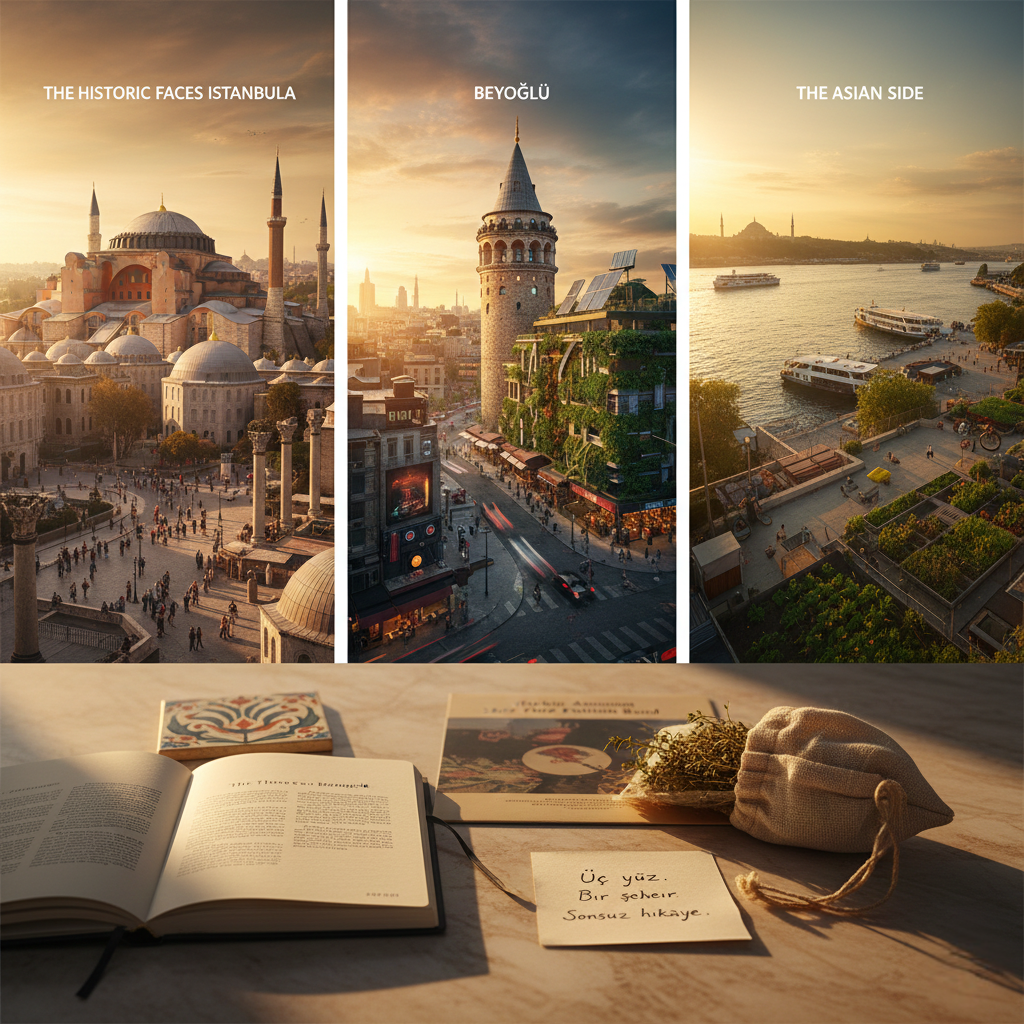
We will discuss the three sides of Istanbul: the historical peninsula, Beyoğlu, and the Asian side.
- First: The Historical Peninsula: This area is known as the heart of the Ottoman Empire and the historical center of Istanbul. It has been a UNESCO World Heritage Site since 1985. Among its most important districts are Sultanahmet and Fatih. The atmosphere here is creative, vibrant, and cosmopolitan. Some of its most prominent landmarks include:
- Hagia Sophia: A famous historical and architectural monument in Istanbul, it is a unique blend of Byzantine architecture and Islamic art. It was initially an Orthodox cathedral, then converted into a mosque, and later a museum. In 2020, it was reconverted into a mosque. This landmark is located in the Sultanahmet district and is famous for its massive dome, Christian mosaics, and Islamic minarets.
- The Blue Mosque: Also known as the Sultan Ahmed Mosque, this is a historical imperial mosque dating back to the Ottoman era. It was built between 1609 and 1617 during the reign of Sultan Ahmed I and is considered one of the most prominent and famous examples of Ottoman architecture.
- Topkapi Palace: This palace served as the main residence and administrative center of the Ottoman sultans for nearly 400 years. It was commissioned by Sultan Mehmed the Conqueror after the conquest of Constantinople. Located in the Sultanahmet district, near Hagia Sophia and the Sultan Ahmed Mosque, it houses numerous artifacts and relics, including a collection of sacred items belonging to the Prophet Muhammad (peace be upon him), the Imperial Treasury, and the Harem. It is now one of the most important museums in Turkey and the world, and is a UNESCO World Heritage Site.
- Basilica Cistern: This ancient underground water reservoir is located in the heart of Istanbul, near Hagia Sophia. Built in the 6th century AD for water storage, it features 336 marble columns, including the two heads of Medusa. Also known as the Sunken Palace, it is a tourist attraction with underground wooden walkways surrounded by illuminated columns that reflect a mesmerizing light on the water.
- Second: Beyoğlu and Galata: These are the cultural heart of Istanbul and are known as the heart of modern Istanbul. Their atmosphere is a unique blend of history and European culture. Among their most prominent landmarks are:
- Istiklal Street: This street is one of Turkey’s most famous historical streets. Located in the Beyoğlu district, it stretches 1.6 km from Taksim Square to the Tünel Tunnel. A major tourist and commercial destination, strolling along it is like walking into paradise. It features European-style buildings, international shops, cafes, art galleries, and the famous historic red tram.
- Galata Tower: This landmark is one of the most important and prominent historical and tourist attractions in Istanbul. Located in the Beyoğlu district, it overlooks the Bosphorus and the Golden Horn. It was first built in the 6th century AD and rebuilt by the Genoese in 1348. It remains in its current form and is famous for its impressive height of 66.9 meters. Now a museum and tourist attraction, it offers breathtaking panoramic views from an observation deck overlooking Istanbul. A café and restaurant are located on the top floor.
- Karaköy: This is a vibrant historical and commercial district located in the heart of Istanbul, near the historic Galata Tower. It is the meeting point of the Bosphorus and the Golden Horn, blending modernity and history. It features trendy cafes, a colorful umbrella street, and a ferry terminal.
- The Museum of Innocence: A unique and enchanting artistic and literary hub founded in 2012 by Nobel Prize-winning Turkish author Orhan Pamuk, located in the Çukurcuma district. It displays everyday objects that document the love story and obsession between Kemal and Fusun, featuring 83 glass displays that recreate chapters from the novel and depict life in Istanbul between 1975 and 1984.
- Third: The Asian Side: This area is known for its tranquility and green spaces. It boasts upscale residential areas, a rich history, and a long coastline on the Sea of Marmara. Visitors have the opportunity to enjoy aspects of local life, and the streets are well-organized and less crowded than the European side. Among its most prominent landmarks are:
- Kadıköy Moda: A prestigious and historic residential district located on the Sea of Marmara coast, Kadıköy Moda is characterized by its peaceful atmosphere, green streets, modern cafes, and the historic Moda tram. This neighborhood is a cultural and artistic center that attracts young people and tourists alike, and it has been ranked among the top 50 neighborhoods in the world.
- Çamlıca Mosque: The largest mosque in Turkey, located on Çamlıca Hill in the Asian part of Istanbul. Opened in 2019, it can accommodate over 63,000 worshippers. Distinguished by its modern Ottoman design, it features six minarets, a massive dome, and a magnificent panoramic view of the city. It also serves as a comprehensive Islamic cultural center, housing a museum, library, and gallery of Islamic art.
- Maiden’s Tower (Kız Kulesi): An Ottoman-era tower located on a small island at the southern entrance to the Bosphorus Strait in Istanbul, 200 meters from the Üsküdar coast. A prominent landmark, it now houses a museum showcasing historical and romantic legends, notably the legend of the Princess and the Snake.
Insight: True Istanbul Türkiye 2026 magic happens when you cross the Bosphorus by public ferry—3 TL, 20 minutes, and a front-row seat to the city’s soul.
3. Must-Visit Landmarks in Istanbul Türkiye 2026
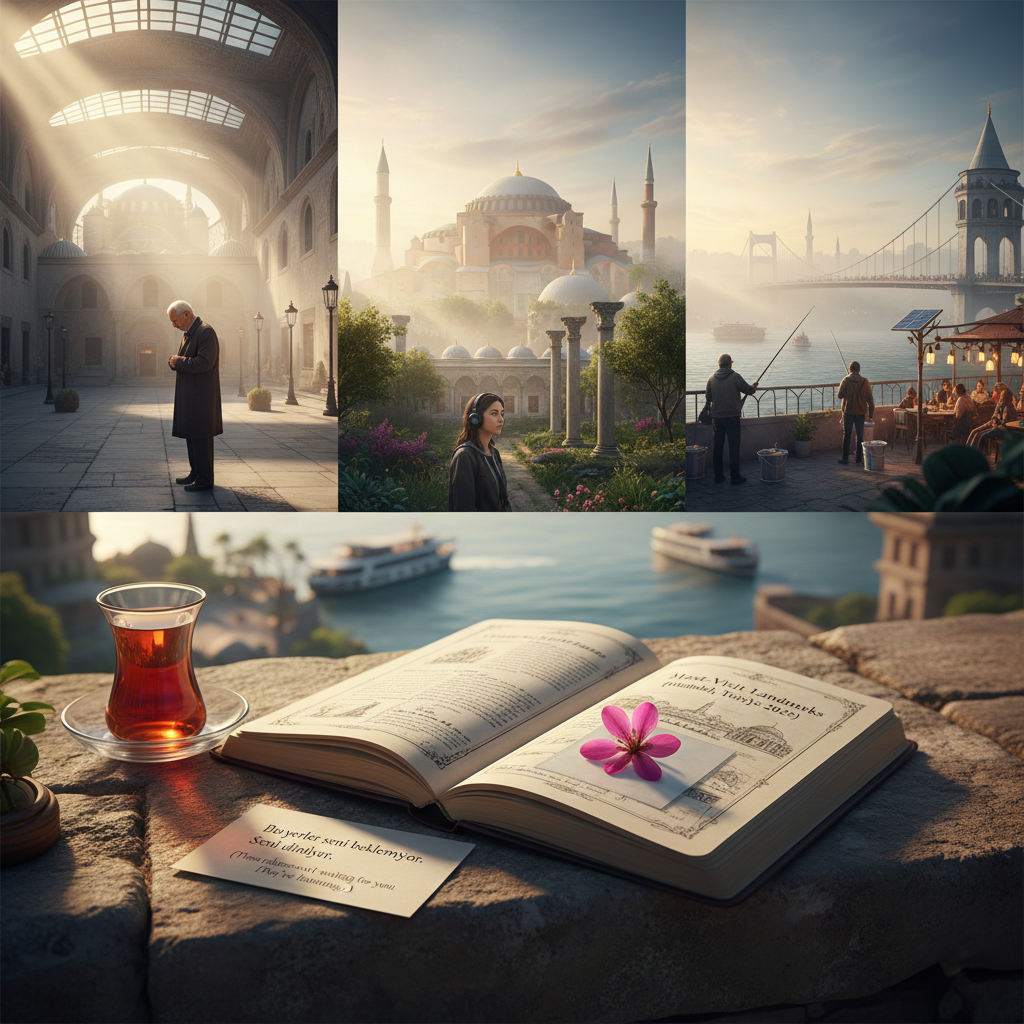
1. Hagia Sophia – The Ultimate Symbol of Synthesis
- History: Cathedral (537), mosque (1453), museum (1935), mosque (2020).
- Visitor Protocol:
- Visitors are welcome when it is not the time of prayer. (check Diyanet Namaz Vakti)
- Cover up (scarf provided for ladies).
- Photos are allowed (no flash, not during prayer).
2. Topkapı Palace – Where Sultans Ruled the World
This palace served as the main residence and administrative center of the Ottoman sultans for nearly 400 years. It was commissioned by Sultan Mehmed the Conqueror after the conquest of Constantinople. Located in the Sultanahmet district, near Hagia Sophia and the Sultan Ahmed Mosque, it houses numerous artifacts and relics, including a collection of sacred items belonging to the Prophet Muhammad (peace be upon him), the Imperial Treasury, and the Harem. It is now one of the most important museums in Turkey and the world, and is a UNESCO World Heritage Site.
3. Grand Bazaar – The World’s Oldest Covered Market
One of the oldest and largest covered markets in the world, it was founded in 1461 AD during the reign of Sultan Mehmed the Conqueror. It is located in the historic Fatih district and includes more than 4,000 shops and 61 streets. It is a major center for handicrafts and sells carpets, gold, spices, traditional souvenirs, accessories and Turkish sweets (lokum).
4. Chora Church (Kariye Museum) – The Mosaic Masterpiece
It is a historical Byzantine landmark in Istanbul containing mosaics and murals dating back to the 14th century that tell stories from the Bible and embody art from the late Byzantine period. It is considered one of the most beautiful Byzantine monuments. Located in the Fatih district, it was converted from a church to a mosque, then a museum in 1948, and was reconverted into a mosque (Kariye Mosque) in 2020 after having been a monastery outside the walls of ancient Constantinople.
These sites form the spiritual and historical spine of Istanbul Türkiye 2026.
4. Beyond the Icons: Hidden Gems Only Locals Know
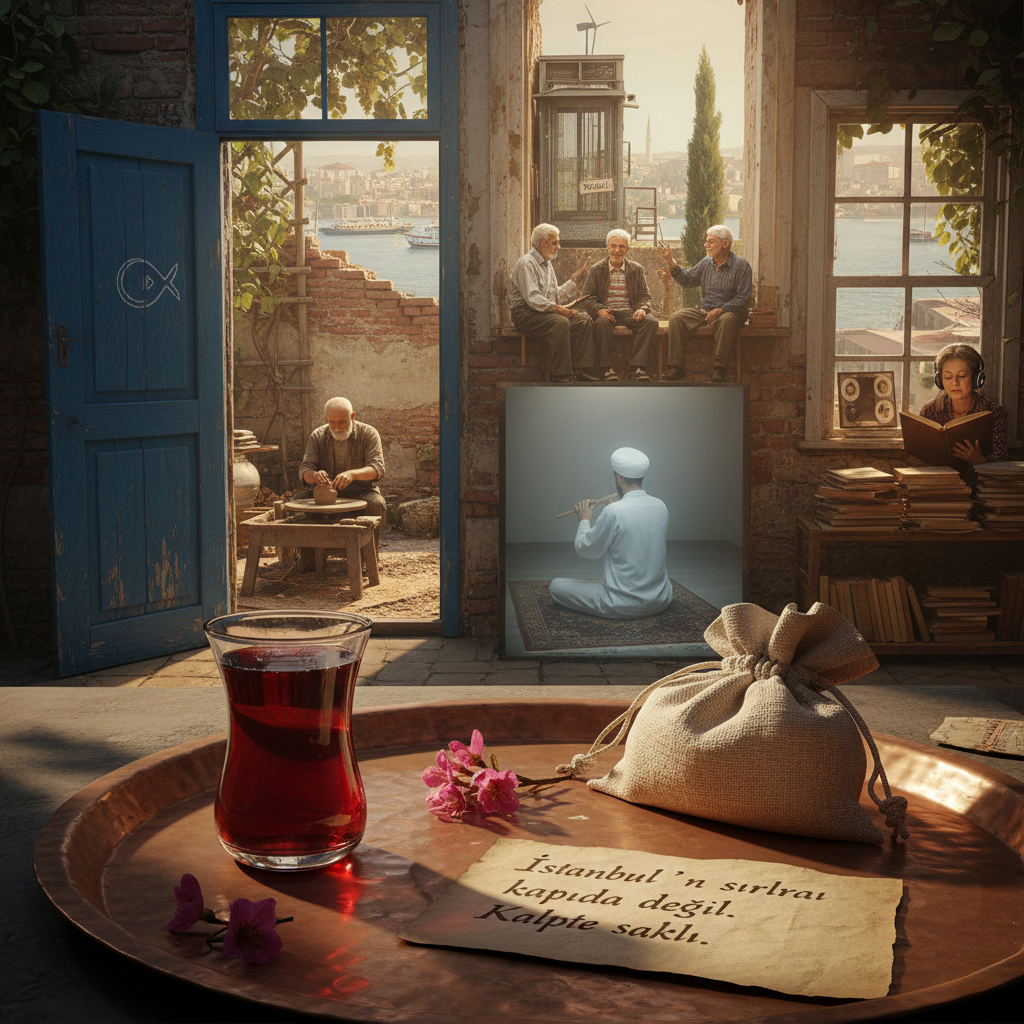
A. Süleymaniye Hamam – The Architect’s Bath
It is one of the most famous historical Turkish baths in Istanbul. It was built in 1557 AD by the architect Mimar Sinan at the order of Sultan Suleiman the Magnificent. It is located in the Fatih district near the Suleymaniye Mosque. It is distinguished by its magnificent original design and distinctive domes. It is a testament to Ottoman architecture in the 16th century. It has services including marble heating, exfoliation, and massage, which are divided into three stages: the hot relaxation room, the massage and exfoliation room, and then the cooling room. Couples and families are allowed to enter together. It is famous for having a large marble stone for massage surrounded by eight columns. Booking must be made in advance online before visiting via the official link (https://thescribsandnibs.com/europe/turkey/suleymaniye-hamam-couple/).
B. Balat Neighborhood – Istanbul’s Colorful Soul
It is one of the oldest and most prestigious historical neighborhoods of Istanbul, located in the Fatih district on the Golden Horn coast. Its houses are distinguished by their beautiful colors in the Ottoman style and their cobblestone streets. This neighborhood has a unique cultural mix of churches, synagogues, and mosques. It is listed as a UNESCO World Heritage Site and was recently filmed in the Turkish series “The Pit”. This neighborhood includes small cafes and shops selling antiques and artifacts. It has the Red Castle Tower and Umbrella Street. It can be easily reached via the T5 tram line, which passes through the Gulf coast.
C. Pierre Loti Hill – Panoramic Poetry
It is a hill located in the Eyüp district of Istanbul and is one of the most famous tourist attractions with a charming panoramic view of the Golden Horn. It was named in honor of the French writer Pierre Loti, who lived in the area. It features historic cafes, beautiful old wooden houses, and a collection of historic mansions that have been converted into boutique hotels. It can be reached via the Eyüp cable car (TF2), and it is recommended to go before sunset to enjoy the panoramic view through telescopes that allow you to see the city directly.
These treasures reveal Istanbul Türkiye 2026 beyond the guidebooks.
5. A perfect 5-day itinerary for Istanbul.
- Day 1: Start your day with a visit to Hagia Sophia, followed by a visit to the Blue Mosque. Next, head to Sultanahmet Square (also known as the Old Hippodrome). At midday, visit the Basilica Cistern, followed by lunch at a nearby restaurant. In the evening, visit Topkapi Palace, followed by dinner at a wonderful restaurant in the Sultanahmet area.
- Day 2: Begin your day with a 2-3 hour cruise on the Bosphorus Strait, enjoying the views of the palaces and bridges from the sea. Afterwards, visit the Dolmabahçe Palace. At midday, have lunch in the Beşiktaş district, followed by a visit to Galata Tower. In the evening, stroll along Istiklal Street, then visit Taksim Square and have dinner at a nearby restaurant.
- Day 3: We begin in the morning with a visit to the Grand Bazaar, one of the oldest covered markets in the world, where we can shop and buy souvenirs. In the afternoon, we’ll visit the Twelve Bazaar, a market similar to those in Egypt, followed by lunch at a nearby restaurant. In the evening, we’ll take a ferry to the Asian side, specifically Kadıköy, where we’ll explore the Moda district. Afterwards, we’ll have dinner in Kadıköy and enjoy the vibrant, youthful atmosphere.
- Day 4: We start in the morning with a visit to the Fatih Mosque, followed by a visit to the Bosphorus Bridge and a stroll around it. In the afternoon, we’ll visit the Archaeological Museum, followed by lunch in the Eminönü district. Afterwards, we’ll visit the Galata Bridge for a tour and to try the delicious grilled fish. In the evening, we’ll visit the Süleymaniye Mosque and enjoy a magnificent view of the city. Afterwards, we’ll go shopping in the area, explore it, and have dinner at a nearby restaurant.
- Day 5: We start in the morning by visiting Forum Mall or Cevahir Mall, then we head to Gülhane Park. In the afternoon, we head to the Laleli area for a charming tour, shopping, and lunch. In the evening, we head to the Suleymaniye Bathhouse for an unparalleled relaxation experience, and then we head to the charming Taksim Square for a farewell tour and a delicious dinner.
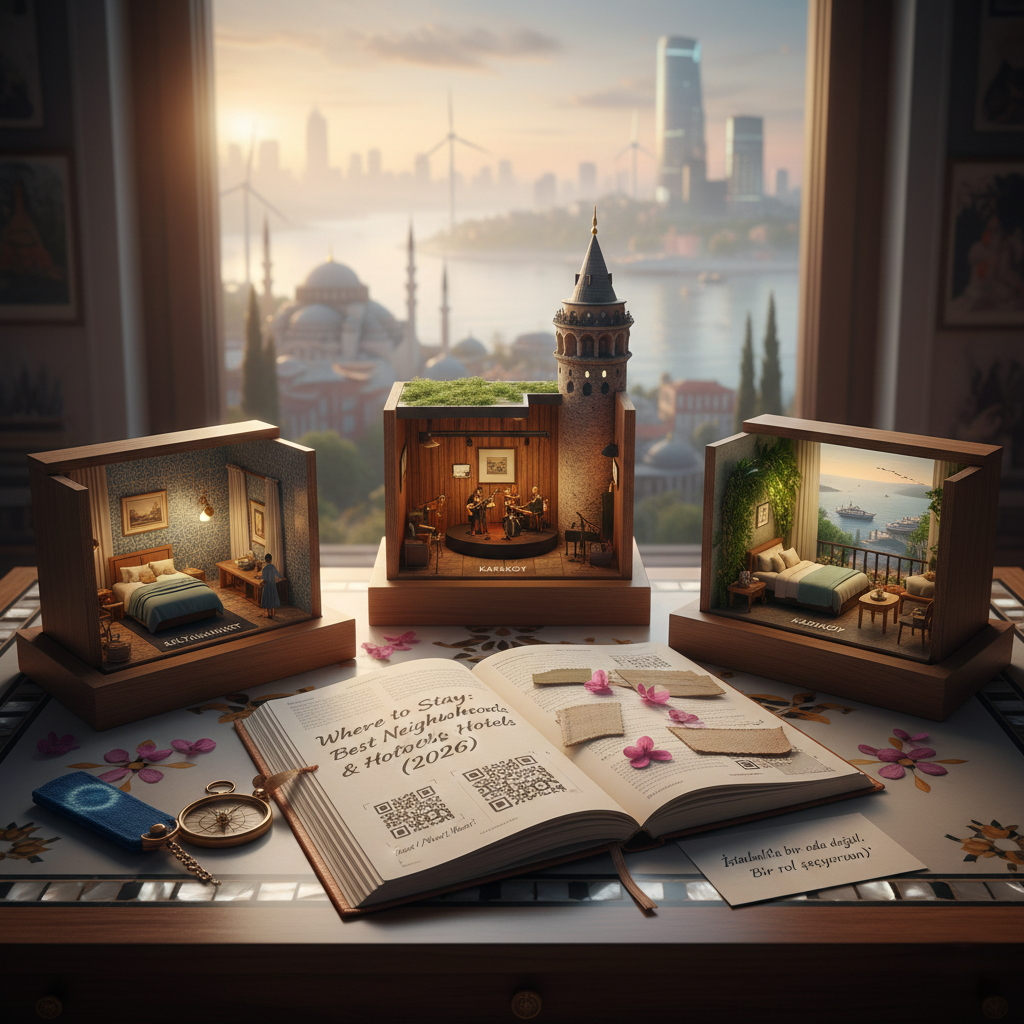
6. Where to Stay: Best Neighborhoods & Hotels (2026)
| Area | Best For | Top Picks |
| Sultanahmet | First-timers, history lovers | Four Seasons Sultanahmet, Ajwa Sultanahmet |
| Beyoğlu/Galata | Culture, nightlife, views | Pera Palace, Georges Hotel Galata |
| Karaköy | Modern luxury, design | The Bank Hotel, Mütevelli Suites |
| Kadıköy (Asian) | Local life, authenticity | Witt Istanbul, DoubleTree Moda |
Tip: Choose historic boutique hotels over international chains for authentic charm.
Your base shapes your Istanbul Türkiye 2026 experience—choose with intention.
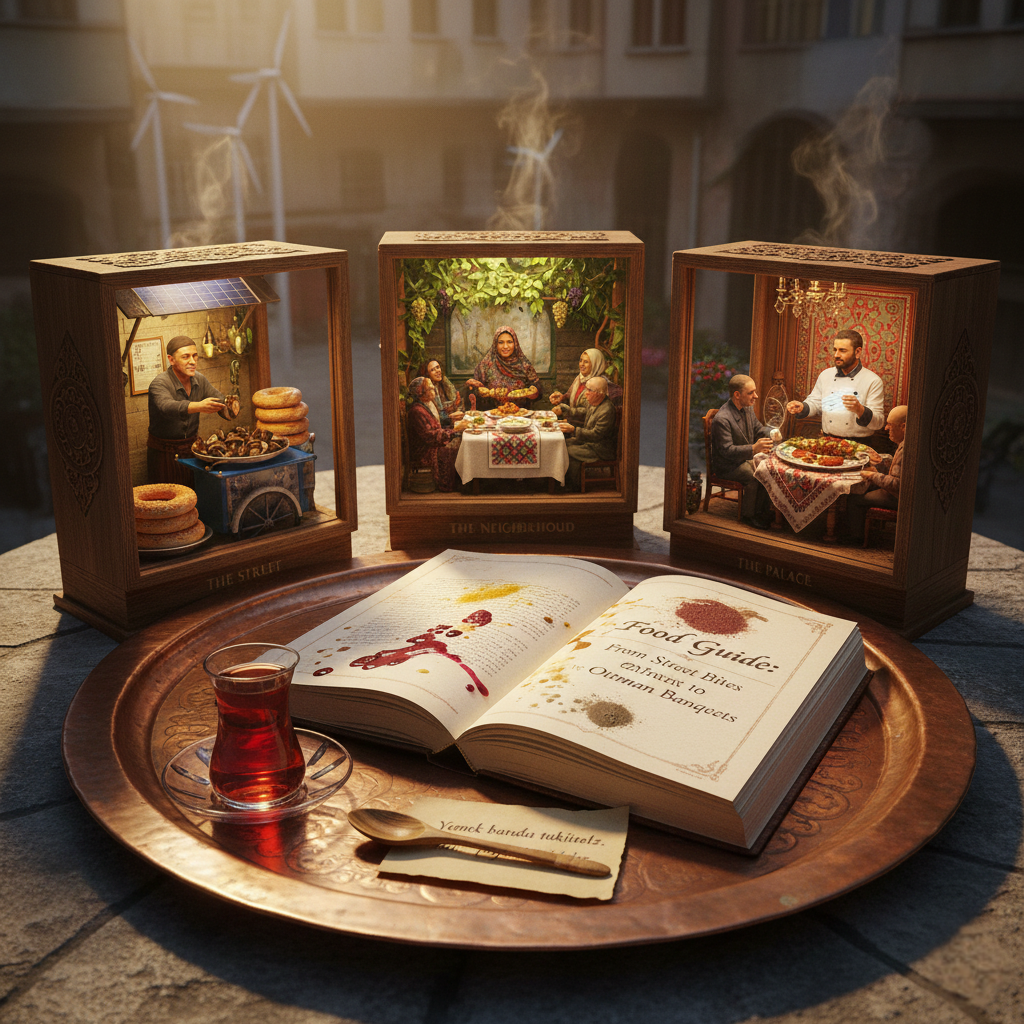
7. Food Guide: From Street Bites to Ottoman Banquets
- Must-Try Dishes:
- Balık Ekmek: Fish sandwich- grilled, at Eminonii quay.
Kumpir: Baked potato with all the toppings, Ortakoy.
Manti: Tiny dumplings of yoghurt and mint.
Turkish coffee: It is also served with fortune readings (fal). - Top Spots:
- Street Food: Karakoy Lokantasii, Hafiz Mustafa.
Fine Dining: Neolokal (New Anatolian), Mikla (Scandinavian-Turkish).
Historic: Hunkar (Ottoman palace cuisine since 1950).
Culinary immersion is central to Istanbul Türkiye 2026.
8. Practical Tips for Visitors (2026)
- Transport:
- Istanbulkart: It is a transit card that can be reloaded and can be used on the metro, ferry, and bus. You can get it at the stations.
- Ferries: It is the cheapest and most beautiful method of crossing the Bosphorus.
- Taxis: Use the BiTaksi app. It also prevents meter scams.
- Dress Code:
- Concerning mosques: arms and legs should be covered, and women should wear a scarf.
- Safety:
- The level of crime is low. Be wary of pickpockets in the Grand Baazar.
- Tourist Police- Call 153. Major sites have English-speaking tourist police.
Respect and preparation ensure a smooth Istanbul Türkiye 2026 journey.
9. When to Visit Istanbul Türkiye 202
| Season | Pros | Cons |
| April–May | Mild temps (15–22°C), blooming tulips, Istanbul Tulip Festival | Slightly higher prices |
| September–October | Warm days, cool nights, cultural events (Istanbul Biennial) | Occasional rain |
| June–August | Long days, vibrant nightlife | Cold (5–10°C), shorter days |
| Avoid: December–February | Festive lights, fewer crowds | Cold (5–10°C), shorter days |
Best Window: Late April or early October—ideal weather, cultural energy, manageable crowds.
Timing enhances your Istanbul Türkiye 2026 experience.
10. Sustainable Travel in the City of Two Continents
- Green Transport: The ferries and metro are environmentally friendly.
- Community: Eat in local lokantas, and shop in workshops.
- Heritage: Avoid touching archaeological artifacts or mosaics.
Sustainability ensures Istanbul, Türkiye 2026, remains vibrant for centuries more.
11. Future Outlook: What’s New in 2026–2027
- Bosphorus Tunnel Expansion: New metro line linking Asian and European sides
- Digital Heritage Platform: “Istanbul AR” app overlays historical scenes on live camera view
- Green Roofs Initiative: Historic buildings retrofitted with gardens to reduce heat
Istanbul’s future is rooted in respect—a promise of Istanbul, Türkiye 2026.
12. Final Reflection: The City That Holds Time
Istanbul, Türkiye 2026 is not a place you simply visit. It is a city that holds you—in the echo of footsteps through Roman cisterns, the scent of simit at dawn, the golden light on the Bosphorus at dusk. Here, every stone tells a story, every cup of tea offers connection, and every crossing of continents reminds you that the world is richer when cultures meet.
So go. Wander without a map. Listen more than you speak. And let Istanbul—not as a checklist, but as a living, breathing dialogue between past and future—reveal itself to you
Trusted Resources (2026)
- UNESCO – Historic Areas of Istanbul:
https://whc.unesco.org/en/list/356
2. Istanbul Museums Directorate:
İstanbul Museums Official Website
3. Istanbul Modern:
https://www.istanbulmodern.org
Follow us on:
Articles that might interest you :
Smart City Tourism 2026: Where the City Plans Your Trip from the Moment You Land
The Best Family Travel Destinations in 2026: Places That Will Amaze Children… and Relax Mothers!.


