


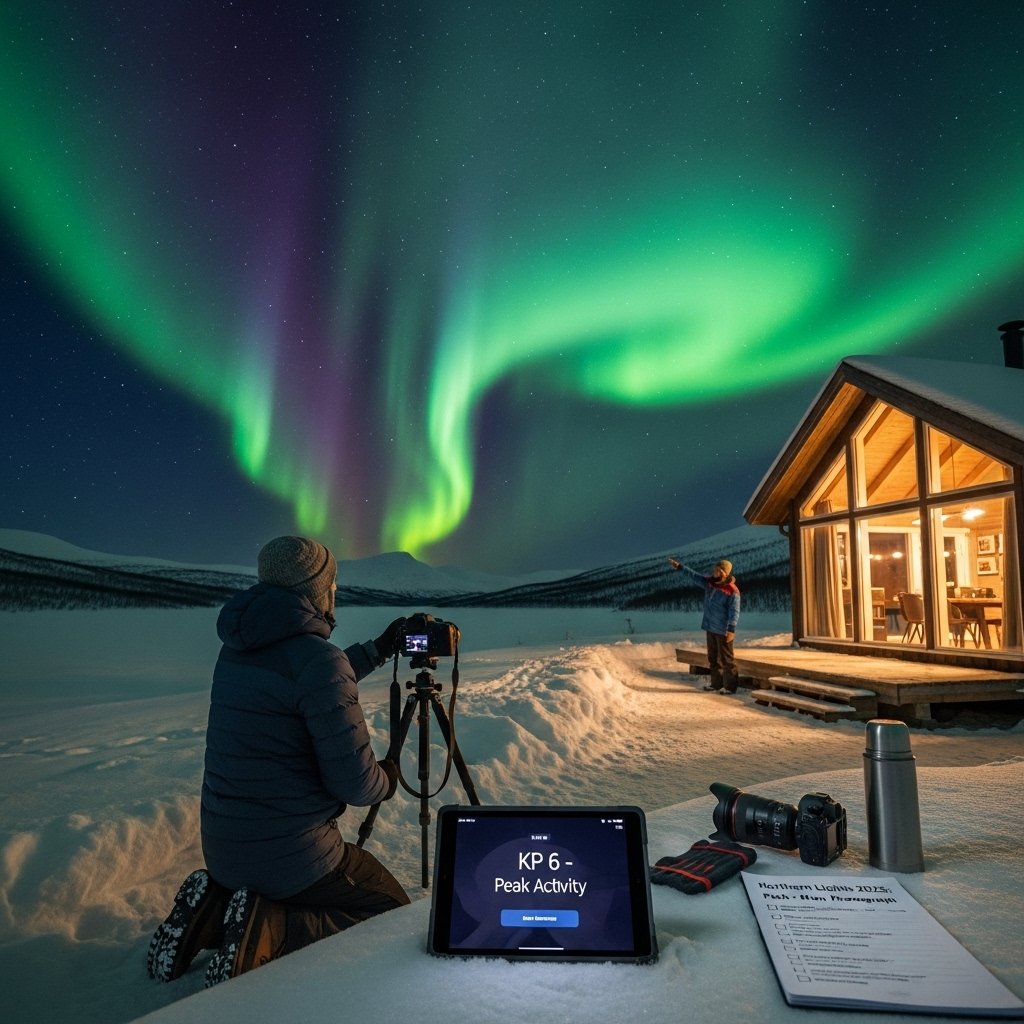
Introduction: Chasing the Aurora – More Than a Bucket List Item
Catching the Northern Lights isn’t just ticking something off your bucket list. You’re out there, standing under a sky that’s totally alive—colors swirling, shifting, the whole thing buzzing with a kind of ancient energy you can actually feel. With 2025 on the horizon and light pollution creeping in, plus climate changes messing with the usual patterns, it feels like the chance to see this show is slipping away faster than ever. But don’t worry: if you know when to go, where to look, and how to plan, you can still watch the aurora borealis put on its wildest show.
This guide isn’t just another rundown of “top ten places.” It’s complete, end-to-end blueprint to pull off the trip of a lifetime in 2025. We’ll help you pick the best places to see Northern Lights 2025, plan around solar activity, travel responsibly, stay warm, and snap stunning photos—even if all you’ve got is your phone.
You’re not going in blind, either. We’re bringing you the latest aurora forecasts, real climate data, and tips straight from local guides up in the Arctic. This way, you won’t just see the lights—you’ll actually connect with them. Whether you’re heading out on your own, looking for a romantic escape, or trying to nail that perfect shot, consider this your roadmap to one of the planet’s most unforgettable experiences.
1. Understanding the Northern Lights: Science Meets Wonder


The Northern Lights, or aurora borealis, show up when charged particles from the sun slam into Earth’s magnetic field and set off a light show in the upper atmosphere. Oxygen lights up green (that’s the color you’ll see most) and sometimes red. Nitrogen throws purples and blues into the mix.
What really shapes your chances of seeing them?
- First, solar activity matters. Scientists use something called the KP Index, which runs from 0 to 9. If you’re hoping to catch the lights from mid-latitudes, look for a KP of 4 or higher. Up north, inside the Arctic Circle, a KP of 2 or 3 usually does the trick.
- Next, you need real darkness—not just a bit of twilight. In the Northern Hemisphere, that means late August to early April. Anything outside those months, and the sky just doesn’t get dark enough.
- Weather counts, too. Clouds ruin everything. Even a thin layer can block the show, so clear skies are a must.
- don’t forget about light pollution. Even the glow from a small town can make the aurora fade away.
Pro Tip: Use the Aurora Forecast app (by University of Alaska Fairbanks) or SpaceWeatherLive.com for real-time KP index and cloud cover maps
Understanding these variables helps you choose not just the best places to see Northern Lights 2025, but the best nights within them.
2. The Aurora Oval: Why Location Within the Arctic Circle Matters
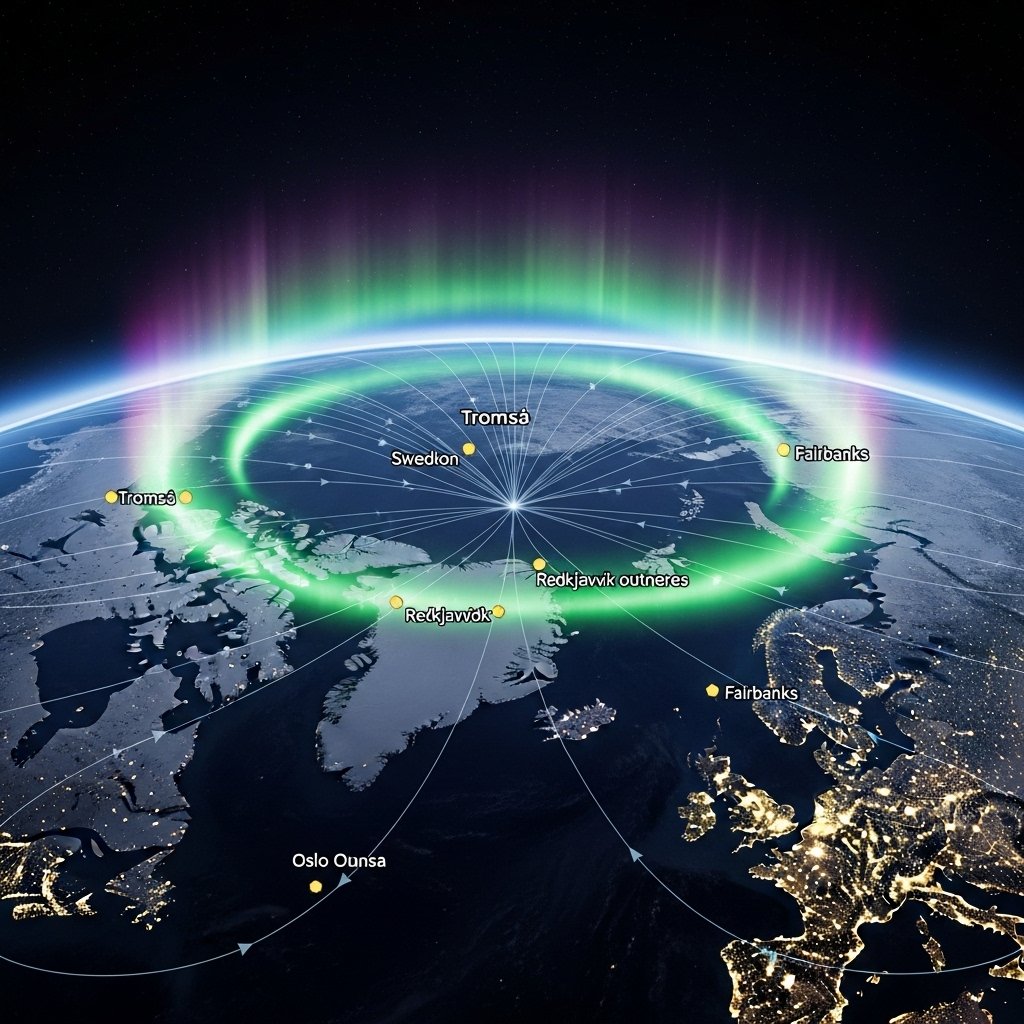
The Northern Lights create a glowing ring—called the auroral oval—around the magnetic North Pole. If you want the best places to see Northern Lights 2025, aim for spots right under or close to this oval, usually between 65° and 72° latitude.
Go too far south, like Scotland, and you’ll probably catch only faint, rare shows. Head too far north, say the actual North Pole, and you’re stuck with endless winter darkness, freezing temperatures, and not much in the way of comforts.
The real magic happens in places that hit the sweet spot: easy to reach, good places to stay, reliably dark skies, and plenty of aurora action. In 2025, five destinations stand out above the rest.
3. #1: Tromsø, Norway – The Arctic Capital of Aurora Tourism
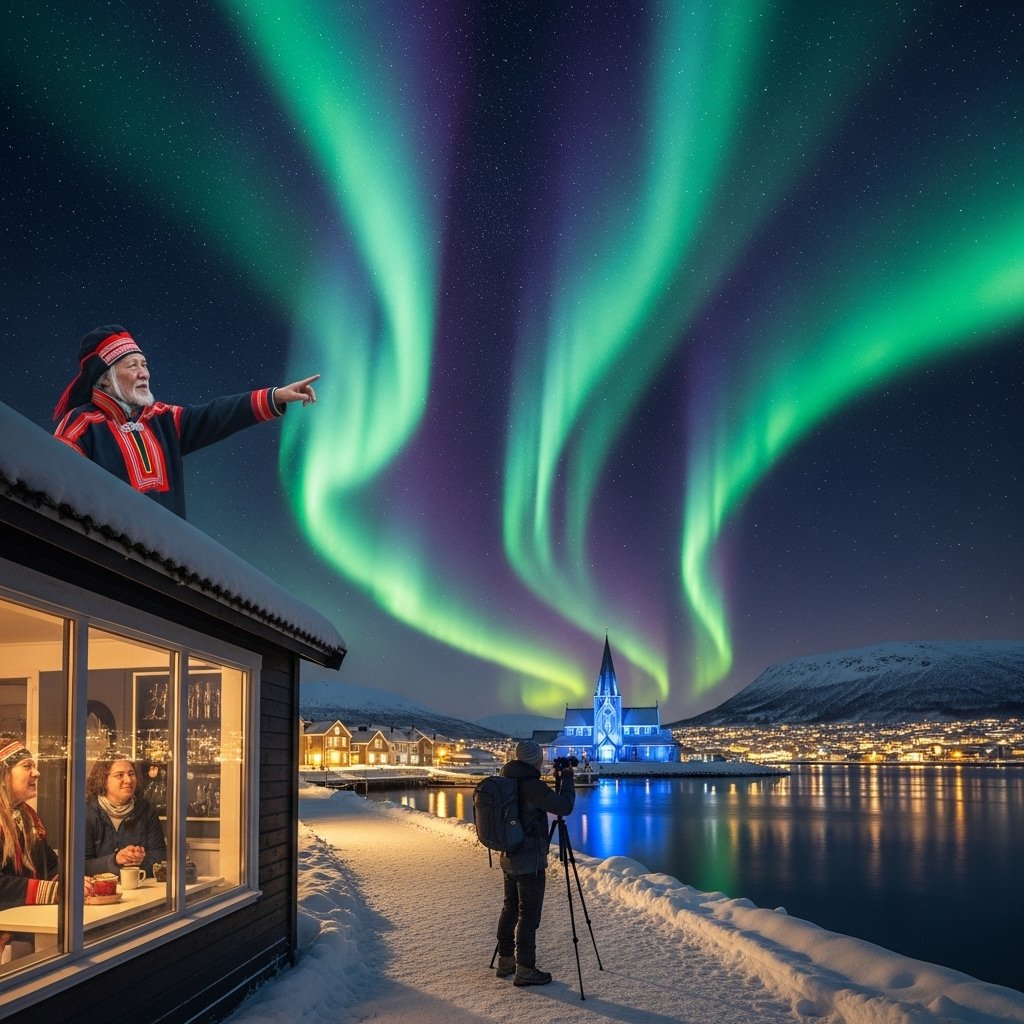
Why Tromsø Tops the List for Northern Lights in 2025
Tromsø sits way up at 69°N, right under the auroral oval. That means you get over 200 nights of potential aurora activity every year with a real shot at seeing the northern lights dance overhead.
- When to Go: Late September through early April
- Getting There & Staying: Super easy. Direct flights from Oslo, plenty of cosy cabins, and guides who really know their stuff.
- Why It’s Special:
- The fjords: When the aurora shows up, it bounces off the calm water—twice the beauty in one view.
- Culture: Dive into Sami traditions and learn from the people who’ve lived in the Arctic for generations.
- Responsible touring: Most guides follow “Leave No Trace” rules, so you get the experience without leaving a mess.
Insight: Tromsø’s microclimate often creates clearer skies than inland areas—thanks to coastal winds (Norwegian Meteorological Institute, 2024).
Who Loves It: Perfect for first-timers, photographers, or anyone who wants a comfortable, reliable trip.
Pro Tip: Book a stay in Sommarøy or Lyngseidet. It’s just a quick drive from town, but you dodge the city lights and get a better show.
Where to Sleep: Try a glass igloo at Tromsø Ice Domes or go for an eco-lodge like Skansen.
Tromsø remains a gold standard among the best places to see Northern Lights 2025—blending science, culture, and awe.
4. #2: Abisko, Sweden – The Blue Hole of Clear Skies
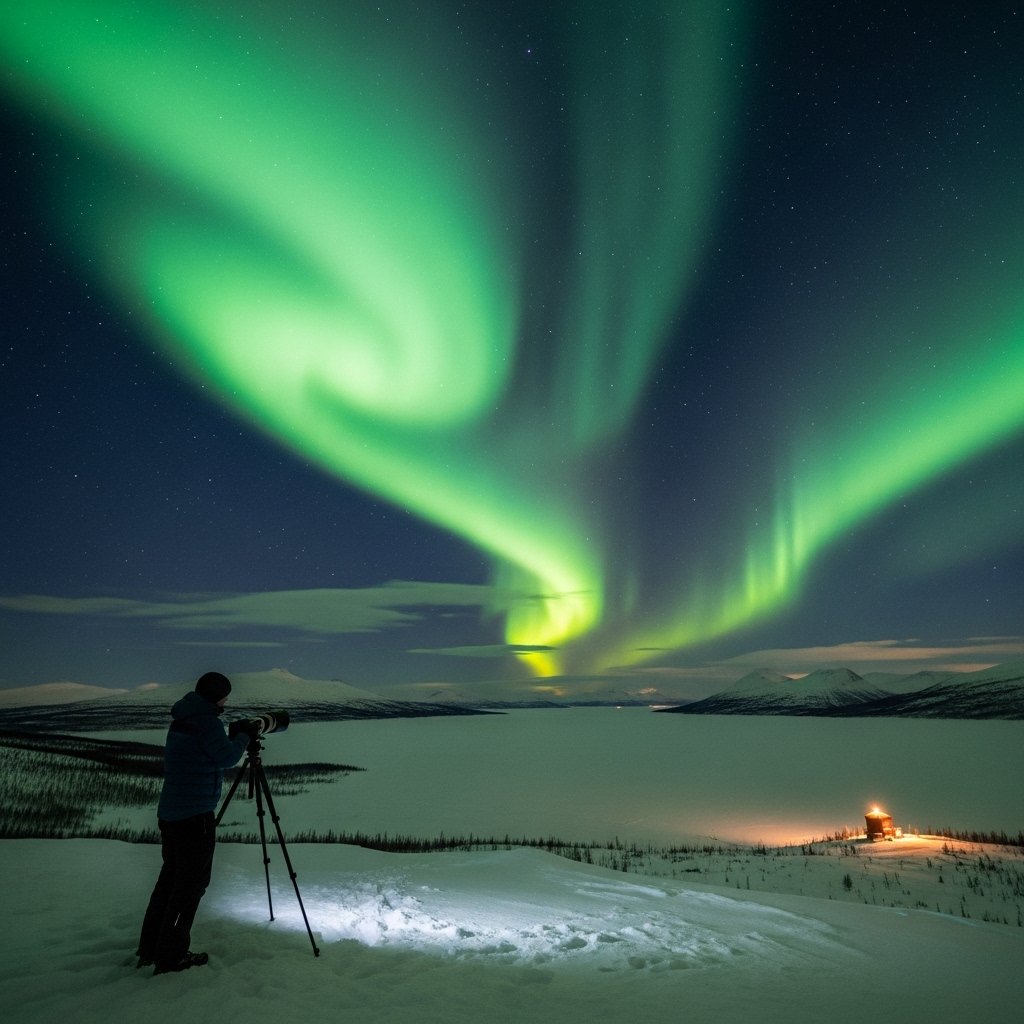
Why It’s a Top Choice for Best Places to See Northern Lights 2025
Abisko National Park sits up in Swedish Lapland, and honestly, it’s a legend for a reason. Thanks to this odd “blue hole” effect—a kind of microclimate—the skies above Abisko stay clear even when clouds cover everything else around. Locals swear by it, and after one night there, you get why.
- If you’re thinking about timing, aim for late August through early April.
- The setup here is simple but dialed-in: cozy glass cabins, a research station, and guided snowshoe walks if you want to wander out into the quiet.
- Now, the real star is the Abisko Sky Station.
- You hop on a chairlift, climb up to 900 meters, and suddenly you’re face-to-face with the northern lights, no rooftops or phone lines in the way.
- There’s almost no light pollution—seriously, it’s one of the darkest corners in Europe.
- The official viewing platform even gives you real-time aurora forecasts, so you’re not left guessing.
Data: Abisko averages 150+ clear nights per winter—among the highest in Scandinavia (Swedish Polar Research Secretariat, 2024).
Best for: Photographers, aurora fanatics, anyone who wants a quiet, minimalist escape—this is your place.
Pro tip: Go in February or March. You get crystal-clear nights, but it’s not brutally cold like January (think -10°C instead of -30°C).
Accommodation: check out the Aurora Sky Station cabins or the Abisko Mountain Lodge. Both get you right in the heart of the action.
Abisko proves that the best places to see Northern Lights 2025 aren’t always the most famous—but the most reliable.
5. #3: Fairbanks, Alaska, USA – North America’s Aurora Hub
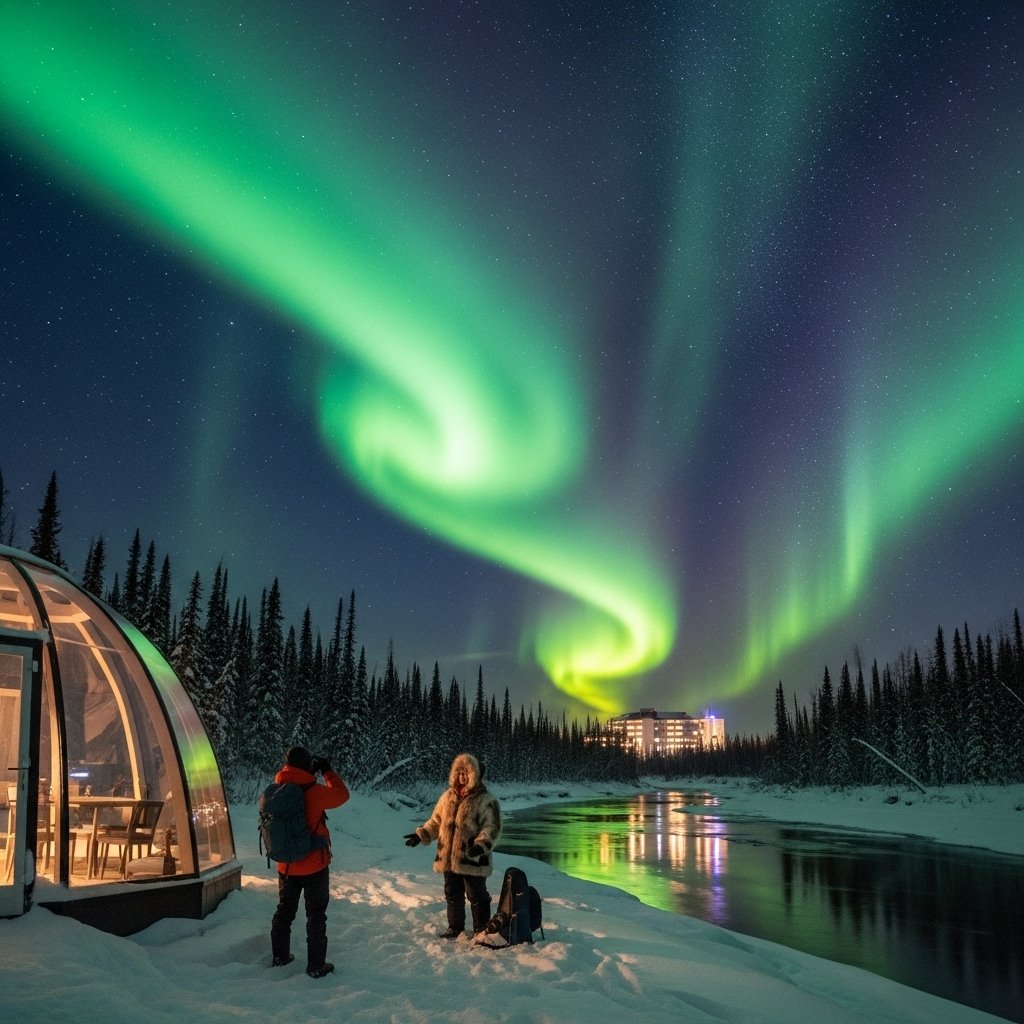
Why Fairbanks Tops the List for Northern Lights in 2025
Fairbanks sits high up at 65°N, right under the auroral oval. That means you get a 90% chance of seeing auroras on clear nights between August 21 and April 21.
- Season: late August through mid-April. Not bad, right? When you fly in—usually through Seattle—you’ll find it’s easy to get around.
- Infrastructure: Flights from Seattle, Heated lodges keep you warm, and the University of Alaska’s Geophysical Institute puts out some of the best aurora forecasts in the world.
- Unique Perks:
- Geophysical Institute (UAF): World-leading aurora prediction
- Chena Hot Springs: Soak in warm water while watching lights overhead
- Dog sledding + aurora combos: Unique Alaskan experiences
Insight: Fairbanks is far from coastal storms, making it drier and clearer than coastal Alaska(University of Alaska Fairbanks, 2024).
Fairbanks is perfect if you’re coming from: North America, bringing the family, or want to mix the lights with a bit of winter adventure.
Pro tip: Book a place at least 20 miles outside the city—like Borealis Basecamp or Chena Hot Springs—for truly dark skies.
Accommodation: At Borealis Basecamp, you can even stay in a geodesic dome with huge windows and get woken up if the lights appear.
Fairbanks offers the best balance of accessibility and intensity among the best places to see Northern Lights 2025 in North America.
6. #4: Reykjavík & Rural Iceland – Drama, Volcanoes, and Lights

Why It Was a Top Choice for Best Places to See Northern Lights in 2025
Iceland’s weird and wonderful nature—volcanoes, glaciers, black sand beaches—makes for some of the most spectacular aurora. The city of Reykjavík may be bright, but the country is where the light show can be seen.
- Season: Late August to mid-April
- Infrastructure: Self-driving is doable (if you are careful), and there are a lot of tours to choose from.
- Unique Perks:
- Auroras over waterfalls (Seljalandsfoss) or glacial lagoons (Jökulsárlón)
- Volcanic landscapes: Lava fields enhance photo compositions
- Combined experiences: Northern Lights + ice caving or glacier hiking
Caution: Iceland’s weather is unpredictable—cloud cover can last days. Flexibility is key.
Perfect for: Photographers, thrill-seekers, and those who are attracted to dramatic landscapes.
Smart Tip: The Iceland Aurora App is handy for knowing when there will be clear sky for your viewing and also the safest routes for driving.
Accommodation: ION Adventure Hotel (near Reykjavík) or Fosshotel Glacier Lagoon.
Iceland is full of reminder that the best places to see Northern Lights 2025 will also be places where you feel the raw, elemental power of nature.
7. #5: Yellowknife, Canada – The Underrated Powerhouse

Why Yellowknife Is a Top Pick to See the Northern Lights in 2025
Yellowknife, in the Northwest Territories, is located on the Canadian Shield. It’s a relatively flat site with very clear skies, with more than 240 nights per year suitable for aurora activity.
- Season: Mid-August through mid-April
- Getting There: Flights from Calgary, Native-Owned Lodges
- Special Perks:
- Great Slave Lake: A Lake that reflects light from the city like a mirror
- Indigenous storytelling: Dene & Métis guides’ ancient legends of the aurora.
- Solar activity: Red auroras appear on this planet (rarely found elsewhere).
Data: Yellowknife has less cloud cover than Fairbanks in winter (Environment and Climate Change Canada, 2024).
Best suited for: People preferring fewer crowds, Cultural enthusiasts, People in search of intense displays
Smart tip: Support traveling with indigenous-owned companies, such as Aurora Village, which give back to their communities.
Where to Stay: Tepees with heaters in Aurora Village, or more luxurious hotels such as Chateau Nova.
Yellowknife is a gem in the list of top destinations for the Northern Lights in 2025, with spectacular displays free from congestion.
8. Honorable Mentions: Emerging & Niche Destinations
- Rovaniemi, Finland: Santa Claus Village, glass igloos, but very touristy.
- Murmansk, Russia: Affordable, although difficult to visit as a result of sanctions (do not recommend visiting in 2025).
- Svalbard, Norway: You can view the displays throughout the Polar Night (November through January), but it is well below freezing (–30°C) and expensive.
Avoid: Scotland, Ireland, or northern U.S. states—they’re outside the oval and offer only rare, weak displays.
9. When to Go: The 2025 Aurora Calendar
| Month | Pros | Cons | Best For |
| August–Sept | Mild temps, autumn colors | Shorter nights | Photographers, hikers |
| October–Nov | Darker skies, fewer crowds | Colder, more snow | Serious chasers |
| December | Festive atmosphere | Very cold, busy | Families, first-timers |
| January–Feb | Longest nights, peak activity | Extreme cold (-30°C) | Hardy adventurers |
| March–April | Milder temps, spring light | Shorter nights | Comfort-seeker |
Solar Maximum Alert: 2024–2026 is Solar Cycle 25’s peak—meaning more frequent, intense, and colorful auroras (NASA Solar Cycle Update, 2024).
2025 is arguably the best year this decade to see the lights.
10. How to Plan Your Trip: Step-by-Step (2025 Edition)
Step 1: Pick Your Style
- Want to splurge? Check out those glass igloos in Finland or Norway.
- Feeling adventurous? Try dog sledding in Alaska or go snowshoeing up in Abisko.
- More into culture? Indigenous tours in Yellowknife or Sami experiences in Tromsø are both unforgettable.
Step 2: Book Early
- Flights fill up fast—grab your tickets 4 to 6 months ahead since there aren’t many routes up north.
- For those glass cabins, you’ll need to book 6 to 12 months in advance. They disappear in a flash.
Step 3: Get Travel Insurance
- Don’t skip this. Weather can change everything, and aurora trips rely on clear skies.
Step 4: Pack Smart
- Bring thermal base layers, a solid down jacket, and proper boots like Sorels.Don’t forget mittens.
- For gear, you’ll want a tripod, extra batteries (the cold kills them quick), and a headlamp with a red light.
Step 5: Keep an Eye on the Forecast
- Check Aurora Forecast (UAF) for activity, Windy.com for clouds, and always stay in touch with local guides for the latest updates.
11. Photography Guide: Capture the Lights Without a Pro Camera
You don’t need to drop $3,000 on fancy gear. Even your phone can catch the aurora in 2025.
For DSLRs or mirrorless cameras, switch to manual mode.
- Set your aperture to f/2.8 or wider, crank up the ISO anywhere from 800 to 3200, and let the shutter stay open for 5 to 15 seconds.
- Grab a wide-angle lens—something between 14 and 24mm works well.
- don’t forget to set your focus to manual infinity. It helps to test it out on some stars before you start shooting.
Using a smartphone?
- iPhone users, just turn on Night Mode and use a tripod if you have one.
- On Android, go for Pro Mode or grab an app like NightCap.
- If you don’t have a tripod, just prop your phone on a rock or anything steady. You really don’t need fancy equipment to get a shot.
Pro Advice: Shoot in RAW format for better post-processing.
12. Ethical Aurora Tourism: Respect the Night
- Avoid light pollution: Turn off flashlights; use red-light mode
- Stay on paths: Arctic tundra is fragile—footprints last years
- Support local: Choose Indigenous or family-run tours
- Don’t chase: If a tour van is full, don’t follow—wait your turn
As the Sami say: “Guohtun lea goas” (“The light is a guest”)—treat it with reverence.
13. Common Mistakes to Avoid
- Staying in city centers: Light pollution kills visibility.
- Not checking cloud cover: Aurora apps show activity—but you need clear skies.
- Giving up after one night: Aim for 3–5 nights to maximize odds.
- Overpacking cameras: Enjoy the moment—photos are secondary.
14. Final Verdict: Which of the Best Places to See Northern Lights 2025 Is Right for You?
| Traveler Type | Best Destination | Why |
| First-timers | Tromsø, Norway | Reliable, safe, great infrastructure |
| Photographers | Abisko, Sweden | Clear skies, dark skies, iconic backdrops |
| North Americans | Fairbanks, Alaska | Easy access, high success rate |
| Adventure Seekers | Iceland | Volcanoes, glaciers, dramatic landscapes |
| Cultural Travelers | Yellowknife, Canada | Indigenous stories, intense display |
All are among the best places to see Northern Lights 2025—but the right one depends on your heart, not just your camera.
Conclusion: Stand Beneath the Dancing Sky
In 2025, the Northern Lights remain one of Earth’s last great free shows—a reminder that wonder still exists beyond screens and schedules. By choosing one of the best places to see Northern Lights 2025, planning wisely, and approaching with humility, you don’t just witness a spectacle. You participate in a cosmic dance that has inspired humans for millennia.
So bundle up, look up, and let the sky speak to you. The aurora isn’t just seen—it’s felt.
Trusted Resources & Tools (2025)
- Aurora Forecast – University of Alaska Fairbanks:
https://www.gi.alaska.edu/monitors/aurora-forecast - SpaceWeatherLive – Real-Time KP Index:
https://www.spaceweatherlive.com - Windy.com – Cloud Cover Maps:
https://www.windy.com - Iceland Aurora App:
https://aurora.is - NASA Solar Cycle Predictions:
https://solarscience.msfc.nasa.gov
Last Updated: November 2025. Aurora activity is natural—no guarantee of sightings.