


Introduction: Where Ancient Alleys Meet Contemporary Soul.
In 2026, Marrakech, Morocco, is a meeting of two worlds, the modern and the past. The time-honored districts of riads fitted with internet connections sing their Islamic prayers in unison with the sound that shrills all around the town. The Medina walls, built in the 12th century, demonstrate cutting-edge art galleries, so the art lovers will not run short of ideas. The fresh smell of saffron and orange flower blends with the bitter odor of electricity when tuk-tuks are driven by drivers who drive around the city. The city gets its common nickname Red City due to its ancient pink walls of pis̩ construction. The synonymous cosmopolitan spirit, which is an indication that the city is not simple and balanced, is a result of the combination of established traditions and has extended beyond the borders of the city.
Tourists find the largest advantage in this duality. The tourist can enjoy mint tea in a courtyard that has been established hundreds of years ago during breakfast, and afterward, he or she can enjoy a DJ set at sundown in a rooftop lounge under palm trees, within one day. To get the full feel of Marrakech that is not just a postcard, tourists must have more than a simple map. They need a guide who understands the culture, is good at planning, and is decent, and the guide has to respect the city of its past, but also its future.
The Marrakech, Morocco 2026 Guide will assist you. It provides an informative and complete guide to the Red City through the experiences of the local artisans, riad owners, cultural historians, and the Ministry of Tourism of Morocco. The guide shows you how to explore the souks, discover hidden courtyards, promote female cooperatives, and experience the spiritual life of the city to allow you to experience Marrakech at a deeper level than simply seeing its surface.
1. Why Marrakech Morocco 2026 Is More Relevant Than Ever.

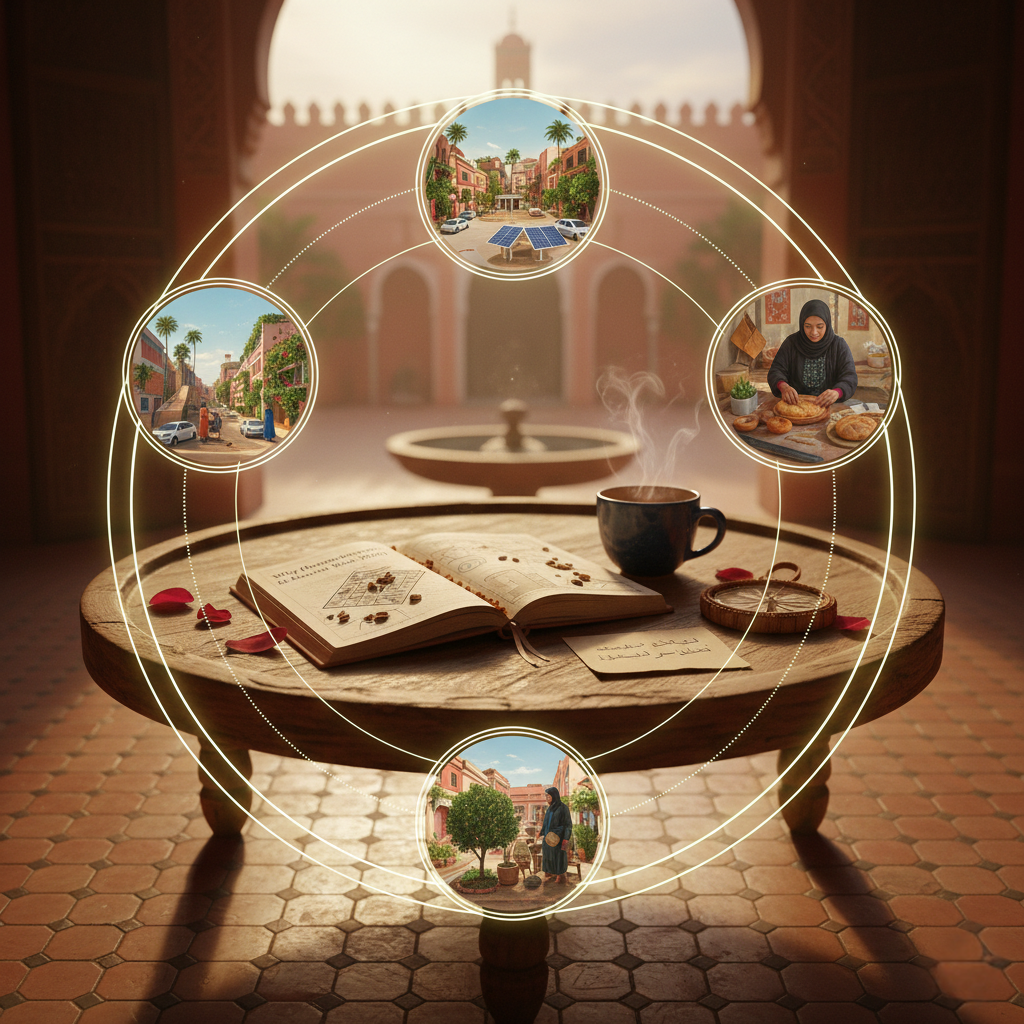
Whenever you want to think of the artistic, dreamy, and exploratory souls, then Marrakech is the city to land in. The year 2026 has seen the city silently revamping itself due to the new phenomenon of local empowerment, sustainable living, and preservation of cultures.
- The existing national strategy of Morocco is Vision 2030 for Tourism, which aims at maintaining steady progress in tourism rather than managing large numbers of tourists, especially in the old medina. The government has been able to control the number of tourists through specified caps of visitors and through the utilization of digital queues (https://onmt.com/).
- UNESCO Medinas Protection: Historic medina areas, which were declared World Heritage Sites in 1985, have been renovated with fountains, pedestrian protected zones, and artisan apprenticeship programs (UNESCO, 2025).
- Digital Transformation: The city is providing free WiFi in town centers. It is available in native tongue-speaking guides using AI and e-tickets at famous locations. All of these things facilitate visitors in enjoying themselves and moving about the city.
Marrakech is not losing its magic—it’s refining it.”
— Youssef Benkirane, Cultural Heritage Director, Marrakech, 2025
This intentional evolution makes Marrakech Morocco 2026 a model of conscious urban tourism.
2. The Two Marrakechs: Medina vs. Ville Nouvelle.

To navigate wisely, understand Marrakech’s dual identity:
A. The Medina (Old City) – The Heartbeat
- This old maze has stood since 1126, and UNESCO now calls it a heritage site:
- The square of Jemaa el-Fnaa bustles with snake charmers and juice sellers during the day, while storytellers and food vendors take over at night.
- Souks: The city center has more than 3000 artisan shops which sell various crafts at different markets, such as Souk Semmarine for leather goods and Souk des Teinturiers for spices.
- Historic Monuments: The Ben Youssef Madrasa, the Bahia Palace, and the Saadian Tombs stand as historical monuments in this area.
- The area gives you an intense impression through all your senses while making you feel a spiritual connection.
B. Ville Nouvelle (New Town) – The Modern Pulse
- The French established this section in the 1920s, which brought two new districts to Marrakech.
- Gueliz: presents its visitors with street cafes, modern shops, and art galleries.
- Hivernage: houses two of the most luxurious hotels in Marrakech, which are La Mamounia and Royal Mansour, while it also provides high-end dining experiences.
- Guéliz Cultural Center: stands out as a lively spot for modern Moroccan art and music. It has a chill atmosphere, feels.
- Vibe: Relaxed, cosmopolitan, green
Insight: The magic of Marrakech Morocco 2026 lies in moving between these two worlds—medina intensity by day, Ville Nouvelle calm by night.
3. Must-Visit Landmarks in Marrakech Morocco 2026.

1. Jemaa el-Fnaa – The Living Theater
- Why It’s Essential:
- It is a UNESCO Intangible Cultural Heritage site which unites oral tradition, food, and live performance.
- Best Time to Visit:
- Morning: Orange juice stands, henna artists, traditional medicine vendors
- Evening: Food stalls (try stall #14 for tangia), Gnawa music, acrobats
- 2026 Update: the digital kiosks will allow real-time playback of the tales of the storytellers using a QR code
2. Ben Youssef Madrasa – The Architectural Jewel
- History:
- Among the most significant Islamic colleges of the 14th century, it was the largest in North Africa.
- Highlights:
- Cedar-wood ceilings comprising 10,000 hand-carved pieces;
- Zellige tilework in the colours of cobalt blue and terracotta;
- Courtyard fountain where the students performed ablutions.
- Visitor Tip: Go there at 8.30 am to avoid the crowds; photography is permitted (no flash).
3. Majorelle Garden – Yves Saint Laurent’s Oasis
- History:
- Formed by French painter Jacques Majorelle, revived by YSL in 1980
- Why Visit:
- The walls of blue Majorelle color between 300+ varieties of plant life, five different continents of the globe.
- Available at the Berber Museum – it exhibits Amazigh jewelry, cloth, and tools
- Sustainability: Solar-powered irrigation; proceeds are used to fund the Jardin Majorelle Foundation. (jardinmajorelle.com)
4. Bahia Palace – The People’s Palace
- Built:
- 1894 for Grand Vizier Si Moussa
- Why It’s Special:
- Made to catch the spirit of paradise
- 150 rooms, 8 hectares of gardens, and ceilings of gold leaf
- Cultural Note:
- Bahia differs from royal palaces. It was made for everyone and shows off the warm hospitality of Morocco.
These sites form the architectural and cultural spine of Marrakech Morocco 2026.
4. Beyond the Icons: Hidden Gems Only Locals Know

A. Le Jardin Secret – The Reimagined Courtyard
- What It Is: The building is a restored 19th-century riad with Islamic and exotic gardens.
- Why It’s Special: The Rooftop cafe offers 360-degree Medina views and serves sunset mint tea.
B. Maison de la Photographie – Visual Time Capsule
- Collection: The photos of Morocco (between 1870 and 1950) are more than 3000, and the Berber portraits are rare.
- Location: Just a few meters away from Rue Riad Laarous on Rue des Bahias.
C. Tanneries of Bab Debbagh – The Art of Leather
- Experience: See artisans at work dyeing skins using natural dyes such as indigo and saffron, and poppy.
- Ethical Tip: It is recommended to purchase from cooperatives such as the Cooperative Artisanale des Femme de Marrakech and not use the middlemen.
D. Café Clock – Cultural Crossroads
- Why It’s Unique: It holds Henna Night, cooking lessons, and live Amazigh music.
- Social Impact: Hires local young people. Profits help support community projects.
These discoveries reveal the soul beneath the surface of Marrakech Morocco 2026.
5. A Perfect 4-Day Itinerary: Your Marrakech Morocco 2026 Blueprint

Day 1: Medina Immersion
- The first one will be the Ben Youssef Madrasa at 8.30 a.m.
- Then you can hit the souk at 11 am (leather, spices, lanterns),
- 1:00 PM: Lunch at Nomad (modern Moroccan, rooftop views)
- While the view on the rooftop is fantastic, the food is modern Moroccan. At 4 pm, you go to the Bahia Palace
- then have your dinner in Jemaa el-Fnaa at food stall #11 in lamb mechoui at 7 pm.
Day 2: Gardens & Art
- Majorelle Garden is open at 9 am
- the Yves Saint Laurent Museum (close by) at 11 am
- Le Jardin Secret at 2 pm (with a tea in the rooftop).
- Gueliz gallery crawl (David Bloch Gallery, Comptoir des Arts) at 5 pm.
Day 3: Culture & Craft
- At 10 am, visit the Maison de la Photographie
- then at noon, take a cooking class at Café Clock.
- At 3 pm, visit the Tannery and ethical shopping.
- You can have your dinner at Le Foundouk at 7:00 PM (candlelit courtyard).
Day 4: Modern Marrakech & Relaxation
- You can experience Hammam at 10:00 AM (try Les Bains de Marrakech).
- You can go shopping in Gueliz at 2:00 PM (concept stores like 33 Rue Majorelle).
- You can have sunset cocktails at La Mamounia Rooftop at 6:00 PM.
This rhythm balances discovery, depth, and downtime—essential for Marrakech Morocco 2026.
6. Where to Stay: Best Areas & Riads (2026)

| Neighborhood | Best For | Top Picks |
| Medina (Near Ben Youssef) | Authentic immersion, walkable to sites | Riad Yasmine (eco-certified), Dar Les Cigognes (luxury) |
| Mellah (Jewish Quarter) | Quiet, historic, local feel | Riad Monceau, Dar Zellij |
| Gueliz | Modern comfort, dining, nightlife | El Fenn, Hotel Des Amis |
| Hivernage | Luxury, spa, gardens | La Mamounia, Royal Mansour |
Tip: Choose riad over hotel for authenticity—most offer rooftop terraces and personalized service.
Your base shapes your Marrakech Morocco 2026 experience—choose wisely.
7. Food Guide: Eat Like a Local, Not a Tourist

Must-Try Dishes:
- Tagine: cooked stew (eat lamb with prunes).
- Pastilla: is a sweet and savory pie made from pigeons (currently available in a chicken flavor).
- Mint Tea: It is provided with ceremony-never say no to another cup.
Top Spots:
- Street Food: Jemaa el-Fnaa stalls (find long local lines)
- Modern Moroccan: Nomad, Amal Women’s Training Center (assists single mothers)
- Fine Dining: Le Jardin (Secret Garden Oasis), La Grande Table Marocaine (YSL-Inspired).
Ethical Note: Amal Center (amalnonprofit.org) trains disadvantaged women—dining here supports real change.
Food is a portal to culture in Marrakech Morocco 2026.
8. Shopping with Integrity: Support Artisans, Not Importers
What to Buy:
- Leather: From the Bab Debbagh tanneries, not the imported Moroccan bags.
- Ceramics: Go for Fes blue or Safi green, painted by hand, not printed.
- Textiles: Berber rugs purchased from women’s cooperatives (such as Anou).
Bargaining tips:
- Start at 50% of the price quoted.
- You can be walking away, and this is often the trick that brings a better offer.
- Do not bargain for food or a fixed price item.
Golden Rule: Buy direct from makers—your dirham funds families, not middlemen.
Ethical shopping is central to Marrakech Morocco 2026.
9. Practical Tips for Visitors (2026)
- Dress code: Put on modest clothes (covering shoulders/knees) – particularly in the medina.
- Photography: Always seek permission before taking photos of people; a lot of artisans will ask a nominal amount.
- Transport:
- Petit taxis: must be metered only, cost between 5 and 15 MAD per trip
- Walking: Recommended within Medina, closed shoes (uneven stones)
- Language: Learn Shukran (thank you), La, shukran (no, thank you). It opens hearts.
- Safety:
- Low violent crime: be wary of pickpockets in Jemaa el-Fnaa
- Tourist Police: Blue outfits; call 19 for help.
Respect and preparation ensure a smooth Marrakech Morocco 2026 journey.
10. When to Visit Marrakech Morocco 2026
| Season | Pros | Cons |
| March–May | Mild temps (20–28°C), blooming gardens, cultural festivals | Slightly higher prices |
| September–November | Warm days, cool nights, harvest season | Occasional dust storms |
| December–February | Cool weather (10–20°C), festive atmosphere | Crowded during holidays |
| Avoid: June–August | Extreme heat (40°C+), desert winds | Limited outdoor activity |
Best Window: April or October—ideal weather, cultural energy, manageable crowds.
Timing enhances your Marrakech Morocco 2026 experience.
11. Cultural Etiquette: Travel with Reverence
- Mosques: Non-Muslims are not allowed to get into most mosques (exceptions: Hassan II in Casablanca).
- Ramadan in 2026: (approximately 18th March-16th April) – Do eat and drink quietly during the daytime.
- Tipping: bathroom attendants-5- 10 MAD, guides-50-100 MAD.
- Greetings: Muslims normally greet others by shaking hands, and they keep waiting until women extend their hand.
“Marrakech rewards humility—not haste.”
This mindset is key to Marrakech Morocco 2026.
12. Sustainable Travel in the Red City
- Water: in Morocco is in short supply. Take a shower, and reuse towels.
- Plastic: Do not bring plastic bottles; most of the riads provide filtered water.
- Support Local: go for women’s cooperatives, family riads, and local guides.
- Leave No Trace: Do not drop it, medina waste system is weak.
Sustainability ensures Marrakech Morocco 2026 remains vibrant for generations.
13. Common Mistakes to Avoid
- Getting lost without a plan: Download Maps. Me (works offline)
- Accepting “free” guides: who provide free service will later ask for a significant payment.
- Ignoring siesta: most of the shops are closed between 1 and 4 PM-plan your shopping accordingly.
- Over-scheduling: Marrakech is best experienced by walking and exploring the city leisurely.
- Skipping haggling: in the souks, it is normal to negotiate prices with traders; this is a custom of the local population.
Avoiding these pitfalls deepens your Marrakech Morocco 2026 connection.
14. Future Outlook: What’s New in 2026–2027
- Pedestrianization: More Medina streets are now closed to motorbikes that pass through the city center.
- Digital Souk Platform: Through the Souk Darija app, clients can directly interact with artisans.
- Green Riad Certification: Initiatives about solar energy and water cleaning.
Marrakech’s future is rooted in respect—a promise of Marrakech Morocco 2026.
15. Final Reflection: The City That Breathes
Marrakech, Morocco 2026 is not a museum—it’s a living, breathing entity. Its alleys whisper stories of sultans and scholars; its courtyards echo with the laughter of children and the rhythm of daily prayer. To visit is not to observe, but to participate—in a centuries-old dance of hospitality, artistry, and resilience.
So go. Lose yourself in the souks. Find peace in a hidden garden. And let the Red City remind you that the most beautiful journeys are not about seeing—but feeling, listening, and belonging.
Trusted Resources (2026):
- Morocco Ministry of Tourism – Marrakech Guide:
2. UNESCO – Medina of Marrakech:
https://whc.unesco.org/en/list/333
3. Amal Women’s Training Center:
4. Jardin Majorelle Foundation:
https://www.jardinmajorelle.com
Follow us on:
Articles that might interest you :
Mount Roraima Trek 2026: Journey to the Lost World That Inspired Disney and Arthur Conan Doyle.