
Slow Travel in Europe: Your Practical Guide to Discovering Italy, Portugal, and Slovenia in Depth.
Posted in :

Introduction: The Art of Being Present in a Hurried World
“Bucket list travel,” “Instagram plans,” and “10 cities in 10 days” tours have made slow travel in Europe a statement of quiet dissent. It’s about going back to what traveling really means: arriving in a place and engaging with it enough to experience life there, no matter how briefly.
It’s an idea that works best in Europe’s more sensory places; places where history, food, and crafts manifest themselves not only in large monuments but find their way into moments such as those of a morning market or the pause between church bells.
There are three countries explored in this guide that can be well done using the slow travel concept: Italy, Portugal, and Slovenia. These countries offer their own uniqueness: Italy with its regional identity and culinary traditions, Portugal with its Atlantic spirit and village ambience, and Slovenia with its green mountains and more sustainable lifestyle.
It’s more than just inspiration. It’s how you can make your own meaningful and unhurried trip experience in 2025—a guide to accommodations, transport, eating well, and responsible traveling. By incorporating local knowledge and transport insights with sustainable traveling tips and tricks, this article shows you how to trade speed for substance so you can get back home refreshed but transformed.
1. What Is Slow Travel Europe—And Why It Matters Now

European slow traveling refers neither to moving at slower speeds but instead implies an intensity of engagement with experience. It covers:
- Four to five nights at least at each location
- Use of local forms of transport (trains, buses, bicycles, on foot)
- Enjoying local specialties, often cooked while engaging with local culture consciously
- Development of real human ties with hosts, artisans, and members of neighborhood communities
- Steer clear of day-tripper tourist throngs by venturing beyond regular tourist areas
According to the European Travel Commission (2024), “68% of travelers increasingly value meaningful experiences over accumulating places visited,” which shows that there has been a significant shift towards the idea of slow travel among tourists in Europe.
On top of that, slow tourism promotes community resilience. For example, instead of moving to urban areas, families can stay in rural Italy or Portugal because tourism supports local farms or small accommodations and traditional craftsmanship. In conclusion, slow travel within Europe benefits not only the individual but also the local areas that are visited.
2. Italy: Slow Down Where Time Is Made of Olive Oil and Stone

Slow Food was born in Italy, and this attitude can also be found among travelers.
Where to go: beyond Rome and Venice
- Le Marche: it’s not well-known; it’s situated between the Apennines and the Adriatic Sea. Option: hotel stay at Urbino or an agriturismo close to Ascoli Piceno.
- Puglia: White-painted houses with black roofs called trulli among cypress-studded fields of olives; pristine blue-green turquoise coves. Base yourself in Alberobello or Lecce.
- Val d’Orcia (Tuscany): avoid touristy Florence; stay at a farmhouse rental around Pienza or Montalcino.
Insight: In Le Marche, the “Borghi più Belli d’Italia” (Most Beautiful Villages) program highlights towns like Offida and Mondavio—perfect for week-long immersion (Borghi più Belli).
How to Travel Slowly in Italy” could easily refer
- Agriturismo: stay at a farmhouse B&B with homemade cooking (book via Agriturismo.it). These agriturismos are run as farm stays with a home
- Use local trains: Trenitalia’s Regionale rail services connect small towns at local rates.
- Take a cooking class not at an urban cooking school but at grandma’s kitchen (look for it on Cookly or Eatwith platforms ).
- Pilgrim paths: For example, Via Francigena in Tuscany offers quiet times for reflection over several days’ walking.
Example Itinerary:
- Days 1–3: Lecce – Baroque architecture, tasting of local olive oil, evening promenade
- Days 4-7: A masseria in the countryside not far from Ostuni – cooking school, winery tour, day at Torre Guaceto beach
This way, you can experience la dolce vita—that’s not just a catchphrase but an oscillation.
3. Portugal: Where Saudade Meets Slowness

Portugal’s soul lies in its villages, coastlines, and quiet resilience. Here, slow travel Europe means embracing saudade—a bittersweet longing that finds beauty in stillness.
Where to Go: Beyond Lisbon and Porto
- Alentejo: Golden plains, cork forests, and whitewashed villages like Monsaraz and Mértola.
- Douro Valley: Not just for wine tours—but for riverboat stays or vineyard homestays.
- Azores (São Miguel): Volcanic lakes, geothermal hot springs, and dairy farms. Base in Lagoa do Fogo area.
insight: The “Aldeias Históricas de Portugal” (Historic Villages) network includes 12 medieval towns—ideal for slow exploration (Aldeias Históricas).
How to Travel Slowly in Portugal
- Stay in a casa rural: Rural guesthouses with organic breakfasts (book via Ruralidays).
- Use intermunicipal buses: Companies like Rodoviária do Alentejo connect remote villages.
- Walk the Fisherman’s Trail (Rota Vicentina): 227-km coastal path—do a 3–5 day segment.
- Volunteer with farmers: Platforms like WWOOF Portugal connect travelers with organic farms.
Sample Itinerary: One Week in Alentejo
- Days 1–3: Évora – Roman temple, cork museum, local migas dinner
- Days 4–7: Countryside near Monsaraz – Sunrise at castle, olive harvest (Oct–Nov), stargazing (Alentejo is a Dark Sky Reserve)
In Portugal, slow travel Europe means learning that time isn’t spent—it’s savored.
4. Slovenia: Europe’s Green Heartbeat

Slovenia is the perfect example where the slow travel Europe concept meets sustainability. With its population of just 2.1 million and more than 60% of the land covered by forest, this green country, committed to eco-friendly tourism, is made for mindful travelers.
Where to Go: Beyond Ljubljana
- Sočia Valley: Pristine river, mountain hikes, and historical tales of the Great War. Accommodation options are plenty in both Bovec and Kobarid.
- Karst Region: The area known for delicious prosciutto and underground wine caves. Stay in the quaint town of Štanjel or Divača.
- White Carniola (Bela Krajina): A border area with Croatia and known for its folk music, pumpkin seed oil, and thermal springs.
Insight: Slovenia is the first country to be declared a Green Destination in its entirety by Green Destinations (Green Destinations – Slovenia).
How to Travel Slowly in Slovenia
- Consider eco-farming holidays: Most of them provide workshops such as cheese-making, beekeeping, and bread-baking.
- Take the “Green Train”: Enjoy beautiful views on the rail routes such as Ljubljana–Ilirska Bistrica.
- Drava River Bike Trail: The Drava river route is a part of EuroVelo 6, is completely flat, and thus very safe and attractive for cyclists.
- Experience local farm food culture: Share authentic meals accompanied by good local wine and stories at farm inns (kmečka gostilna).
Sample Itinerary: One Week in Soča Valley
- Day 1-3: Bovec – Kayaking, exploring WWI hiking trails, making a local dish called štruklji
- Day 4-7: Tolmin – Hiking in Triglav National Park, trout fishing, staying at a farm, and tasting sheep cheese
Slovenia is a slow travel Europe to have both the fun of an adventure and the calmness of a retreat.
5. Practical Planning: How to Design Your Slow Travel Europe Trip

A. Duration & Pacing
- Stay at least four nights in each base—five to seven is even better.
- If you’re exploring just one country, you’ll want two to three weeks. Tack on a second country, and you’ll need at least a month.
- Stick to the “one suitcase, one region” rule to keep things simple.
B. Transportation
- Skip rental cars in cities—parking is a headache and costs a fortune.
- In Italy, regional trains and local buses get you just about anywhere.
- For Portugal, go with intercity buses, especially outside big towns. They’re more reliable than the trains in rural spots.
- Slovenia? Trains work, but the real magic happens on a bike. The cycling paths are top-notch.
Tool: Use Rome2Rio to compare realistic transit times—not just flight durations.
C. Accommodation
- Look for agriturismi in Italy, casas rurais in Portugal, and eco-farms in Slovenia—these places offer a more local vibe.
- For booking, try BookDifferent if you care about sustainability, or Fairbnb.coop for places that give back to the community.
D. Budgeting
- Expect to spend €80–120 a day in Italy, €60–90 in Portugal, and €70–100 in Slovenia if you’re going mid-range.
Want to save some cash? Renting an apartment by the week usually beats paying for hotels night by night.
6. Cultural Immersion: Beyond Tourist Interactions
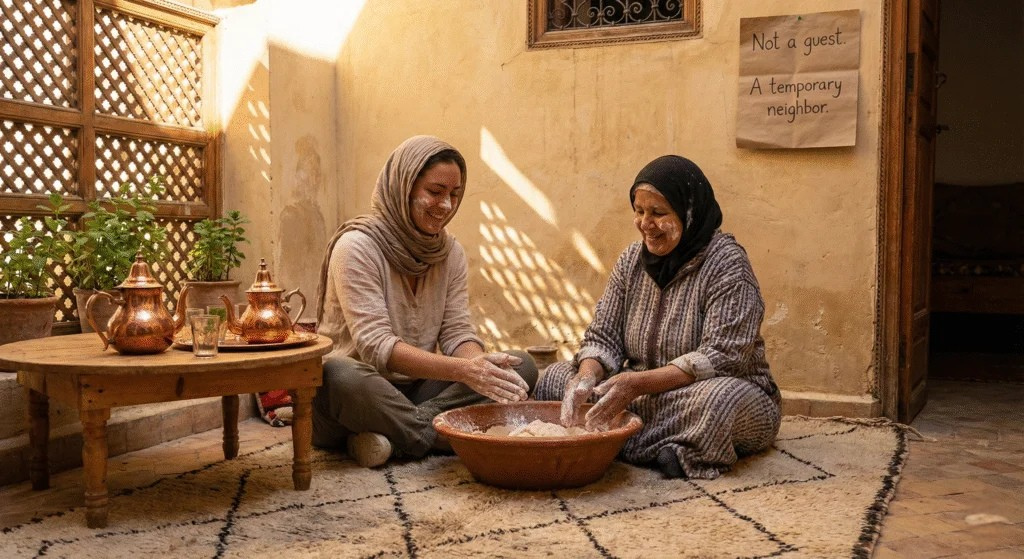
Slow travel in Europe is all about getting real with a place. If you want to go beyond the usual tourist stuff, start here:
- Pick up ten local phrases. Just saying “Grazie,” “Obrigado,” or “Hvala” does more than you think—people open up.
- Visit local markets: Not to shop—but to observe, taste samples, and talk to vendors.
- Go to a festival. In Italy, hunt truffles in Alba in November. In Portugal, skip the big city and find a village version , Slovenia: Pumpkin Festival (Oct, Črnomelj).
- Get your hands dirty with a craft workshop. Try pottery in Estremoz, learn lace-making in Idrija, or dive into leatherwork outside Florence. That’s how you really connect.
Pro Tip: Use WithLocals or TourHQ to book experiences directly with residents—not corporations.
7. The Ethics of Slow Travel Europe
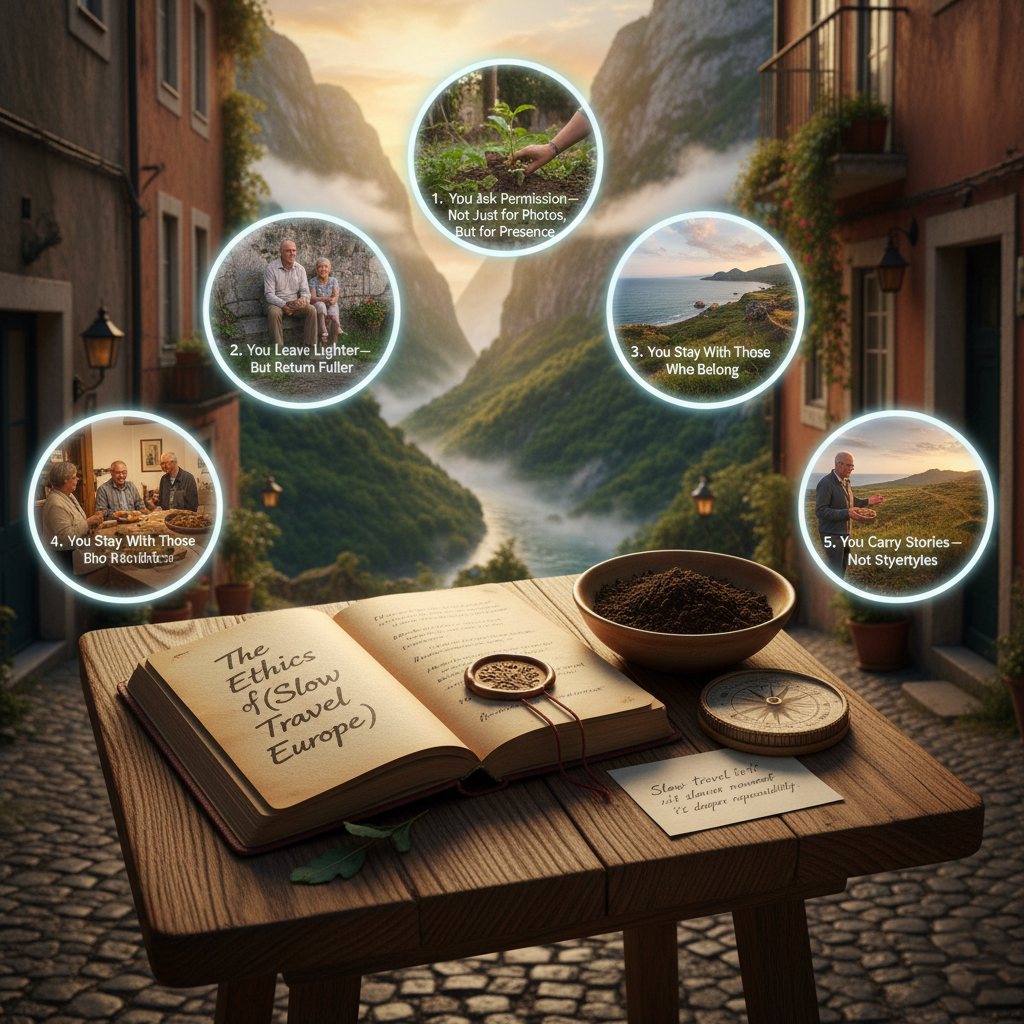
Real slow travel means taking responsibility for where you go and how you act:
- Don’t just follow the crowds to packed places like Cinque Terre—try quieter spots like Tellaro or Camogli instead.
- Spend your money at small, family-run shops, not those big souvenir chains.
- Pay attention to local rhythms, too. In lots of villages, shops shut down from 1 to 4 in the afternoon, so keep it down during those hours.
- don’t leave a mess behind. Bring a reusable water bottle—tap water’s good everywhere here.
Resource: The European Charter for Sustainable Tourism offers guidelines for travelers (EUROPARC).
8. Seasonal Considerations: When to Go for True Slowness
| Country | Best for Slow Travel | Why |
| Italy | April–June, Sept–Oct | Mild weather, harvest seasons, fewer crowds |
| Portugal | May–June, Sept | Wildflowers in spring; warm sea in Sept; avoids July–Aug heat |
| Slovenia | May–June, Sept | Green landscapes, open farm stays, ideal hiking temps |
Avoid July–August: Even rural areas get crowded with European holidaymakers.
9. Common Mistakes to Avoid
- Overplanning: Planning can lead to overscheduling, which must allow for spontaneous invitations (e.g., a neighbor offering wine).
- “Authenticity”: happens when you don’t feel like you’re performing: embracing ordinary.
- Ignoring local rhythms: shops close for lunch at specific times; dinner starts at 8 PM.
- Relying only on English: using local words builds trust fast
10. Why These Three Countries? A Comparative View
| Factor | Italy | Portugal | Slovenia |
| Pace | Regional diversity | Village melancholy | Alpine calm |
| Food Focus | Hyper-local cucina povera | Sea + land simplicity | Forest + farm fusion |
| Landscape | Coast, hills, cities | Atlantic, plains, vineyards | Mountains, rivers, caves |
| Language Barrier | Moderate (English in cities) | Low (younger gens speak English) | High (learn basic Slovene) |
| Best For | Foodies, art lovers | Soul seekers, walkers | Nature lovers, eco-travelers |
Together, they offer a complete spectrum of slow travel Europe experiences.
11. Digital Detox & Mindfulness on the Road
Slow travel Europe is also an internal practice:
- Limit phone use: Designate “photo-free” days.
- Keep a journal: Reflect on sensory details—smells, sounds, textures.
- Practice “sitting still”: Spend an hour in a piazza, church, or riverside—just observing.
- Unsubscribe from urgency: You don’t need to “see everything.”
As Slovenian philosopher Alenka Zupančič says:
“Slowness is not the opposite of speed—it’s the opposite of anxiety.”
Conclusion: Travel Less, Live More
Slow travel Europe isn’t about doing less—it’s about experiencing more. In Italy, you’ll taste olive oil pressed that morning. In Portugal, you’ll hear fado sung not for tourists, but for neighbors. In Slovenia, you’ll sleep to the sound of cowbells in an alpine meadow.
In 2025, as the world speeds up, choosing slowness is a radical act of presence. And in that presence, you don’t just visit a place—you let it visit you.
So leave the checklist behind. Pack curiosity, patience, and an open heart. The real Europe isn’t in the guidebooks—it’s in the spaces between the sights, waiting for you to stay awhile.
12. Resources for Planning Your Trip
- Italy – Agriturismo Network:
https://www.agriturismo.it - Portugal – Historic Villages:
https://www.aldeiashistoricasdeportugal.com - Slovenia – Official Green Tourism Portal:
https://www.slovenia.info/en
Follow us on:
Articles that might interest you :
- La Paz, Bolivia 2026: Your Ultimate Travel Guide to the World’s Highest Capital—Where Andean Soul Meets Urban Innovation.
- Muslim-Friendly Travel Egypt: Prayer Places, Halal Food & Best Hotels Near Islamic Landmarks (2026 Guide).


