


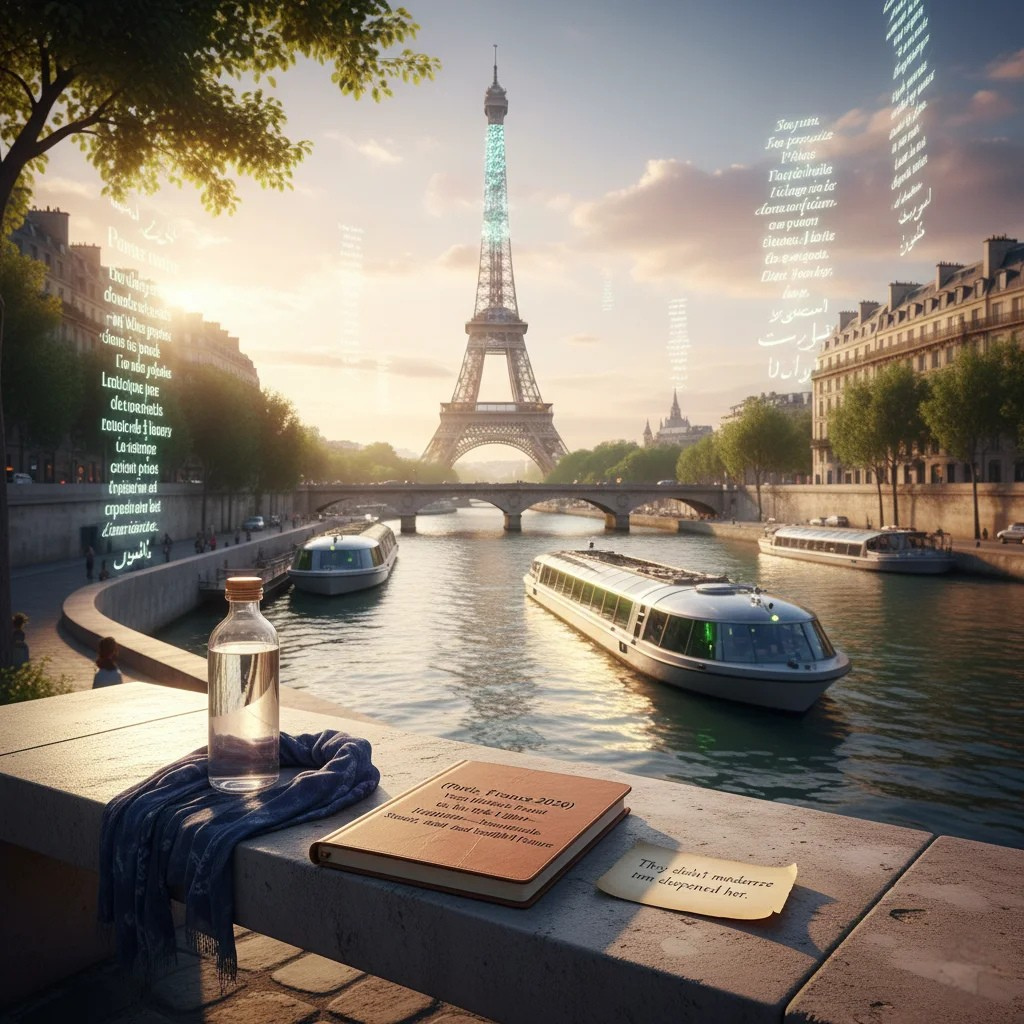
Introduction: Paris Beyond the Postcard—A City in Bloom.
Our article focuses on one of Europe’s most enchanting destinations, a must-see when visiting the continent: Paris. This city is a blend of everything inspiring—industry, tourism, and the future. Adding to this is its commitment to sustainability. Recently, the city has been developing its industrial footprint to serve this goal by replacing diesel buses with electric ones, utilizing clean and renewable energy. In terms of agriculture and green expansion, residents are now cultivating gardens on the rooftops of historic buildings. And in terms of technology, museums are using artificial intelligence to integrate innovative technology with the traditional narratives of their unique exhibits. All of this aims to allow the city to leverage its heritage to build a brighter and more advanced future.
We’ve prepared a comprehensive and detailed guide to this European gem, your perfect companion for exploring this ever-evolving city, the City of Lights. We’ll take you where Paris truly rewards you, not just with its bustling, traditional tourist attractions, but also with its hidden squares, charming cafes in unspoiled neighborhoods, high-end and sustainable fashion boutiques, and immersive cultural experiences that go far beyond simply taking a selfie with the Eiffel Tower.
This guide Paris, France 2026 is based on information from the City of Paris, the French Tourism Development Agency (Atout France), UNESCO, and local artisans. It combines practical tips with spiritual exploration, whether you’re visiting Paris for the first time, returning after a long absence, or simply enjoying a more relaxed journey. You’ll find everything you’re looking for: valuable advice, unique places to visit alongside the usual tourist attractions, transportation options to enhance your trip, and a vivid picture of Paris that blends tradition and modernity.
1. Why Paris, France, 2026 Is More Authentic Than Ever

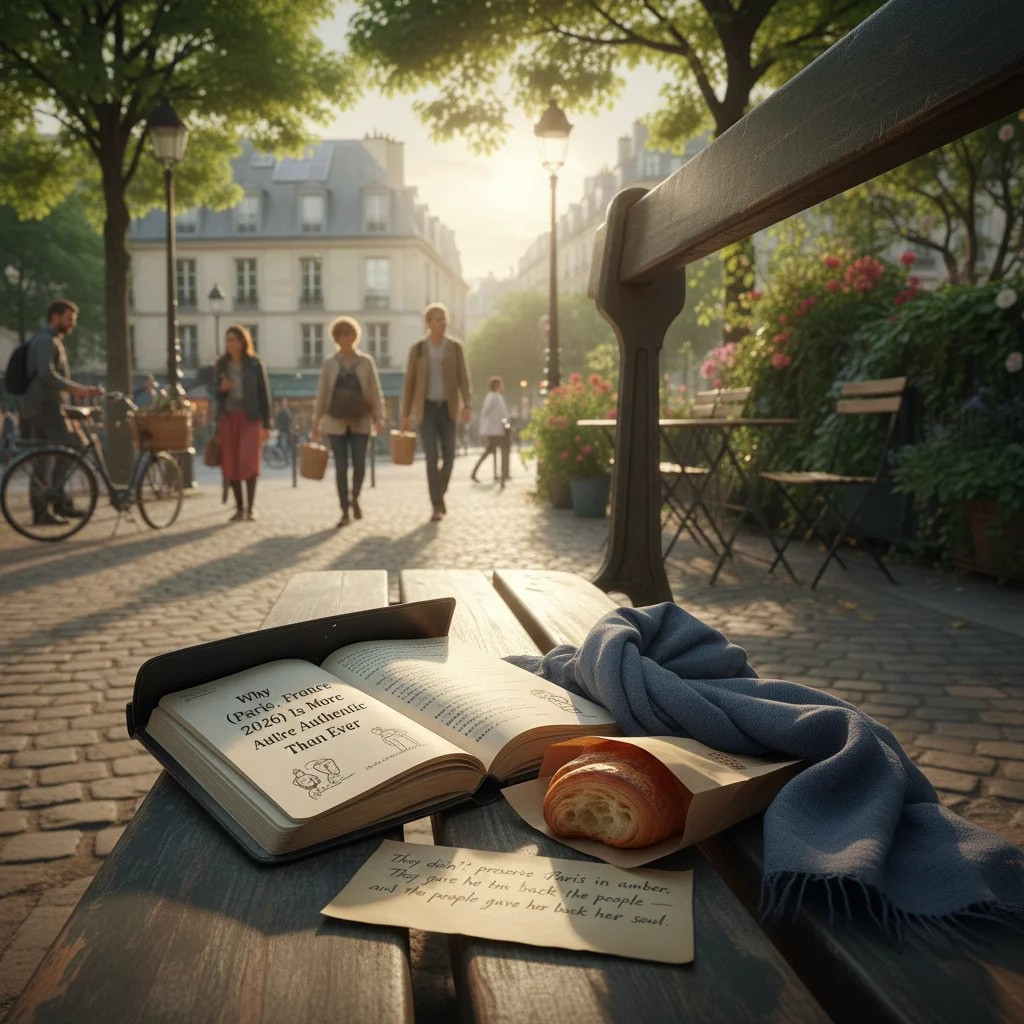
We will discuss the reasons that have made Paris a haven of authenticity and sophistication:
The government has recently been working to reduce overtourism and congestion. Pedestrian zones have been created on the Right Bank of the Seine, in the Place de la Concorde, and in specific areas of the Marais district. This is part of the government’s sustainability vision, which includes several initiatives, such as the “15-Minute City” initiative launched by Mayor Anne Hidalgo. This initiative aims to facilitate easy movement for tourists and residents throughout the city without obstacles. Other initiatives include:
- Creating main pedestrian zones: The city prohibits all vehicles from entering central areas during weekends and holidays.
- The “Paris Breathes” initiative: This step has been implemented by designating car-free zones on the first Sunday of each month.
- Limiting the number of tourists: The Louvre Museum and the Eiffel Tower have implemented digital parking systems to regulate the maximum number of visitors allowed.
- The “Neighborhoods of the Future” initiative: The government aims to revitalize and develop areas such as the Belle Époque district.
We are not closing Paris to tourists—we are opening it to better tourism.”
— Jean-François Martins, Deputy Mayor for Tourism, Paris, 2025
This intentional shift makes Paris, France 2026 a model of urban regeneration with soul.
2. The Four Faces of Paris: Beyond the Center

We will explore the four facets of this enchanting city:
- First: The iconic center (1st to 4th arrondissements): This area is known as the historical heart, and its most prominent landmarks include the Louvre Museum, Notre Dame Cathedral (reopened in late 2024), and the Centre Pompidou. The atmosphere here exudes awe, elegance, and timelessness.
- Note: The restoration of Notre Dame’s spire, which is part of the cathedral complex, has been completed, and the interior has reopened with interactive digital exhibitions (Notre-Dame de Paris).
- Second: The bohemian Left Bank (5th to 7th arrondissements): This area is known as the intellectual and artistic heart, frequented by lovers of French literature who visit the Latin Quarter, Saint-Germain-des-Prés, and Montparnasse. Its most prominent landmarks include Shakespeare & Company, the Luxembourg Gardens, and the Musée d’Orsay. The atmosphere here is imbued with the scent of literature, poetry, and the fragrance of artistic history.
- Third: The trendy eastern part of Paris (10th and 11th arrondissements): This area is known as the new creative hub, characterized by its tranquility and proximity to the Canal Saint-Martin, Obercamp, and Place de la République. Its highlights include street art, natural wine bars, and vintage clothing stores. The atmosphere is modern and youthful, reflecting the local Parisian spirit.
- Fourth: The suburbs of Paris (18th and 20th arrondissements): Often called the soul of Paris, this area experiences diversity and modernity. Visitors can explore Montmartre, a tourist area known as the northern slopes, and Belleville, whose notable attractions include the Buttes Chaumont Garden, bustling markets, and Afro-Caribbean cultural sites. The atmosphere here is diverse and vibrant.
Insight: The magic of Paris, France 2026 lies in moving between these worlds—imperial grandeur by day, local intimacy by night.
3. Must-Visit Experiences in Paris, France 2026

Here are some unmissable experiences in Paris:
- First: Notre Dame Cathedral: The government recently undertook a major renovation and restoration project. Among the highlights for visitors are:
- A digital application using augmented reality technology that displays the locations of fires.
- The restoration and renovation of the cathedral utilized oak wood sourced from French forests and featured lead-free roofs, all in an environmentally friendly manner.
- The cathedral is offering free admission for a limited time (notredamedeparis.fr).
- Second: The Louvre Museum: Where art meets technology and artificial intelligence, it is one of the most famous and fascinating attractions in Paris. This is evident in the Louvre’s multilingual AI-powered smart guide, which helps visitors identify any artwork. The museum houses over 35,000 masterpieces, including the Mona Lisa, the Venus de Milo, and ancient Egyptian artifacts. As part of its sustainability efforts, lighting has been reduced to protect the paintings, and digital tickets are environmentally friendly.
- Third: The Eiffel Tower: Where greenery meets artificial intelligence, this site is one of the world’s most famous and magnificent landmarks. Its historical significance, ingenuity, and architectural brilliance are at the heart of the project. The tower also incorporates the latest development and sustainability practices, such as a solar-powered first floor and hydrogen-powered elevators. It offers a fantastic pass for visitors, the Paris Museums Pass, which allows you to skip the queues and access over 50 museums. You can also visit the Galeries Lafayette rooftop for free, offering panoramic views of the city.
- Fourth: The Seine River: This area is incredibly beautiful and tranquil. It’s part of the “Paris Breathes” initiative, where the riverbanks are closed to cars on the first Sunday of every month. The area also features a yacht club offering electric boat rentals.
These experiences blend heritage, innovation, and sustainability—the core of Paris, France 2026.
4. Beyond the Icons: Hidden Gems Only Locals Know

We will explore a selection of hidden gems in Paris:
- First: The Petite Ceinture (Green Belt): This area features abandoned 19th-century railway lines transformed into green spaces. Located within the 12th, 15th, and 16th arrondissements, it offers a wonderful stroll. What distinguishes this area is its tranquility, beautiful wildflowers, and the presence of street art.
- Second: The Marché des Enfants Rouges (Red Children’s Market): This is the oldest covered market, established in 1628. It houses a collection of stalls offering Moroccan, Lebanese, and Japanese cuisine. The best time to visit is around midday for lunch. There are also stalls where local farmers and immigrant traders display their wares.
- Third: The Hunting and Nature Museum: Located in the Marais district, this museum has a tranquil and surreal atmosphere. It houses a unique collection of Baroque cabinets and plush taxidermied animals. Contemporary art exhibitions are also held there. The first Sunday of each month is recommended for a visit, as admission is free.
- Fourth: The Promenade Plantier: This was Paris’s first elevated park, resembling the High Line in New York City. Its peaceful and beautiful ambiance is surrounded by trees, and it features numerous pedestrian paths and stunning city views. Stretching from the Bastille to the Bois de Vincennes, it’s ideal for a morning stroll or an evening walk.
These treasures reveal the soul beneath the surface of Paris, France 2026.
5. A Perfect 5-Day Itinerary: Your Paris, France 2026 Blueprint

Here’s a perfect itinerary for a short trip to Paris:
- Day 1: We begin at 8:30 AM with a visit to the Louvre Museum via the Pyramid entrance. At 1:00 PM, we’ll have lunch at Café Marly overlooking the Louvre. Then, at 3:00 PM, we’ll visit the Tuileries Garden and Place de la Concorde. Finally, at 7:00 PM, we’ll take a cruise on the Seine River, renting an electric boat called Bateau Mouches.
- Day 2: We begin this day at 9:00 AM with a visit to Shakespeare & Co. bookstore. At 11:00 AM, we take a stroll through the Luxembourg Gardens and relax for a while. At 1:00 PM, we have lunch at Le Procope, one of the oldest cafés in Paris. At 3:00 PM, we visit the Musée d’Orsay. We conclude the day at 7:00 PM with dinner at Saint-Germain-des-Prés.
- Day 3: We start this day at 10:00 AM with a walk along the Canal Saint-Martin. At 1:00 PM, we have lunch at Chez Brun restaurant. At 3:00 PM, we go shopping in Obercamp. We conclude the day at 7:00 PM with dinner and a natural wine at Le Vert Foll bar.
- Day 4: We begin at 9:00 AM with a visit to Notre Dame Cathedral. At 11:00 AM, we head to Île Saint-Louis and enjoy ice cream at Berthelon. At 2:00 PM, we visit the Pantheon, home to the tombs of Voltaire and Rousseau. Afterwards, we have lunch. The day concludes at 7:00 PM with dinner on the rooftop of the Terrace Hotel in Montmartre.
- Day 5: We start at 9:00 AM with a visit to the Allière Market. At 11:00 AM, we take a stroll along the Plantasse promenade. At 2:00 PM, we head to the Eiffel Tower for lunch at one of its restaurants, followed by an extended tour to enjoy its many wonderful experiences. At 6:00 PM, we take a walk along the Petite Centaur miniature railway. Afterwards, we head to a café in the Latin Quarter for dinner and a farewell drink.
This itinerary balances iconic, intimate, and local—the essence of Paris, France 2026.
6. Where to Stay: Best Neighborhoods & Hotels (2026)

| Neighborhood | Best For | Top Picks |
| Le Marais (4th) | History, culture, LGBTQ+ friendly | Hôtel du Petit Moulin, Maison Souquet |
| Saint-Germain (6th) | Literary charm, elegance | L’Hôtel, Relais Christine |
| Canal Saint-Martin (10th) | Hip, local, authentic | Hôtel du Nord, Le Citizen Hotel |
| Montmartre (18th) | Artistic, panoramic views | Terrass” Hotel, Maison d’Été |
Tip: Choose eco-certified hotels (look for Green Key label)—many use solar energy and local produce.
Your base shapes your Paris, France 2026 experience—choose with intention.
7. Culinary Secrets: Eat Like a Parisian

- Must-Try:
- The croissant: from Du Pain et des Idées in the 10th.
- Steak Frites: Le Relais de l’Entrecôte (there is no menu, only one dish).
- Natural Wine: Oberkampf and Belleville
- Markets: Marché d’Aligre, Marché Président Wilson (Sunday organic market)
Food is culture, not a commodity, in Paris, France, 2026.
8. Sustainable Travel in the City of Light
- Transport:
- Vélib’ bikes: Also electric and standard bikes
- Metro Line 14: Fully automated and power-saving.
- Walking: Paris is 87 percent pedestrianized. (Walk Score, 2025)
- Plastic-Free: Take with you a reusable water bottle – Public fountains (Wallace fountains) provide free drinking water.
- Support local: purchase at bakeries, cheese shops, and fresh produce sellers.
Sustainability ensures Paris, France, 2026 remains livable for all.
9. When to Visit Paris, France 2026
| Season | Pros | Cons |
| April–June | Mild temps (12–22°C), blooming gardens, Paris Open House Days | Slightly higher prices |
| September–October | Warm days, cultural events, fewer crowds | Occasional rain |
| July–August | Long days, vibrant atmosphere | Hot (25–35°C), crowded, many locals on vacation |
| Avoid: November–March | Festive lights, lower prices | Cold (3–8°C), shorter days |
Best Window: Late April or early October—ideal weather, cultural energy, manageable crowds.
Timing enhances your Paris, France 2026 experience.
10. Practical Tips for Travelers (2026)
- Language: Learn to say Bonjour, Merci, and S’il vous plait to show respect.
- Tipping : is not necessary as the service charge is already included in the bill; you should just leave a small change when the service is excellent.
- Safety: Paris is a low-violence city, but beware of pickpockets around the Metro stations and among tourists.
- Connectivity: The parks and museums have free Wi-Fi. You can purchase an Orange Holiday SIM at the airport.
- Museum Pass: With the Paris Museum Pass, you will not have to wait at over 50 sites for 2, 4, or 6 days.(parismuseumpass.fr)
Preparation ensures a smooth Paris, France 2026 journey.
11. A set of important tips to follow.
- When visiting the Louvre → take no more than three pieces of artwork at a time.
- Climb the Eiffel Tower → at dusk or purchase a night ticket to avoid the noon rush.
- Not seeing outer arrondissements → Do not get to see actual Paris
- Champs-Élysées restaurants → Tourist traps with high prices
Following these tips will make your trip to Paris a pleasant one.
12. Future Outlook: What’s New in 2026–2027
- Olympic Legacy Parks are the new green spaces that have been established in Seine-Saint-Denis.
- The AI Travel Assistant: provides real-time, customized travel plans using the Paris Je t’Aime app.
- Low Emission Zones: Central Paris is to have all electric cars by 2027.
Paris’ future is green, smart, and human-centered—a promise of Paris, France 2026.
13. Final Reflection: The City That Holds You
Paris in the year 2026 is not a city that you simply view. It is a city that encloses you. The air also rustles due to the chestnut leaves that are falling in the Luxembourg Gardens; wine glasses clank in a terrace on Canal Saint-Martin. Notre-Dame is even better preserved and quieter since it has been restored. The past is revealed in every street of the city. The bakeries provide the products in their natural form. Every time the sun sets on the Seine, it is a miracle.
Go forth. Get lost. You can stay longer than you should. And allow Paris such as a box to check, or a box filled with sunshine and a big hug, not. It demonstrates to you that beauty is not solely found in big monuments but in such minute moments.
Trusted Resources (2026)
- Paris Tourist Office – Official Guide:
2. Atout France – Sustainable Tourism:
3. Notre-Dame de Paris Restoration:
https://www.notredamedeparis.fr
4. Paris Public Transport – RATP:
5. Paris Museum Pass:
https://www.parismuseumpass.fr