


Introduction: The Land of Contrasts, Perfectly Balanced.
Our article explores one of Asia’s most advanced and technologically sophisticated tourist destinations: Japan. This country is distinguished by the unique harmony between its various elements. It’s a land where skyscrapers shimmer with neon lights alongside ancient temples over 1200 years old. High-speed trains traverse breathtaking landscapes, including rice paddies, and the exquisite tea ceremony is served in automated teahouses. All of these places put you between two enchanting experiences: ancient Japan and modern Japan. So, let’s take our time and explore this captivating charm, savor its delicious cuisine, and enjoy the company of its people, renowned for their dignity, respect, and warm hospitality.
We will provide you with a comprehensive and detailed guide to Japan, a country currently undergoing a rapid transformation. This is evident in its highly efficient and advanced digital infrastructure, alongside its initiatives towards sustainability and environmental friendliness. All of this has a significant impact on the tourism sector, which the country actively promotes. Japan encourages visitors and tourist groups to discover the charm of areas outside the “golden road,” offering a relaxing and enjoyable experience that blends historical richness with modern amenities.
In this guide Japan Trip 2026 , we will discuss three of Japan’s most important cities with a deep understanding of Japanese culture. Based on the insights of the Japan National Tourism Organization (JNTO) and local experts, we will provide a detailed itinerary, information on both well-known and lesser-known destinations, and insights into local customs and cuisine, allowing you to experience Japan as a native, not just a tourist or visitor.
1. Why Japan Trip 2026 Is Uniquely Rewarding.

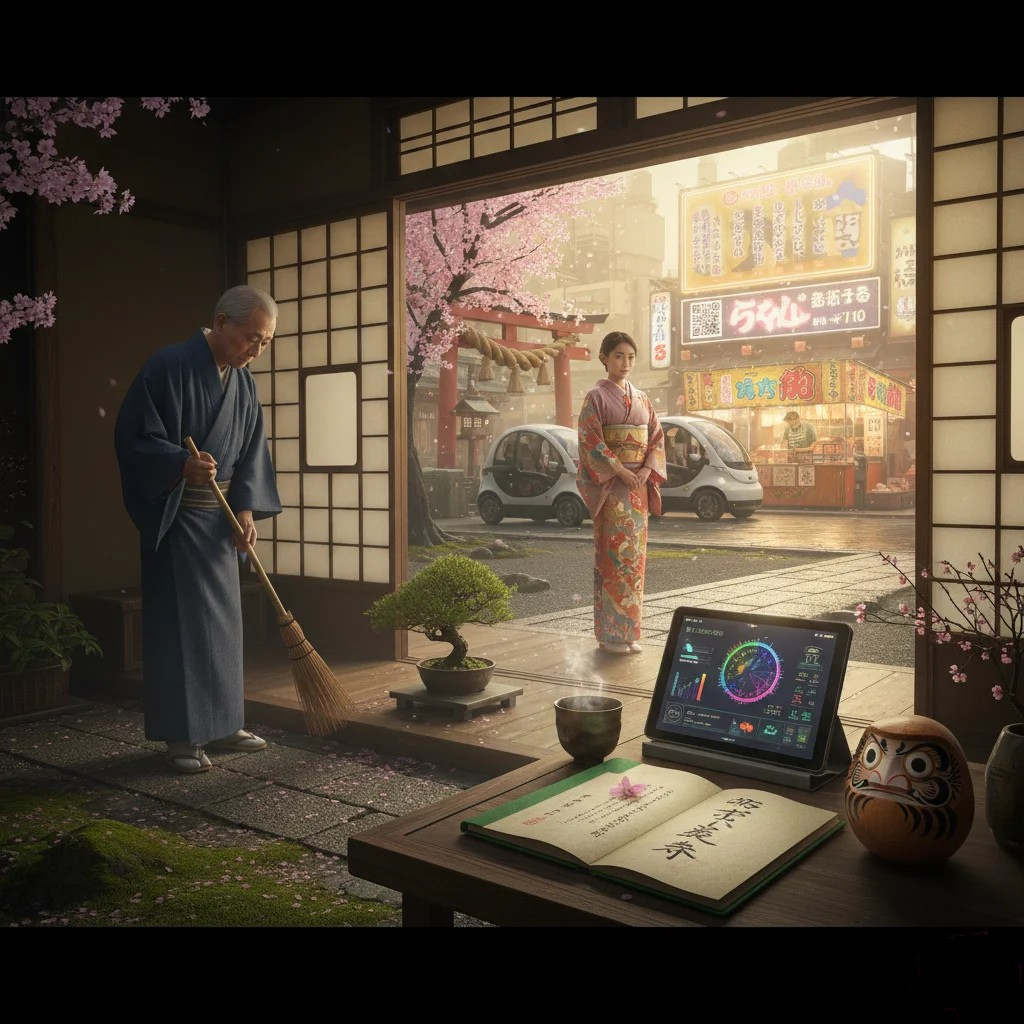
We will discuss a number of reasons that make a trip to Japan a unique and enchanting experience:
- The charm of this country rests on three pillars:
- The first pillar: This is evident in the advanced technological services offered to every visitor. Upon arrival, you can purchase an electronic travel SIM card (eSIM) at the airport, which includes unlimited data, as well as standardized IC cards (Suica/Pasmo) valid nationwide for use on trains and buses. Digital displays in English are also available at all major stations.
- The second pillar: This is evident in the efforts to preserve cultural heritage. The government collaborates with UNESCO to safeguard cultural heritage such as the tea ceremony, Kabuki theater, and washi paper, all of which are included on the list of intangible cultural heritage. In Kyoto, the government has restored traditional machiya houses and transformed them into ryokan (traditional Japanese houses) and cafes.
- The third axis: This is evident in the sustainability program represented by the step of reducing plastic, where 70% of small shops use biodegradable packaging, in accordance with the directives of the Japanese Ministry of the Environment(Ministry of Environment, Japan, 2025). , as well as environmentally licensed ryokan hotels that offer carbon-compensated accommodations.
Japan doesn’t modernize by erasing its past—it elevates it.”
— Dr. Kenji Tanaka, Cultural Anthropologist, Kyoto University, 2025
This balance makes Japan trip 2026 a model of thoughtful travel.
2. The Triad of Japan: Tokyo, Kyoto, Osaka—Each a World Unto Itself.

We will explore three enchanting Japanese cities: Tokyo, Kyoto, and Osaka.
- First: Tokyo, nicknamed the “Spirit of the Future,” is Japan’s most prominent city as it is the capital. It offers a wealth of captivating experiences, blending modernity with the past. Some of the most notable experiences include:
- Visiting Shibuya Sky, a spectacular observation deck on the 47th floor offering panoramic views of the city and sky.
- Visiting TeamLab Planets, an interactive digital art museum. Reservations should be made months in advance.
- Visiting Yansen, which encompasses old Tokyo, Ai Yanaka, Nizu, and Sendaji, and features temples and shops. It is located in the Golden Trail area.
- Second: Kyoto: The second most famous Japanese city after Tokyo, Kyoto is a wonderful tourist destination. Its atmosphere is peaceful and serene, with stunning seasonal flowers. Some of the most notable experiences include:
- Visiting Fushimi Inari, a famous temple in Kyoto. It’s best to visit at dawn, away from the crowds, and spend time there in silence and contemplation.
- Visiting and seeing the cherry blossoms in the Philosopher’s Lane area, ideally in late March or early April.
- Visiting the Maachia teahouses in Gion, where you can experience tea shops, visit artisans’ workshops, and see their work. You can also purchase tea to support them.
- Third: Osaka: This city is known as the culinary capital of Japan. Its atmosphere is vibrant, cheerful, and relaxed. Some of the most notable experiences include:
- Visiting Dotonbori at night, where you’ll find neon signs, enjoy traditional Japanese cuisine, and take a river cruise.
- Visit Kuromon Ichiba Market, considered the heart of Osaka cuisine, with its restaurants serving fresh seafood, takoyaki, and Wagyu beef.
- Visit Osaka Castle Park, where you’ll see cherry blossoms and historical exhibits.
Insight: The magic of Japan trip 2026 lies in moving between these worlds—Tokyo’s energy, Kyoto’s calm, Osaka’s joy.
3. Must-Do Experiences in Japan Trip 2026.

We’ll explore a selection of unmissable experiences when visiting Japan:
- First: In Tokyo, a wonderful selection includes:
- Visiting Asakusa Senso-ji Temple: Start at the Kaminarimon Gate, then head to the Okata shops on Nakamise Street.
- Visiting Tsukiji Outdoor Market: Enjoy a breakfast of fresh sushi in the inner area of Toyosu, where the indoor market is located.
- Visiting Shinjuku Golden Gai: These are charming little bars, some exclusively for locals.
- Visiting Team Lab Borderless: It has reopened in Azabudai Hills, but reservations are required 3 months in advance via this link: teamlab.art .
- Second: In Kyoto, the heart of Japan, a wonderful selection includes:
- Visiting Arashiyama Bamboo Forest: It’s best to arrive early to avoid the crowds. This popular free tourist attraction is open 24 hours a day and is famous for its narrow paths winding through towering, dense bamboo groves.
- Visit Kinkaku-ji: Also known as the Golden Pavilion, this landmark boasts breathtaking views year-round.
- Visit Gion: Take a wonderful evening tour to see the geisha (Kyoto geisha) between 5 and 6 pm.
- Attend and experience a tea ceremony: You can do this at the Camellia Flower Tea House, which offers a wonderful selection of authentic ingredients.
- Third: In Osaka, there’s a fantastic selection of attractions:
- Visit Dotonbori: Here, you can try Takoyaki, Dorako, and Wanaka, a famous Japanese dish.
- Visit Osaka: Take a food tour and try Okonomiyaki, Koshikats, and Wasaki.
- Visit Universal Studios Japan: Enjoy the world of Super Nintendo, which can be booked through express ticket purchases.
- Visiting the Osaka Kaiyukan Aquarium: It is one of the largest gatherings of penguins, whale sharks, and other animals in the world.
Ethical Note: In Kyoto, avoid “geisha photo ops”—they’re often impersonators charging tourists.
These experiences form the emotional core of Japan trip 2026.
4. A Perfect 10-Day Itinerary: Your Japan Trip 2026 Blueprint.

Here’s a perfect 10-day trip itinerary for Japan:
- Days 1-4 will be spent in Tokyo:
- Day 1: Visit Asakusa and Ueno Park.
- Day 2: Visit Shibuya and Harajuku Team Lab.
- Day 3: A day trip to Nikko or Kamakura.
- Day 4: Shinjuku and Golden Gai in the evening.
- Days 5-7 will be spent in Kyoto:
- Day 5: Travel to Kyoto (2.5 hours by Shinkansen bullet train). After arrival, visit Fushimi Inari and Gion.
- Day 6: Visit Arashiyama and Kinkaku-ji.
- Day 7: A day trip to Nara to visit Todai-ji Temple and the Deer Park.
- Days 8-10 will be spent in Osaka:
- Day 8: Travel to Osaka (this will take 30 minutes). Upon arrival, we will visit Dotonbori and Kuromon Market.
- Day 9: Visit Osaka Castle, followed by a food tour.
- Day 10: Visit Universal Studios or Osaka Aquarium.
This rhythm balances iconic, intimate, and indulgent—the essence of Japan trip 2026.
5. Where to Stay: Best Areas & Hotels (2026).

| City | Neighborhood | Top Picks |
| Tokyo | Shinjuku | Park Hyatt Tokyo, Hotel Gracery |
| Tokyo | Asakusa | Ryokan Sakura, The Gate Hotel |
| Kyoto | Gion | Yachiyo Ryokan, The Celestine Gion |
| Kyoto | Downtown | Hotel Kanra Kyoto (modern machiya) |
| Osaka | Namba | Conrad Osaka, Cross Hotel |
Tip: In Kyoto, stay in a ryokan for tatami rooms and kaiseki dinner—book 6 months ahead.
Your base shapes your Japan trip 2026 experience—choose wisely.
6. Culinary Excellence: Eat Like a Local.

Tokyo:
- To avoid a long line and a wonderful sushi meal, you can go to Sushi Dai (Toyosu Market), go there by 5 a.m.
- Ramen Street (in the Tokyo Station) has 9 of the best ramen restaurants in one place.
Kyoto:
- Nishiki Market has pickled vegetables, matcha sweets, and fresh tofu.
- Try the multi-course seasonal meal kaiseki ryori at Kikunoi.
Osaka:
- Takoyaki is an octopus ball with bonito flakes.
- Okonomiyaki is a savory pancake with cabbage and pork.
Etiquette:
- Say “Itadakimasu” before eating
- Don’t stick chopsticks upright in rice (funeral ritual)
- Slurp noodles—it’s polite!
Food is a sacred ritual in Japan trip 2026.
7. Transportation Mastery: Navigating with Ease.

Japan Rail Pass:
- Worth it if taking 3+ Shinkansen rides (e.g., Tokyo–Kyoto–Osaka).
- Book online before the trip since the (JAPAN RAIL PASS).
IC Cards:
- Suica/Pasmo Reloadable for transit, buses, and convenience stores.
- They can be bought at the airport or at dedicated sales outlets.
Airport Transfers:
- The direct train to Tokyo Station is the Narita Express (N’EX).
- Haruka Express: Kansai Airport to Kyoto/Osaka.
2026 Update: Digital JR Pass now available via app—no physical exchange needed.
Efficient transport is the backbone of Japan trip 2026.
8. Practical Tips for Travelers (2026).
Cash vs. Card:
- Carry cash because most small eateries and temples are cash-only.
- Transport and small payments can also be paid using IC Cards.
Language:
- Try to learn how to say Arigatou gozaimasu (thank you), and Sumimasen (sorry and others).
- The Google Translate application (with the offline Japanese Package) is a must-have.
Onsen (Hot Springs):
- Wash up well before you enter.
- You may not be allowed to enter some places because of the tattoos; read the policies or use a private onsen.
Safety:
Crime rates are not high, and the streets are clean.
You normally get back your lost things at the police boxes, which are referred to as koban.
Respect and preparation ensure a smooth Japan trip 2026.
9. When to Visit Japan Trip 2026.
| Season | Pros | Cons |
| Late March–April | Cherry blossoms, mild temps | Crowded, expensive |
| October–November | Fall colors, cool weather | Slightly higher prices |
| May–June | Green landscapes, festivals (Golden Week in May = crowded) | Rainy season starts in June |
| December–February | Snow festivals (Sapporo), fewer crowds | Cold, shorter days |
Best Window: Late October or early November—crisp air, fiery maple leaves, manageable crowds.
Timing enhances your Japan trip 2026 experience.
10. Cultural Etiquette: Travel with Reverence.
Temples/Shrines:
- Bend lightly before passing through torii gates.
- Wash your hands at the chozuya before praying.
Public Transport:
- Priority seats for the elderly/pregnant-vacate if required.
Shoes:
- Remove before visiting homes, ryokans, and temples.
- Slippers provided- but not for tatami rooms.
In Japan, harmony begins with small gestures.”
This mindset is key to the Japan trip 2026.
11. Sustainable Travel in Japan 2026.
- Plastic-Free: Take a multi-use bag/bottle, convenient stores offer filtered water
- Transport: Trains instead of flights-Shinkansen is energy efficient
- Support Local:
- Purchase washi paper from the artisans of Kyoto
- Eat at family-owned izakayas, not chains
- bins are everywhere
Sustainability ensures Japan trip 2026 honors the land and its people.
12. A set of important tips to follow.
- Point-and-Order Photos: Photos can be quite helpful if you are not aware of what to order.
- Queue Discipline: The Japanese are against it; they never cut the line.
- Over-scheduling: The plan should allow for some time of silence, such as in temple gardens.
- Regional Passes: In Osaka/Kyoto, the Kansai Thru Pass saves you money.
- English Assumption: Learn key phrases—many elderly people don’t speak English
Avoiding these pitfalls deepens your Japan trip 2026 connection.
13. Future Outlook: What’s New in 2026–2027.
- Digital Concierge: AI-powered “Japan Travel” app with real-time transit, translation, and booking
- Eco-Ryokan Certification: Incentives for solar power, water recycling
- Shinkansen Expansion: New line to Hokkaido fully operational—faster access to Sapporo
Japan’s future is rooted in respect—a promise of Japan trip 2026.
14. Final Reflection: The Quiet Magic of Japan.
Japan trip 2026 is not about ticking boxes. It’s about the pause between moments: the steam rising from a bowl of ramen, the rustle of a kimono in a quiet alley, the silence of a Zen garden at dawn. It’s a place that teaches you to see slowly, taste deeply, and move with grace.
So go. Let Tokyo electrify you, Kyoto center you, and Osaka feed your soul. And return home not just with souvenirs, but with a quieter mind and a fuller heart.
Trusted Resources (2026).
- Japan National Tourism Organization (JNTO):
https://www.japan.travel/en - Japan Rail Pass Official Site:
JAPAN RAIL PASS - TeamLab Tickets:
https://www.teamlab.art - Ministry of Environment – Plastic Policy:
https://www.env.go.jp - Arigato Japan Food Tours:
https://www.arigatojapan.co.jp