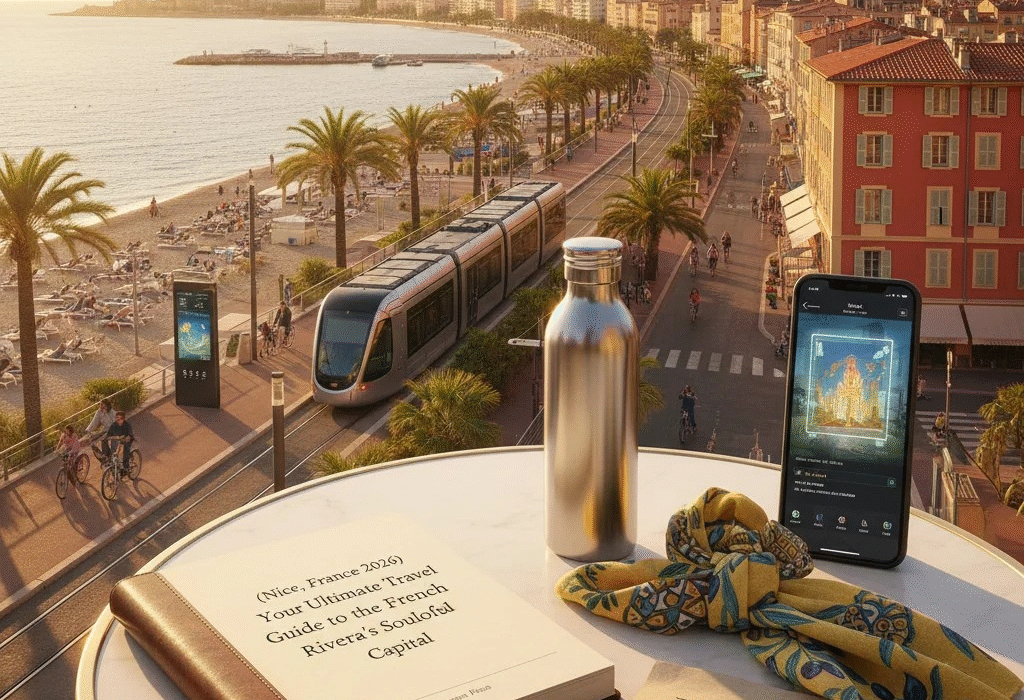
Nice, France 2026: Your Ultimate Travel Guide to the French Riviera’s Soulful Capital—Where Mediterranean Light Meets Sustainable Innovation.
Posted in :

Introduction: Beyond the Postcard—Nice Reimagined.
Nice, France, will not be merely a sunny resort town along the Côte d’Azur in 2026, but rather is based on foresight in regard to town sustainability and cultural depth, and eco-friendly sophistication. Situated between the blue waters of the Mediterranean Sea and the green mountain slopes of the Alps, Nice has passed its Belle Epoque glory to a city that is forward-looking and still gives reverence to its historical base, and is a city that is not afraid to shape its destiny.
The pastel colored Old Town, which inspired Matisse and Empress Eugenie to walk on the promenade, is now the center of a green revolution in France. In response to being named a European Green Capital in 2023, Nice initiated the Sustainable City Initiative of Nice 2030. The city turned the car-choked avenues into pedestrian walkways, converted the old palaces into cultural centers, and made the beach tourism environmentally friendly.
Nice, France 2026, will take you to discover the real Riviera. The guide takes you to the local places and allows you to stay clear of the cruise-ship crowds and the typical tours of the city. The guide has the community-based art, vineyards, and other hidden courtyards and local dining facilities. To make the guide ethical and culturally diverse, UNESCO, Nice Cote d’Azur Metropole, and other local cultural groups have contributed to the guide as well.
The guide is written in such a way that it will allow you to enjoy and remember your visit to Nice, France 2026 irrespective of the speed at which you travel, your love of art or food, or beaches.
1. Why Nice, France 2026 Is Redefining the Riviera.
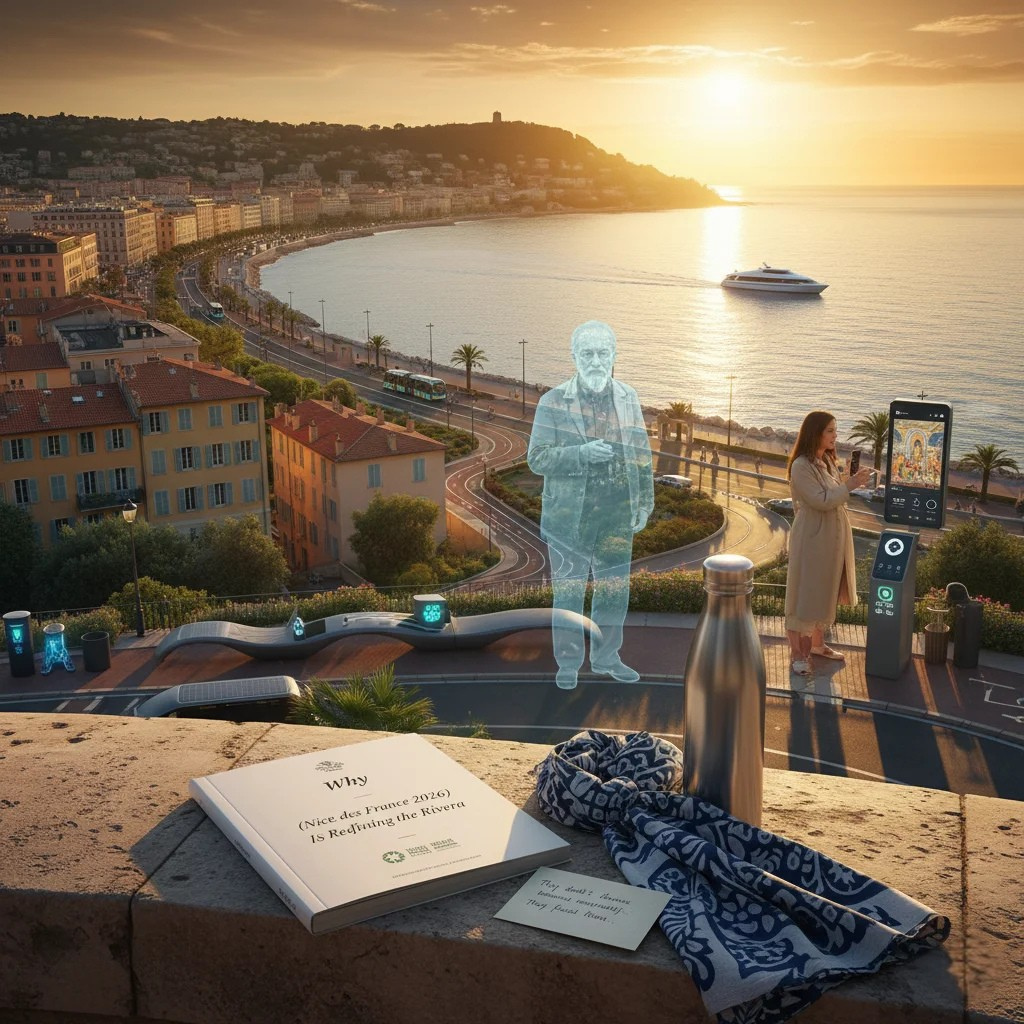
We will discuss the reasons that have led Nice to redefine the capital of the French Riviera as a more beautiful and developed destination:
Recently, the French government began to shift Nice’s focus from a city overcrowded with tourists, which often detracted from its appeal, to one of urban expansion and the implementation of a green city plan. This plan includes:
- First: Converting a significant portion, up to 80%, of the old city’s roads and streets into pedestrian-friendly pathways, creating a truly wonderful experience for strolling through them.
- Second: Launching a range of environmentally friendly public transportation options, such as electric buses and the Velo Bleu bicycle service, which are widely available throughout the city.
- Third: Launching a plastic-free beaches campaign, banning single-use plastics on all public beaches and providing free, clean water refill stations.
- Fourth: The green city initiative provides financial support for the development and restoration of museums and theaters, enabling tourists to enjoy enjoyable experiences at reduced prices.
- Fifth: The French government included two important landmarks of Nice, namely the Promenade des Anglais and the architecture of the winter resort, on the UNESCO World Heritage List in 2021 (UNESCO World Heritage Centre).
Nice is not just preserving beauty—we are redefining it for a livable future.”
— Christian Estrosi, Mayor of Nice, 2025
This intentional evolution makes Nice, France 2026 a global benchmark for sustainable Mediterranean tourism.
2. The Three Faces of Nice: Old Town, Promenade, and Hills.
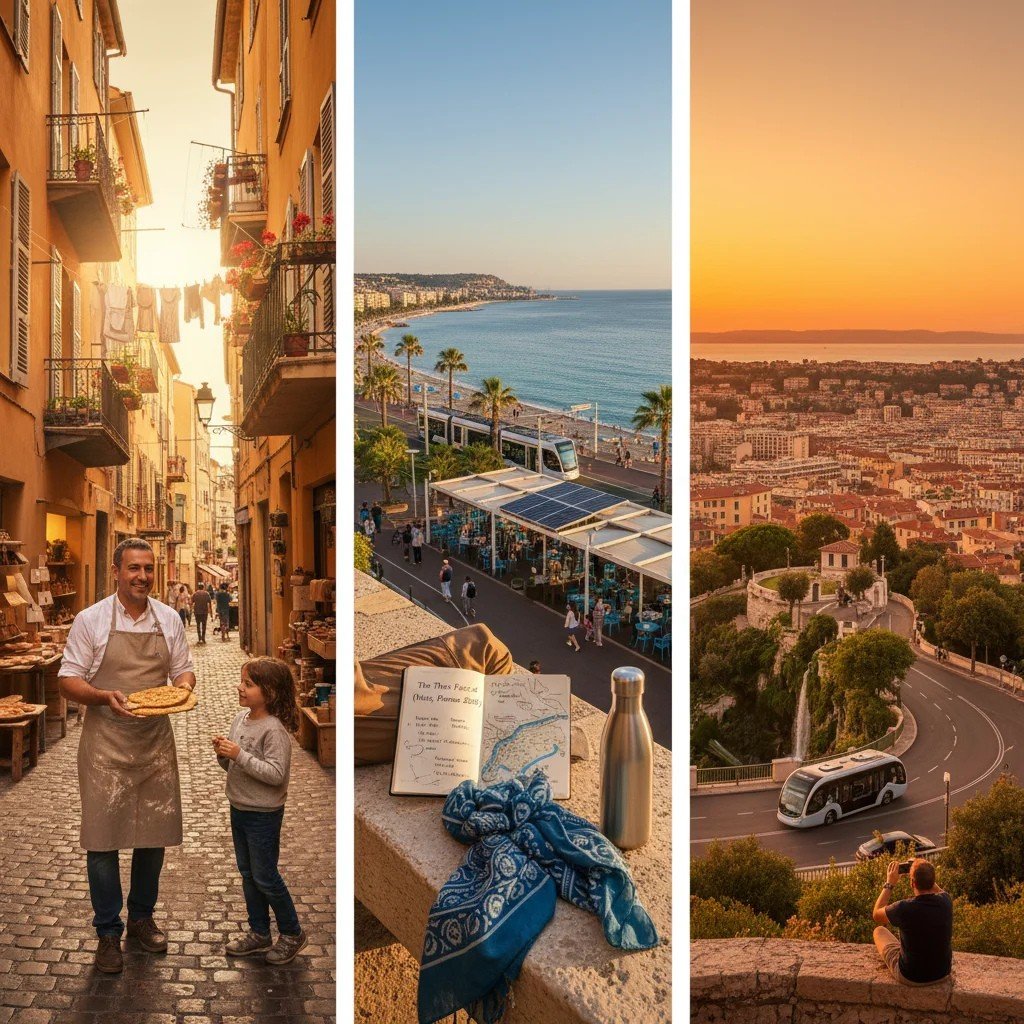
We will explore the three facets of the city: the Old Town, the Promenade, and the hills:
- First: Nice’s Old Town: This city is always vibrant and has a warm atmosphere. Its most prominent landmarks include:
- Cours Saleya: A collection of beautiful stalls selling flowers, produce, and antiques.
- Rue Droit: A historic street dating back to the Middle Ages, lined with shops selling handcrafted goods.
- Place Rossetti: Where you can enjoy delicious vincchio ice cream and visit the Cathedral of Saint-Réparte.
- The Pedestrian Zone: This area will soon feature art galleries until 7 PM, along with wonderful musical performances.
- Second: The Promenade, specifically the Promenade des Anglais (English Promenade): This iconic promenade exudes elegance and sophistication. Its most prominent features include:
- A collection of beautiful beaches, some free and some paid.
- Castle Hill (Colin du Château): This landmark is located in the Promenade des Anglais and consists of waterfalls and the remains of an old castle. It overlooks the Bay of Angels, and from its summit, you can enjoy a breathtaking view of the promenade.
- Art Deco Palaces: These palaces are built in the Art Deco style, a refined French architectural style with a range of classical decorations. Examples include the Hôtel Negresco and the Mediterranean Palace.
- Third: The hills of Simez and Mont Bouron: Here, the atmosphere is filled with tranquility and serenity. The most prominent landmarks include:
- The Matisse Museum: A villa built in the 17th century, surrounded by olive groves.
- The Roman ruins of Simez: An amphitheater, baths, and an archaeological museum.
- Mont Bouron: Forest trails overlooking Villefranche-sur-Mer.
Insight: The magic of Nice, France 2026 lies in moving between these worlds—market bustle by morning, seaside calm by afternoon, hilltop serenity by evening.
3. Must-Visit Experiences in Nice, France 2026.
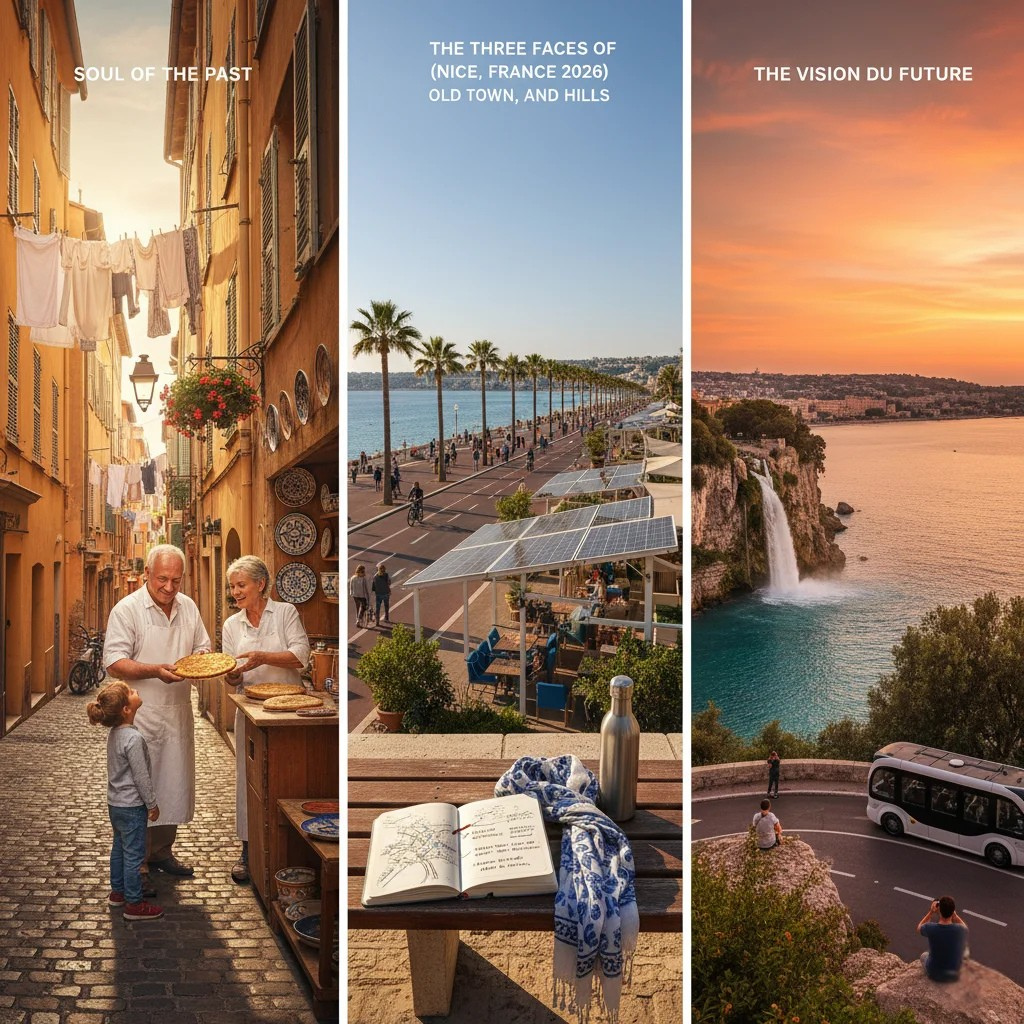
We’ll explore a selection of wonderful experiences you shouldn’t miss in Nice:
- First: The Cours Saleya Market: This is an old daily market dating back to the 13th century and still operating today. Some of the most notable experiences you can have at this market include:
- Monday: Antiques, vintage posters, and Provençal ceramics are sold here.
- Tuesday to Sunday: Local products, socca (chickpea tart), and Niçoise salad are sold here.
- Second: The Matisse Museum: This is one of the most important historical and archaeological landmarks, possessing a significant legacy and value. This is due to the fact that:
- It houses the largest collection of Matisse’s works in the world.
- Behind it lies the Villa d’Arène, providing a stunning backdrop for the museum.
- It is surrounded by the Cemisz Grove, a vast olive grove containing thousands of ancient olive trees.
- Important note: The best time to visit the museum is Wednesday evening, as it is open until 8 pm and is less crowded.
- Third: Castle Hill (Colin du Château): This hill dates back to the 10th century and is the remains of an ancient fortress. Now a magnificent tourist attraction with a garden, its main reasons for visiting include:
- Upon ascending to the top, you can enjoy a breathtaking panoramic view of the Bay of Angels.
- It features a famous artificial waterfall, gardens, and walking trails.
- Visits are free and open 24/7. It can be reached by a free lift from the Old Town or on foot through the pine forest.
- Fourth: Savoring the exquisite wines of Bellet : This region is the only wine region in Nice with a Protected Designation of Origin (AOC). Located 5 kilometers north, the Domaine de la Source winery is a popular tourist destination in the area, renowned for its local wine production and offering exceptional tasting experiences and tours that include Grasse and the Perfume Capital.
These experiences blend culture, nature, and sustainability—the core of Nice, France 2026.
4. Beyond the Icons: Hidden Gems Only Locals Know.
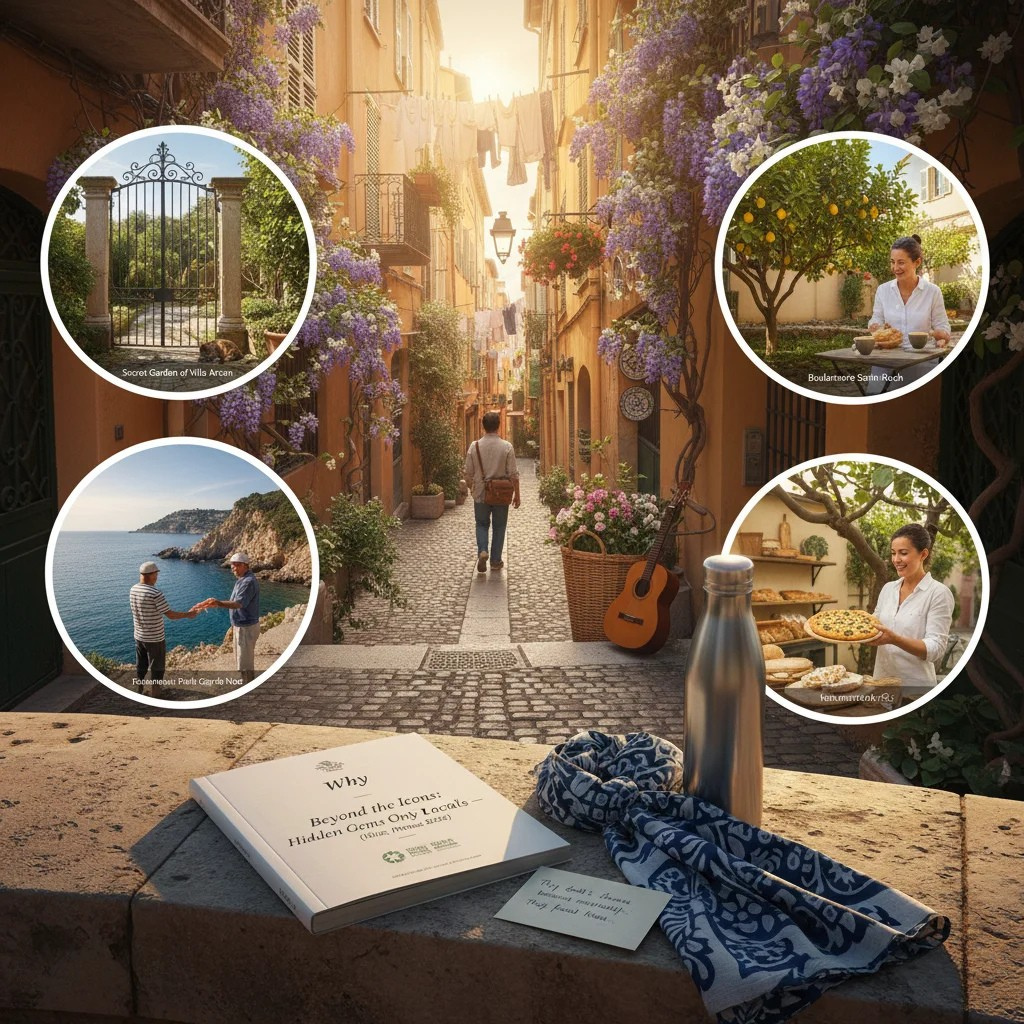
We will explore a collection of wonderful hidden gems to visit in Nice:
- First: Rue Bonaparte: Known as the artisans’ street, this narrow street in the old town houses a collection of pottery workshops, perfume laboratories, and silk-painter workshops. The main reasons to visit are:
- When you go, you can enjoy seeing the paintings on Provençal tiles and watching the artisans at work. You can also buy from them, so it’s best to visit in the morning.
- Second: The Phoenix Garden: Known as an urban oasis, this beautiful garden covers 7 hectares and includes a botanical garden, a lake, and animal enclosures. The main reasons to visit are:
- You can enjoy visiting the greenhouses, which house a large number of plants. Children can enjoy visiting the butterfly farm and house, or you can stroll around the central lake. There is also a great Play area for children.
- Third: The Museum of Modern and Contemporary Art (MAMAC): Also known as the Riviera Avant-Garde, it’s located near Garibaldi Square. Key reasons to visit include:
- It houses a stunning monochromatic blue painting by Yves Klein, as well as rooftop sculptures by Niki de Saint Phalle. The rooftop café offers breathtaking panoramic views of the Old Town.
- Fourth: Carras Public Beach: This public beach is located west of the port. Key reasons to visit include:
- It’s a quiet beach with no street vendors. The water is clear, and the pebbles are beautifully arranged, making it ideal for families. It’s a wonderful family retreat in Nice.
These treasures reveal the soul beneath the surface of Nice, France 2026.
5. A Perfect 4-Day Itinerary: Your Nice, France 2026 Blueprint.

Here’s a perfect 4-day itinerary for Nice:
- Day 1: This day will be spent in the Old Town. We’ll start at 9:00 AM with a visit to the Cours Saleya market. Around 11:00 AM, we’ll visit Rue Droit and Place Rossetti. Around 1:00 PM, we’ll have lunch at Chez Palme d’Amir, where they serve authentic Niçoise salad. At 3:00 PM, we’ll head to Rue Bonaparte to enjoy the artisans’ workshops. To conclude the day, around 7:00 PM, we’ll have dinner at La Merinda restaurant, but reservations are required.
- Day 2: This day will be dedicated to exploring art sites and hills. We’ll start around 10:00 AM with a visit to the Matisse Museum. Around 1:00 PM, we’ll take a stroll through the olive grove of Simès. Around 3:00 PM, we’ll visit the Roman ruins of Simès. Finally, around 6:00 PM, we’ll enjoy a wonderful hike up Mont Bouron until sunset.
- Day 3: This day will be dedicated to visiting the beach and cultural sites. We’ll start at 9:00 PM with a visit to Castle Hill, followed by a stroll along the Promenade des Anglais around 11:00 AM. At 1:00 PM, we’ll have lunch at the Michelin-starred restaurant Jean, which serves dishes prepared with fresh, local ingredients. Around 3:00 PM, we’ll visit the Museum of Modern and Contemporary Art (MAMAC). To conclude the day, around 7:00 PM, we’ll enjoy a drink at Le Langoir, a charming seaside bar.
- Day 4: This day will be dedicated to the tranquil countryside. We’ll begin at 9:00 AM with a wonderful bicycle tour to the vineyards of Pellée. Around 1:00 PM, we’ll go on a wine tasting tour. Around 4:00 PM, we’ll visit Nice and relax in the Phoenix Park. Finally, at 7:00 PM, we’ll have dinner at the Acciardo restaurant.
This itinerary balances culture, nature, and local life—the essence of Nice, France 2026.
6. Where to Stay: Best Neighborhoods & Hotels (2026).

| Neighborhood | Best For | Top Picks |
| Vieux Nice | History, culture, walkability | Hôtel La Pérouse, Le Mas des Oliviers |
| Port Lympia | Local vibe, harbor views | Hôtel Suisse, Airbnb in historic building |
| Cimiez | Peace, gardens, museums | Aparthotel Adagio Nice Acropolis |
| Promenade | Luxury, sea views | Hyatt Regency Nice Palais de la Méditerranée |
Tip: Choose eco-certified hotels (look for Green Key or Nice Eco-Hotel label)—many use solar energy and local produce.
Your base shapes your Nice, France 2026 experience—choose with intention.
7. Culinary Nice: From Socca to Seafood

- Must-Try Dishes:
- Socca: refers to a pancake made of chickpeas, and Chez Pipo is the place where you can enjoy it better.
- Salade Niçoise: contains tuna, olives, and tomatoes (no lettuce).
- Pissaladière: is an onion tart that is accompanied by anchovies.
- The Pan Bagnat: is a round bread sandwich that is made using the Niçoise method.
- Top Ethical Spots:
- La Merenda: There is no fixed menu; the menu is prepared daily based on the freshest foods available each day.
- Acchiardo: A family-owned business since 1920, no waste.
- Avoid: Restaurants on Place Masséna—tourist traps with inflated prices
Food is terroir, not tourism, in Nice, France 2026.
8. Sustainable Travel in the Mediterranean Metropolis.
- Transport:
- The Lignes d’Azur buses: cover the whole city, and they are electric.
- Vélo Bleu: Bike-share -€3 for 1 hour.
- Walk: Nice can be walked 90% of it, and it is small and highly compact near the sea.
- Plastic-Free: Use a reusable bottle- there are more than 100 refill stations within the city.
Sustainability ensures Nice, France 2026 remains livable for all.
9. When to Visit Nice, France 2026.
| Season | Pros | Cons |
| April–June | Mild temps (18–24°C), blooming gardens, festivals | Slightly higher prices |
| September–October | Warm sea, harvest season, fewer crowds | Occasional rain |
| July–August | Long days, vibrant atmosphere | Hot (28–32°C), crowded |
| Avoid: November–March | Festive lights, lower prices | Cool (8–14°C), some closures |
Best Window: Late May or early October—ideal weather, cultural energy, manageable crowds.
Timing enhances your Nice, France 2026 experience.
10. Practical Tips for Travelers (2026).
- French is the official language of Nice. The word Bonjour is a good word to use when greeting the locals.
- The euro is the main currency of money in this area.
- Credit and debit cards may be used by tourists in cafes, shops and restaurants. Individuals should be tipped at 5% to 10% of the total bill when providing excellent service. Good service can be tipped the conventional way or the bill rounded off.
- The crime rate is low in Nice. Pickpockets are highly likely to target tourists and markets. It is recommended to carry a bag in a zipped form so that other people do not bump into your pocket.
- There is free wi-fi that tourists can use in local parks and museums. It is advisable to purchase an Orange Holiday SIM card at the airport since it offers fantastic local tariffs to overseas travellers in Nice.
Preparation ensures a smooth Nice, France 2026 journey.
11. Future Outlook: What’s New in 2026–2027.
- The Nice Tram Line 3, airport – city centre, will be fully completed in 2027.
- Green Festivals: Nice Carnival and jazz Festival will be a zero-waste event in 2027.
- Digital Nomad Hub: Nice Work’s co-working spaces with sea views.
- Blue Flag Beaches: All public beaches to achieve certification by 2026
Nice’s future is green, smart, and human-centered—a promise of Nice, France 2026.
13. Final Reflection: The City That Lives Lightly.
Nice, France 2026 is not just a place you visit. It is a state of being—one of light, color, and gentle rhythm. From the morning market calls to the evening apéro on a hidden terrace, Nice teaches you to live beautifully, lightly, and with deep appreciation for the moment.
So go. But go slowly. Go respectfully. And let Nice, France 2026—not as a checklist, but as a meditation in Mediterranean light—remind you that the good life isn’t found in excess, but in essence.
Trusted Resources (2026).
- Nice Côte d’Azur Official Tourism:
https://www.nicecotedazur.org - UNESCO – Nice Winter Resort Architecture:
https://whc.unesco.org/en/list/1635/ - Musée Matisse:
https://musee-matisse-nice.org - Lignes d’Azur – Public Transport:
https://www.lignesdazur.com
Always verify museum hours and market days before travel.