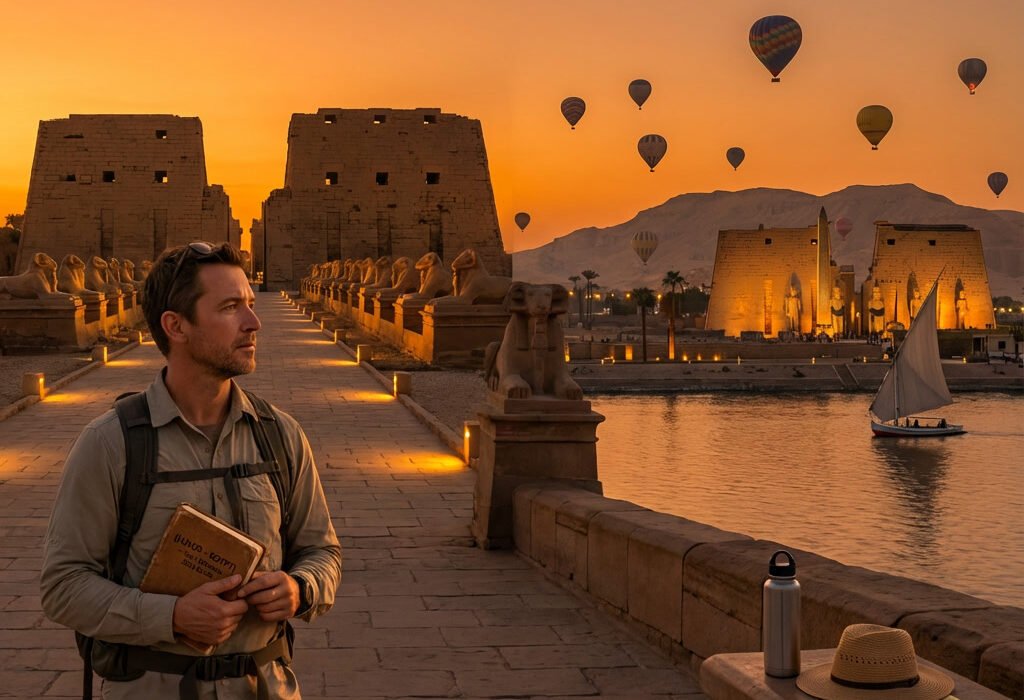
LUXOR – EGYPT: Your Ultimate 2026 Guide to the World’s Greatest Open-Air Museum.
Posted in :

Introduction: Where Pharaohs Whisper and the Nile Breathes History.
This article explores one of the oldest cities, LUXOR – EGYPT, often called the “Enchantress of the Past” or the “Gateway to Ancient Egyptian History.” It boasts a third of Egypt’s ancient monuments, making a visit a journey through time. Located in southern Egypt, on the site of Thebes (its ancient name), Luxor stands like a jewel nestled between the desert and the Nile. Among its most beautiful and unmissable attractions are Karnak Temple, the Valley of the Kings, and Luxor Temple. A trip to Luxor will allow you to truly appreciate the grandeur of ancient civilization.
The Egyptian government has also made significant efforts to develop tourism in the city, focusing on infrastructure improvements and implementing sustainable and environmentally friendly practices. This guide aims to provide engaging and informative information about Luxor and its landmarks to suit all visitors.
1. Why LUXOR – EGYPT Is Unlike Any Other Destination.
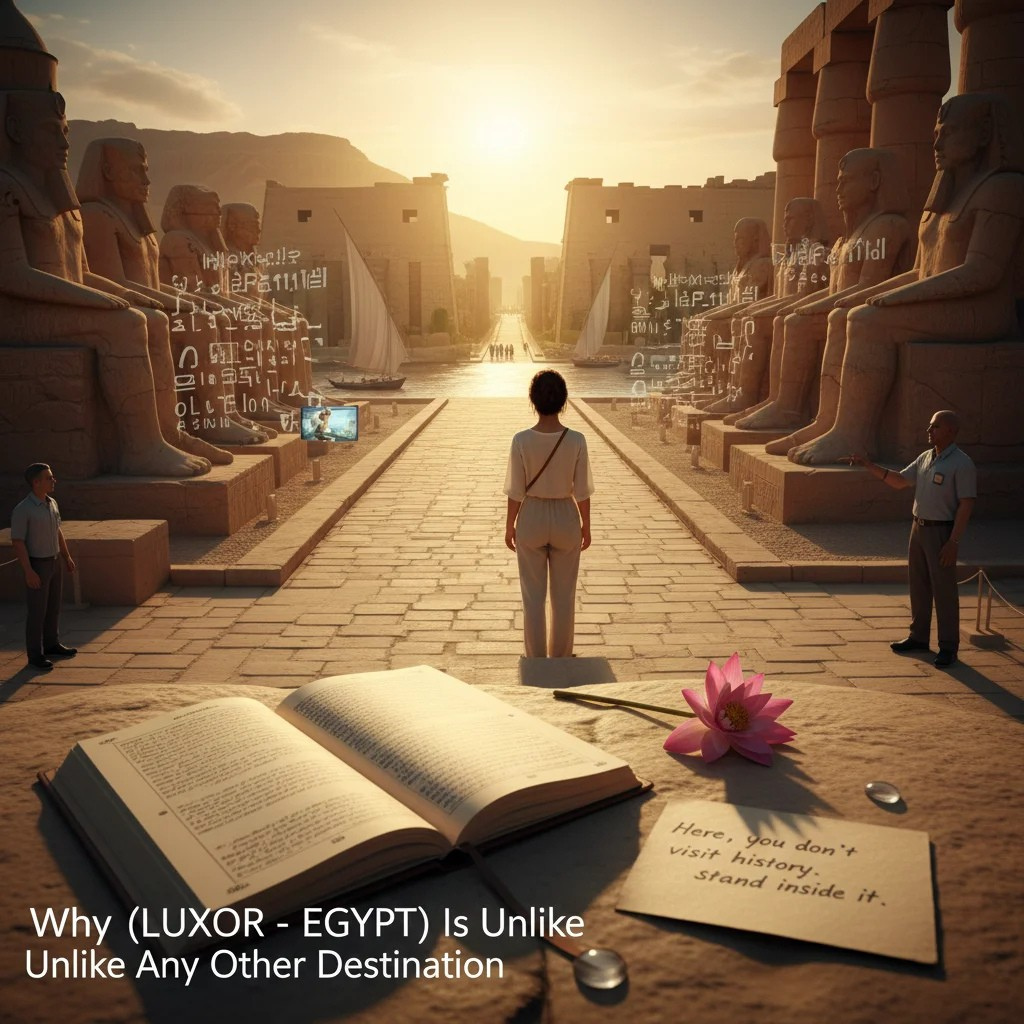
The city of Luxor in Egypt is located on the same site as the ancient city of Thebes, which served as the capital of the New Kingdom from 1550 to 1070 BC. This period is known as the Golden Age of Egypt. While Cairo and Giza are famous for their Islamic and Pharaonic monuments, Luxor’s significance lies in being the birthplace and cradle of the pharaohs and ancient Egyptian civilization, where they lived, ruled, died, and were buried.
Therefore, we will mention what distinguishes Luxor from other Egyptian cities:
- First: It contains more than 500 unique archaeological sites within a 10-kilometer radius.
- Second: The banks of the Nile in Luxor hold great importance. The eastern bank symbolizes life through its temples, while the western bank symbolizes death through its tombs, reflecting the sun’s path.
- Third: Archaeological discoveries continue to this day. In 2023, a group of 16 new tombs was discovered near Dra’ Abu el-Naga.
Source: Egyptian Ministry of Tourism and Antiquities – Luxor Archaeological Updates, Q1 2026 (mota.gov.eg)
This duality—life and afterlife, stone and spirit—is the heartbeat of LUXOR – EGYPT.
2. Historical Significance: Thebes, the City of a Hundred Gates.
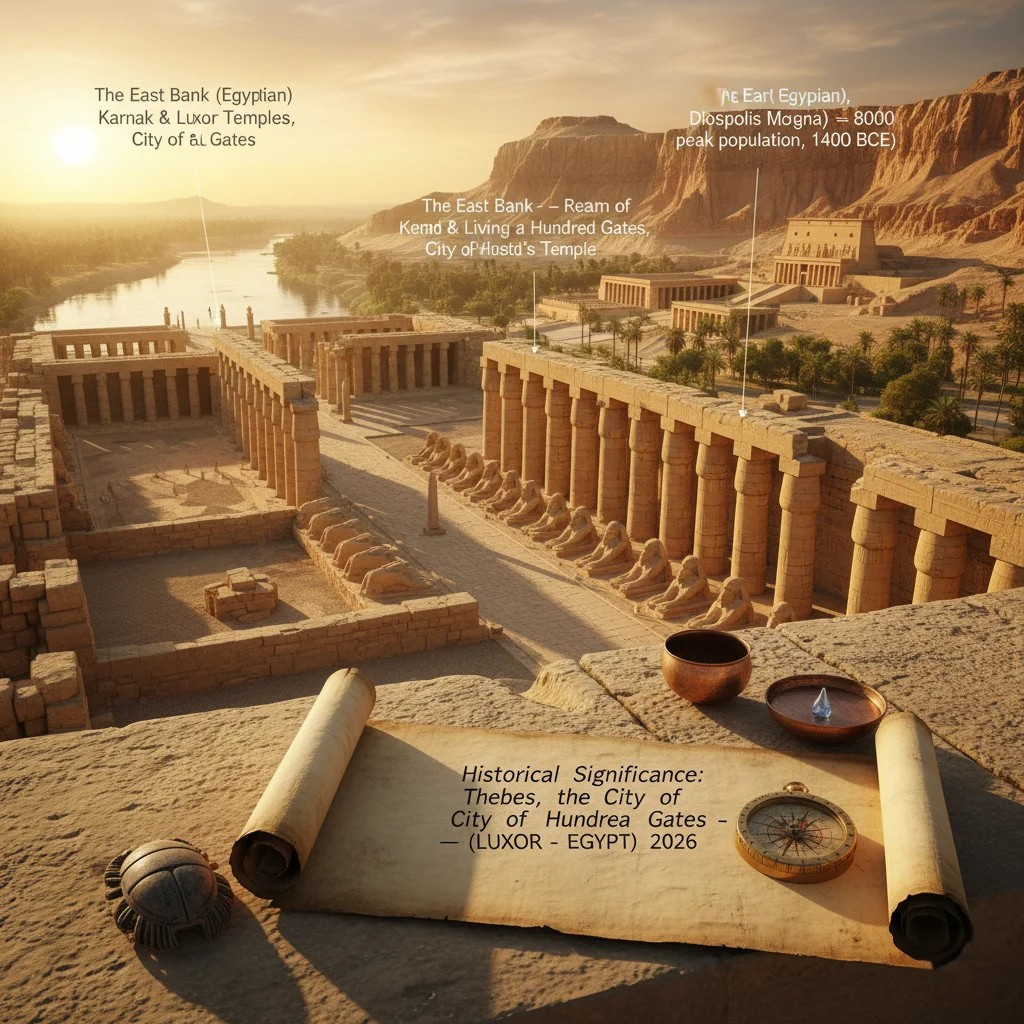
We will discuss the historical importance of ancient Thebes, which the Greek poet Homer referred to as “the City of Gates” due to its vast size and the abundance of ancient monuments and magnificent temples it contains, including:
- First: Karnak Temple: This temple consists of 134 massive columns, each approximately 24 meters high. Its construction took about two thousand years and spanned the reigns of 30 pharaohs. Other notable sites in the temple complex include the obelisks of Hatshepsut and Thutmose I, as well as the temple’s sacred lake.
- Second: Luxor Temple: This temple served as a center for celebrations during the reigns of Amenhotep III and Ramses II. Among the famous festivals held there was the Opet Festival, during which the statue of Amun was moved from Karnak Temple to Luxor Temple. These two temples exemplify the greatness of ancient civilization in this enchanting city and deserve preservation.
Insight: The 3-km Avenue of Sphinxes, connecting Karnak to Luxor Temple, was fully restored and reopened in 2021—walkable at night with atmospheric lighting
These sites aren’t ruins—they’re active stages of memory, and LUXOR – EGYPT invites you onto them.
3. The West Bank: Where Eternity Begins.
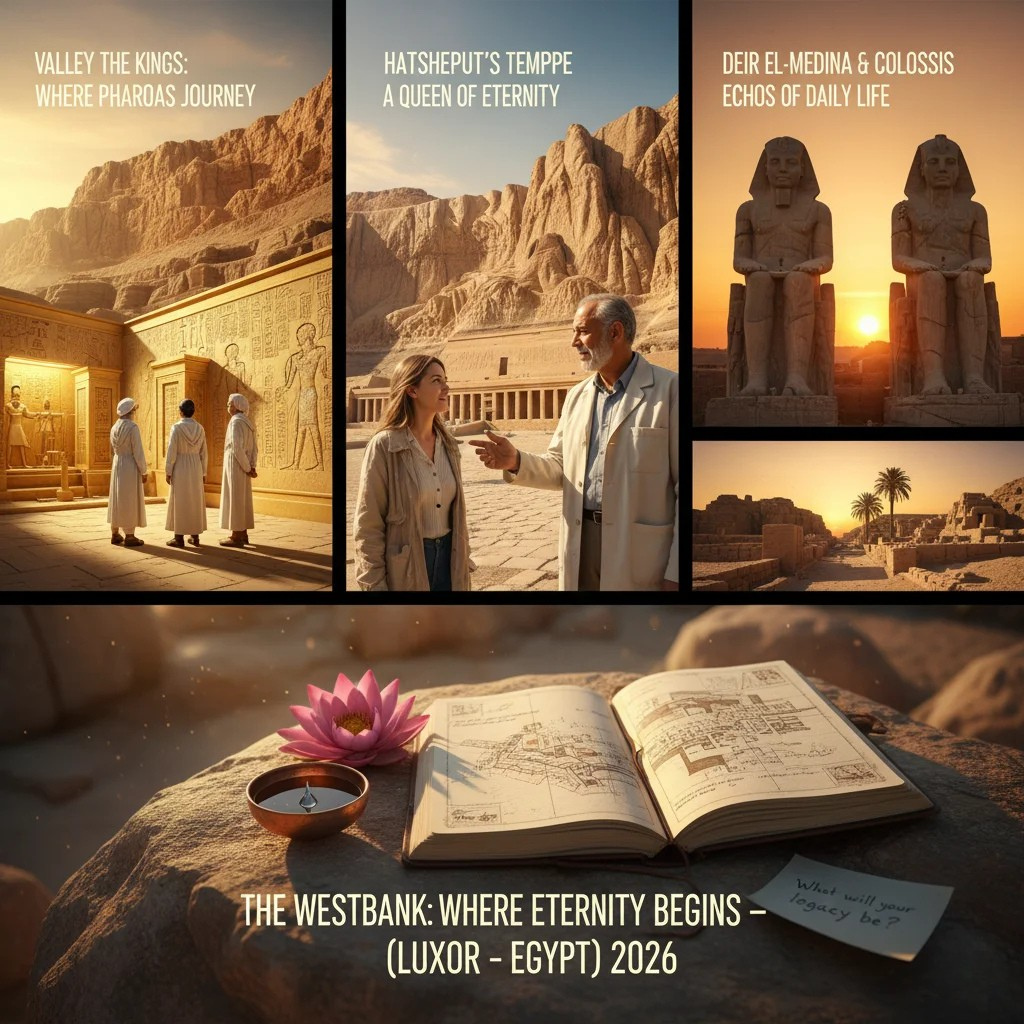
We will explore the many magnificent sites on the West Bank, a land rich in tombs, funerary temples, and tranquil valleys:
- First: The Valley of the Kings: This site contains 63 tombs of Egyptian pharaohs, including Tutankhamun (KV62), a small tomb filled with golden artifacts; Seti I (KV17), the longest tomb, distinguished by its magnificent reliefs (often opened with special permission); and Ramses VI.
- Second: The Temple of Hatshepsut: Built on a rocky outcrop, this temple consists of three mastabas designed to align with the sunrise of the winter solstice. When you gaze upon it, you are struck by the awe and grandeur of a structure built to commemorate the greatest pharaoh of Egypt.
- Third: The Colossi of Memnon: These two statues of King Amenhotep III were created for his mortuary temple, and each stands 18 meters tall.
Ethical Note: Avoid “unofficial guides” offering “secret tomb access”—they damage heritage and lack safety training.
The West Bank is the emotional core of LUXOR – EGYPT, where mortality and divinity intertwine.
4. Beyond the Highlights: Hidden Gems of LUXOR – EGYPT.
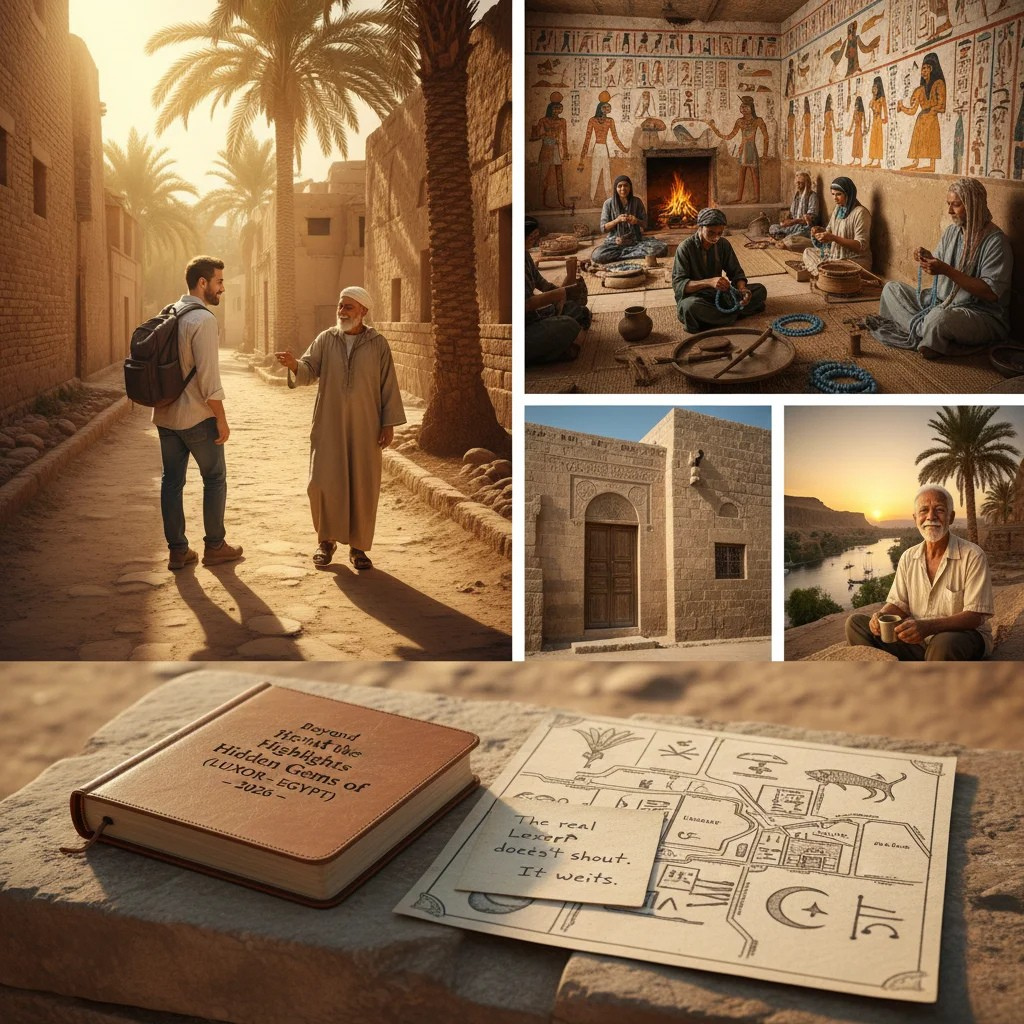
We will now discuss another group of enchanting gems in Luxor that are not to be missed:
- First: Medinet Habu: This temple was built during the reign of King Ramses III. Its reliefs and paintings depicting the period of wars remain vivid. Around the first century AD, it served as a place of worship for Coptic Christians.
- Second: Deir el-Medina: This village was built by the craftsmen who worked in the tombs. Upon visiting this site, you will find inscriptions on the walls of the houses. This village depicts and illustrates what life was like for ordinary people in ancient Egypt.
- Third: Tombs of the Nobles: This archaeological site contains a collection of tombs, but it is less expensive and less crowded. These tombs belonged to high-ranking officials, provincial governors, and priests from the Old Kingdom to the Roman era. When visiting, don’t miss tomb TT52 (Nakht), which depicts agricultural scenes, and tomb TT36 (Ipi), which is distinguished by its beautiful ceiling.
- Fourth: Dendera Temple: It is the temple of Hathor, the goddess of (joy, love and beauty) in the Old Kingdom. This temple is considered one of the best-preserved astronomical ceilings in Egypt and is distinguished by its unique Hathorian columns, the colorful astronomical inscriptions on the ceiling of the columned hall, and the hieroglyphic inscriptions that show Cleopatra VII and her son Caesarion.
These sites ensure your LUXOR – EGYPT experience goes beyond the postcards.
5. The Perfect 3- to 5-Day Itinerary for LUXOR – EGYPT (2026).
Here’s a perfect 3-5 day Luxor itinerary:
- Day 1: We’ll start early in the morning on the East Bank with a visit to Karnak Temple around 8:00 AM. In the afternoon, we’ll visit Luxor Temple and take a wonderful walking tour along the Avenue of Sphinxes. The day will conclude with dinner at the Sofra Restaurant.
- Day 2: We’ll begin on the West Bank with a magical hot air balloon ride starting at sunrise. Afterwards, we’ll visit the Valley of the Kings and the Temple of Hatshepsut early in the morning. In the afternoon, we’ll visit the Colossi of Memnon and Medinet Habu. We’ll return to the hotel in the evening for dinner.
- Day 3: We’ll start the day with a visit to the Tombs of the Nobles. In the afternoon, we’ll visit the Luxor Museum, which houses royal mummies. The day will end with a Sound and Light Show at Karnak (in Arabic and English) in the evening.
- Day 4: The tour on this day could be either a visit to the Dendera Temple or a visit to the Temple of Seti I and the famous Abydos King List in Abydos.
This itinerary balances iconic sites, local culture, and quiet reflection—the essence of LUXOR – EGYPT.
6. How to Get to LUXOR – EGYPT in 2026

Here’s how to get to Luxor:
- First: From Cairo: The flight from Cairo to Luxor takes about one hour. There’s also a sleeper train service from Cairo to Luxor, which takes about 10 hours. You can book train tickets via the following link: ( https://www.enr.gov.eg/Ar/Default.aspx )
- Second: From Hurghada or Aswan: There are flights from Aswan or Hurghada airports to Luxor International Airport, which take about one hour. There’s also a train service from Aswan to Luxor. Additionally, you can rent a car or bus from Hurghada or Aswan to Luxor. This journey takes about 3 to 4 hours by road.
Tip: Arrive early morning to maximize Day 1—LUXOR – EGYPT rewards early risers.
7. Where to Stay: Best Hotels for Every Budget (2026).
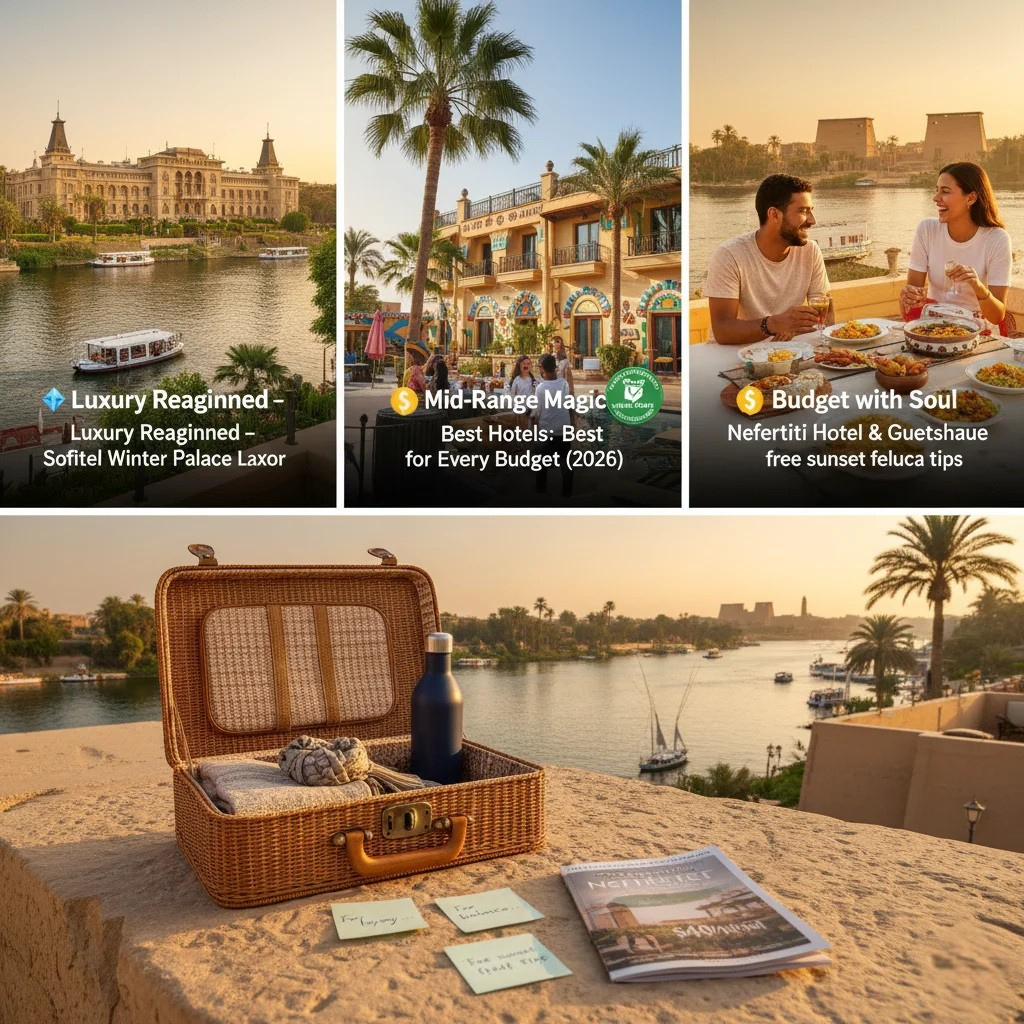
| Budget ($20–40) | Mid-Range ($50–90) | Luxury ($100+) |
| Nefertiti Hotel – Central, rooftop views | Sofitel Winter Palace – Historic gardens, Nile front | Al Moudira – Boutique, artistic palace |
| Iberotel Luxor – Pool, family-friendly | Pavilion Winter Luxor – Adjacent to Winter Palace | Steigenberger Nile Palace – Modern luxury |
All are within walking distance of Luxor Temple or a short taxi ride to ferries.
Strategic lodging enhances your LUXOR – EGYPT experience—putting you steps from sunrise at Karnak.
8. Food & Dining: Eat Like a Local in LUXOR – EGYPT.
We will discuss a selection of foods and restaurants to try in Luxor:
- First: Among the best foods to try are molokhia (a leafy green soup) with rabbit, beef, or chicken; feteer meshaltet (a layered pastry) with honey or cheese; tahini salad (a local salad containing cumin and garlic); and Alexandrian liver.
- Second: Among the best restaurants to try are Sofra Restaurant, a traditional Egyptian restaurant in the style of the oases, nestled amidst gardens; Sahabi Lin Restaurant, a seafood restaurant overlooking the Nile; and Tahrir Restaurant, which serves koshari.
Food in LUXOR – EGYPT is simple, fresh, and deeply connected to the land.
9. Cultural Etiquette: Respect the Land and Its People
- Dress conservatively by keeping your shoulders and knees covered, especially when in rural areas.
- Always ask permission before photographing locals because a friendly smile combined with saying Momken sura (Can I take a photo) will create goodwill.
- Sacred Sites:
- Never come into contact with wall reliefs.
- Never use a flash when photographing tombs.
LUXOR – EGYPT thrives on mutual respect—tourists who honor local norms are warmly welcomed.
10. Safety in LUXOR – EGYPT (2026 Update).
- Crime: Extremely low; violent crime against tourists is rare
- Tourist Police: Blue-uniformed officers at all major sites (dial 126)
- Health: Tap water unsafe; carry bottled water
- Advisories: U.S. State Department lists Egypt as Level 2—same as Italy (travel.state.gov)
Insight: Luxor is safer than most European cities for tourists—locals depend on tourism and protect visitors.
Your biggest risk? Sunburn—not safety.
11. Spiritual & Reflective Experiences in LUXOR – EGYPT.
We will explore a selection of wonderful contemplative experiences in Luxor:
- First: Witnessing the sunrise on the West Bank, standing amidst the Theban Mountains and feeling the light bathe the valley.
- Second: Visiting the Temple of Hatshepsut and experiencing the profound silence that pervades the place, a testament to the grandeur and majesty of this site.
- Third: Taking a felucca ride on the Nile and witnessing the sunset, sailing the river as the pharaohs did.
LUXOR – EGYPT isn’t just historical—it’s energetic. Many visitors report deep emotional or spiritual shifts here.
12. Photography Guide: Capturing LUXOR – EGYPT Respectfully
- Good Light Conditions: Early morning (6-8 AM) and late afternoon (4-6 PM)
- Photography License:
- Still camera: Entry ticket includes permit
- Video camera/Tripod: Additional charge (~$50)
- Do not:
- Take pictures of the military, police
- Drones are not allowed without a permit
Capture the soul of LUXOR – EGYPT—not just the stones.
13. Ethical Tourism: How to Visit LUXOR – EGYPT Responsibly
- Hire licensed guides: Look for a Ministry of Tourism ID badge
- Avoid “free” gifts: Vendors will demand payment later
- Support local: Buy crafts from Luxor souk artisans, not imported souvenirs
- Leave no trace: Carry a reusable bottle; avoid plastic
UNESCO Note: Luxor is part of the Ancient Thebes World Heritage Site—your choices impact its future (unesco.org).
Ethical travel ensures LUXOR – EGYPT remains majestic for generations.
14. When to Visit LUXOR – EGYPT: Seasonal Guide
| Season | Pros | Cons |
| Oct–Apr | Mild temps (20–28°C), ideal for exploring | Peak crowds (Dec–Jan) |
| May–Sept | Fewer tourists, lower prices | Extreme heat (40–45°C) |
Best Months: October, November, February, March—comfortable, clear skies, fewer crowds.
Plan wisely, and your LUXOR – EGYPT trip will be perfect.
15. Common Mistakes to Avoid in LUXOR – EGYPT.
- wrong: Visiting tombs at midday → right: Heat exhaustion; go early
- wrong: Skipping a guide at Karnak → right: You’ll miss 90% of the symbolism
- wrong: Bargaining aggressively → right: Fair price, not lowest price
- Wrong: Rushing the experience → right: Luxor rewards slowness
- wrong: Ignoring local rhythms → right: Shops close 1–4 PM; plan accordingly
Avoid these, and your LUXOR – EGYPT journey will be seamless.
16. Final Verdict: Why LUXOR – EGYPT Belongs on Every Traveler’s List.
LUXOR – EGYPT is more than temples and tombs. It’s a conversation across millennia—between builder and stone, pharaoh and god, past and present. In 2026, it offers unprecedented access, yet retains its mystery.
You don’t just visit LUXOR – EGYPT. You witness it. You feel it. And you leave not with souvenirs, but with a deeper sense of human possibility.
So go. Stand where Ramses stood. Walk where priests walked. And let LUXOR – EGYPT remind you that greatness is not lost—it’s waiting to be remembered.
Resources for 2026 Travelers.
Official Egypt Tourism – Luxor Page:
https://www.experienceegypt.eg/en
Train Tickets:
https://www.enr.gov.eg/Ar/Default.aspx
UNESCO – Ancient Thebes:
https://whc.unesco.org/en/list/87
U.S. Travel Advisory:
(travel.state.gov
Follow us on:
Articles that might interest you :
The Grand Egyptian Museum: Your Ultimate 2025 Guide to the World’s Largest Archaeological Museum.