La Paz, Bolivia 2026: Your Ultimate Travel Guide to the World’s Highest Capital—Where Andean Soul Meets Urban Innovation.
Posted in :

Introduction: The City in the Sky, Reimagined.
Our article explores one of the most remarkable and captivating destinations: La Paz, the capital of Bolivia. Nestled in a breathtaking valley in the Andes Mountains at an altitude of 3,650 meters (11,975 feet) above sea level, it is the highest capital city in the world and a center of a vibrant and enduring civilization.
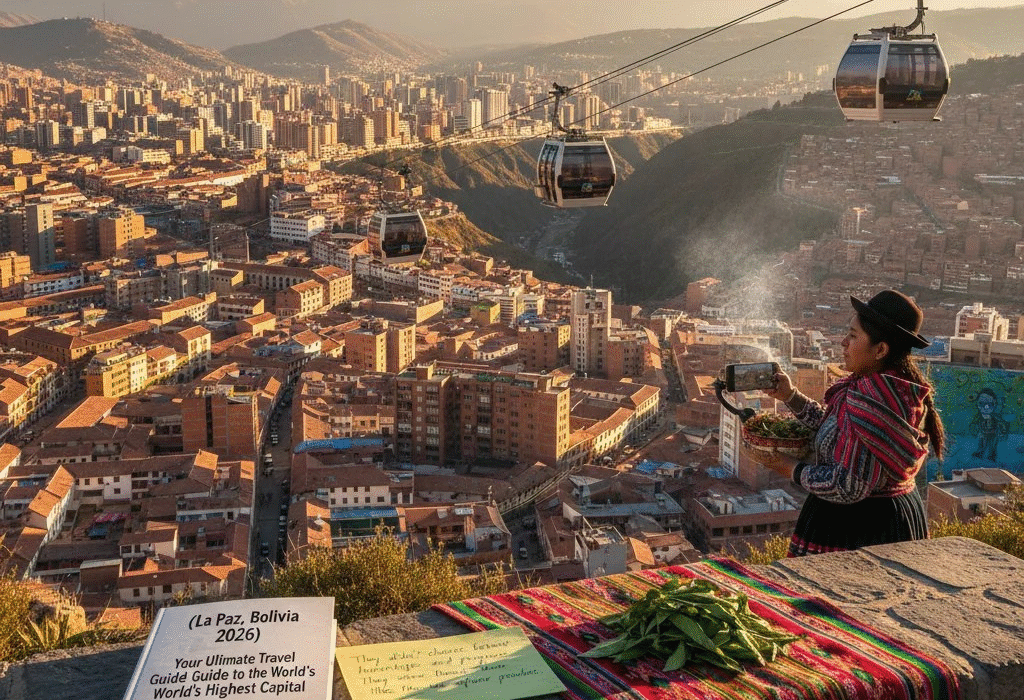
In this article, we will delve into all aspects of La Paz’s tourism, particularly the efforts undertaken by the government in collaboration with local residents. These efforts have transformed La Paz into a stunning, sustainable, and environmentally friendly tourist destination. It is no longer merely a transit point to the Salar de Uyuni. This transformation is evident in the preservation of Aymara heritage, in addition to the city’s modern and diverse cable car network. The city has been modernized to preserve its colonial-style churches, keeping them separate from the bustling markets. Upon visiting, you’ll be enveloped by the aroma of “Abi Morado,” a local spirit, mingled with the sounds of the Mi Teleférico cable car, the world’s longest urban cable car system.
The La Paz, Bolivia 2026 Guide is a helpful and comprehensive travel companion to everything you need to know about this culturally, logistically, and ethically fascinating city. Based on information from the Bolivian Ministry of Culture, UNESCO, and community tourism cooperatives, the guide covers the period 2025-2026 and goes beyond stereotypes, introducing you to hidden gems, vibrant local markets, spiritual practices, and innovative transportation solutions that honor the city’s past and pave the way for its future.
Whether you’re traveling solo, a culture enthusiast, or an environmentalist, this guide will ensure your trip to La Paz is a journey into its soul, not just a fleeting visit.
1. Why La Paz, Bolivia 2026 Is More Relevant Than Ever
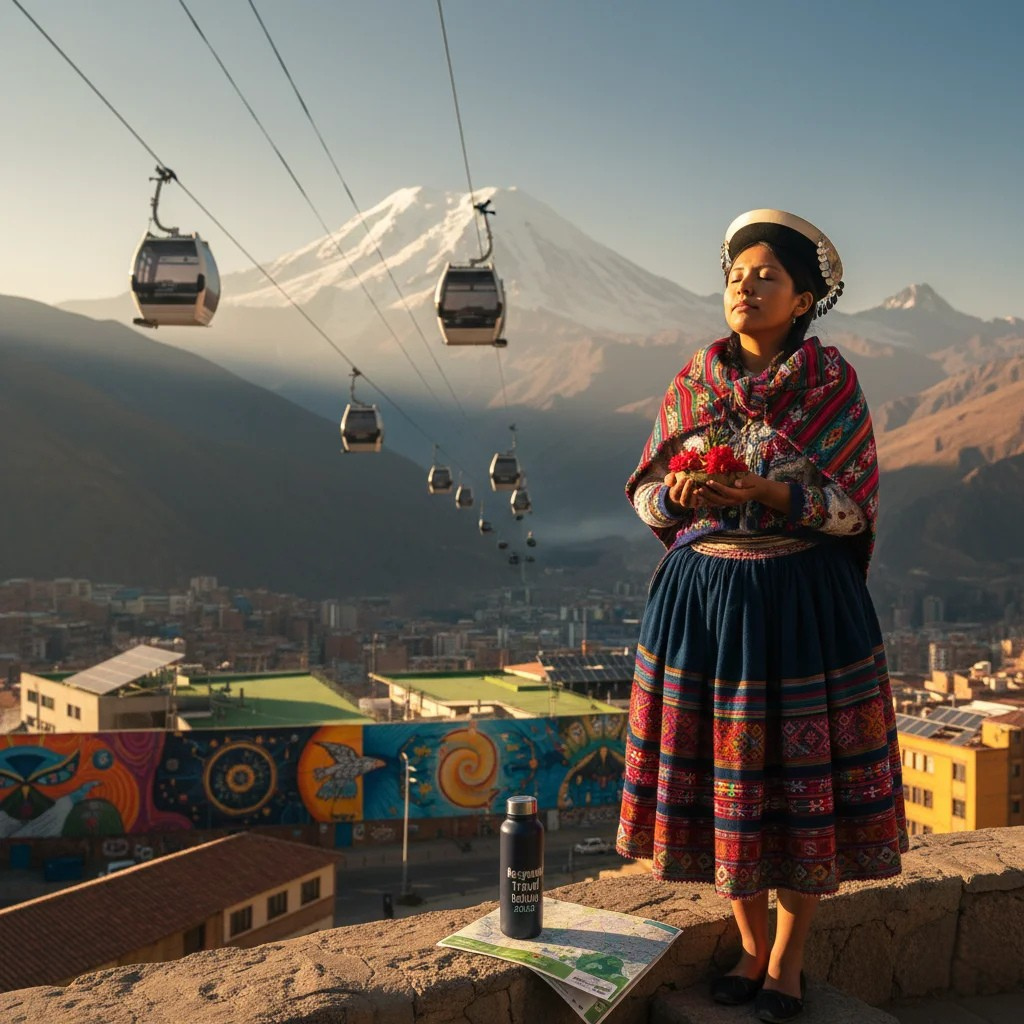
We will discuss a number of reasons that explain why visiting La Paz now is more enjoyable than before:
Due to the political and economic turmoil Bolivia experienced, the government was unable to develop the tourism sector in this magnificent city. However, the situation has now changed. The government is implementing a tourism marketing program focused on high-value, authentic, and community-oriented activities. This is clearly evident in:
- First: The cable car network has been expanded to include more than 10 lines, now connecting El Alto (4100 meters) to the Zona Sur area. This has helped alleviate traffic congestion and provided greater support to less fortunate neighborhoods.
- Second: There is a competent and professional government administration in the form of the Bolivian Community Tourism Authority, which grants licenses to indigenous tours and accredited tour providers.
- Third: La Paz was honored and awarded the UNESCO Creative City of Music Award in 2024, thanks to its unique blend of Andean folk music and street music culture.
- Fourth: The use of single-use plastics is prohibited, as a nationwide ban has been implemented in markets and restaurants.
“Tourism in La Paz is not about consumption—it’s about reciprocity with Pachamama (Mother Earth).”
— Doña Elena Quispe, Aymara Community Leader, El Alto, 2025
This intentional evolution makes La Paz, Bolivia 2026 a model of decolonized, community-centered travel.
2. The Three Layers of La Paz: Canyon, Altiplano, and Sky
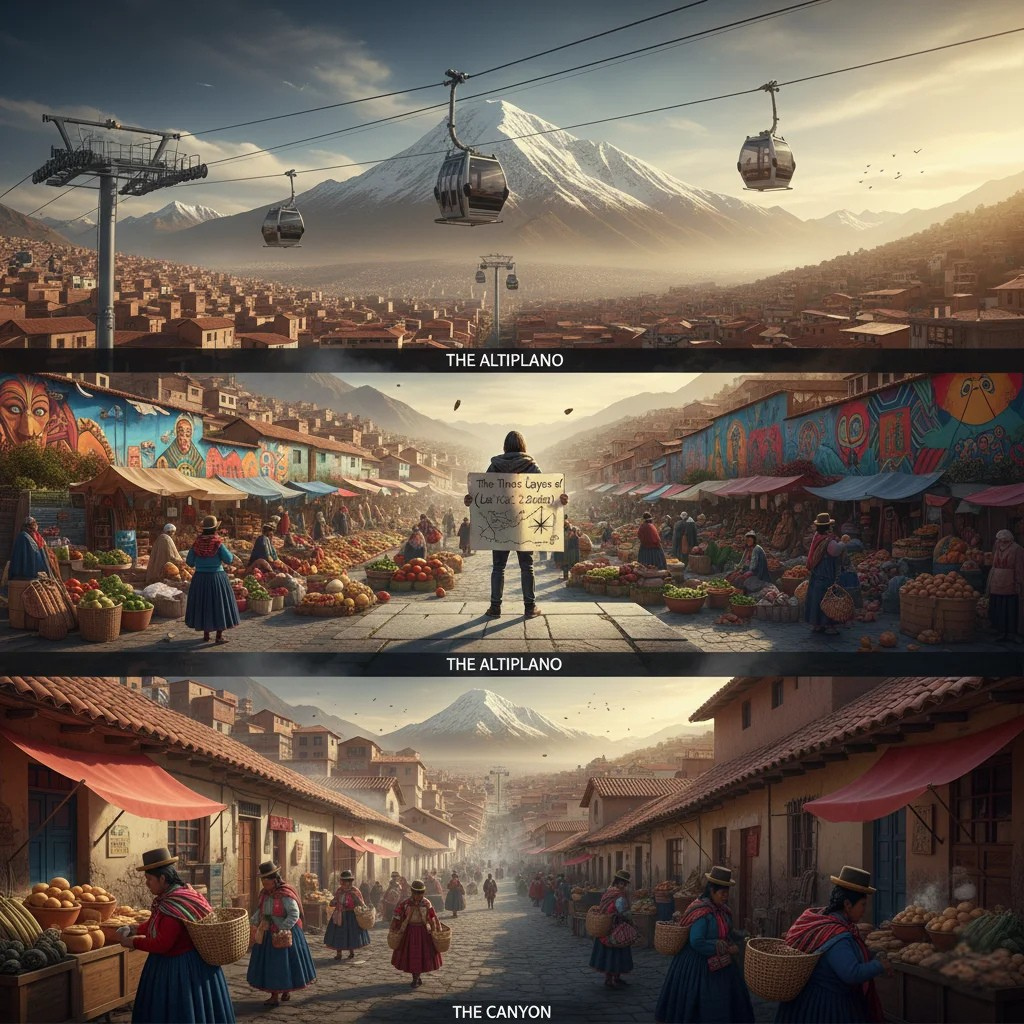
We will explore the three fascinating facets of La Paz: the valley, the plateau, and the sky.
- First, the valley: This is the central region of the country, where the city sits at an altitude of 3,650 meters (11,975 feet) above sea level. Its atmosphere is steeped in history, yet it is a vibrant and diverse city. Among its most prominent landmarks are:
- Murillo Square: A magnificent square that houses the Presidential Palace and the National Congress building.
- The San Francisco Cathedral: This cathedral is distinguished by the Aymara inscriptions on its Baroque facade.
- Sagarnaga Street: A fantastic tourist market where shops sell a wide variety of locally made souvenirs.
- Second: El Alto (Altiplano): This is the largest Aymara region, considered the center of their power as it reflects their authentic spiritual culture. At an altitude of 4,100 meters, its most prominent landmarks include:
- Mirador Kelly Kelly: Here you can enjoy a panoramic view of the La Paz Valley.
- El Alto Witches’ Market: Where dried llama fetuses, traditional Tchalla offerings, and coca leaves are displayed.
- Gacha Pata: A venue for live Morinada dancing.
- Third: The Sky (Cable Car Lines): This is the La Paz cable car system, a true urban innovation. It consists of more than 10 lines, divided into five color-coded lines: red, yellow, green, orange, and white. To experience this cable car system, it’s essential to understand the details of each line, its stations, and the colors. For example:
- The Red Line: Offers local trips; the journey on the Red Line takes 12 minutes between the city center and El Alto.
- Yellow color: Provides views of the rich Zona Sur hills.
Insight: The magic of La Paz, Bolivia 2026 lies in riding the cable car from canyon to sky—a metaphor for the city’s duality.
3. Must-Experience Cultural Immersion (2026)
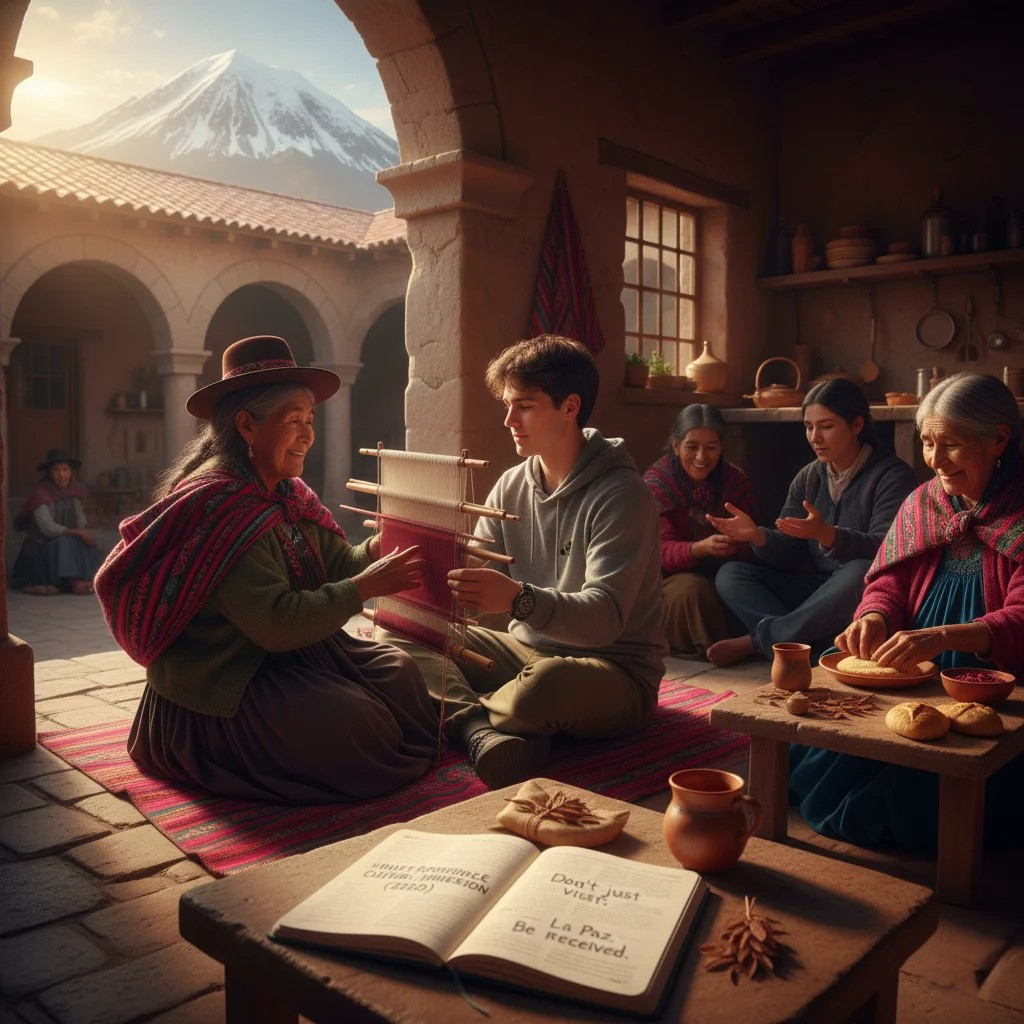
We’ll explore a fantastic selection of unmissable cultural experiences in La Paz:
- First: Attend a Cholita wrestling match. This wrestling sport is practiced by Aymara women who wear traditional bolera skirts. These matches take place at Lucha Libre Cholita in the Hernando Celes Stadium (Sundays, 12 noon). The women participate in this sport as it represents an authentic aspect of their identity and culture. Photography is not permitted during the matches.
- Second: Visit the Witches’ Market (Mercado de las Brujas) where you can see:
- Iquico statues: representing the goddess of abundance, used to bring good luck.
- Coca leaves: legal and sacred, used in rituals. Tourists are prohibited from chewing them.
- You can also see witches and their performances in Linares Street (downtown) and the El Alto neighborhood.
- Third: The Pachamama Offering Ritual: This is an Aymara ritual expressing gratitude to Pachamama. It involves the use of coca, alcohol, and seeds. Attendance at this ritual can be booked through Awana Tours or Indian Roots.
- Tip: When attending this ritual, always show respect. Do not mock or refuse the coca when it is offered.
These experiences connect you to La Paz’s living culture—not just its aesthetics.
4. Sustainable Stays: Where to Sleep in La Paz, Bolivia 2026
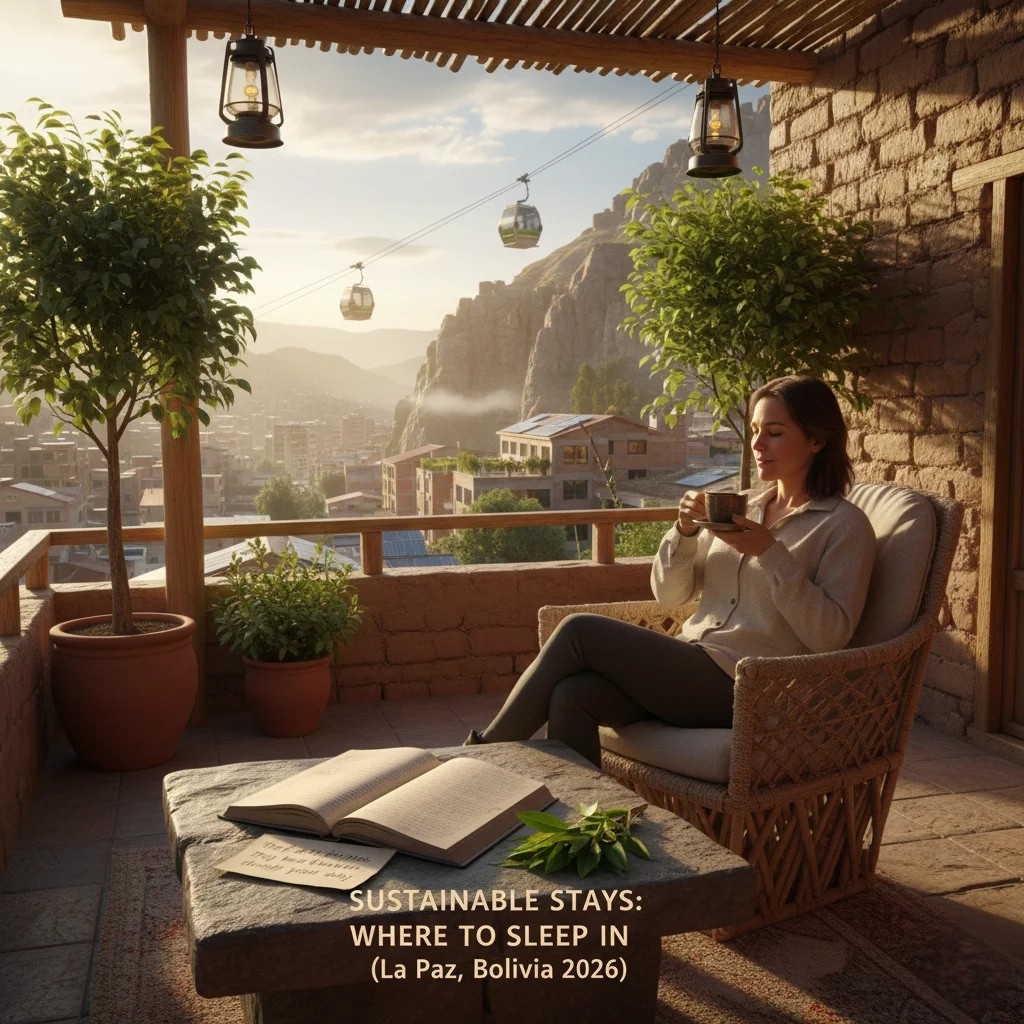
| Neighborhood | Type | Top Picks | Why It’s Ethical |
| Sopocachi | Boutique Hotel | Casa Grande, Hotel Europa | Family-run, supports local artisans |
| Calle Jaén | Heritage Stay | Hotel Boutique Colonial | Restored 18th-century house |
| El Alto | Community Homestay | Jacha Pata Guesthouse | 100% Aymara-owned, cultural immersion |
| Zona Sur | Eco-Lodge | Atix Hotel | Solar-powered, indigenous art gallery |
Certification Tip: Look for the “Turismo Comunitario Bolivia” label—ensures real community benefit.
Your accommodation is your greatest impact choice in La Paz, Bolivia 2026.
5. A Perfect 4-Day Itinerary: Your La Paz, Bolivia 2026 Blueprint
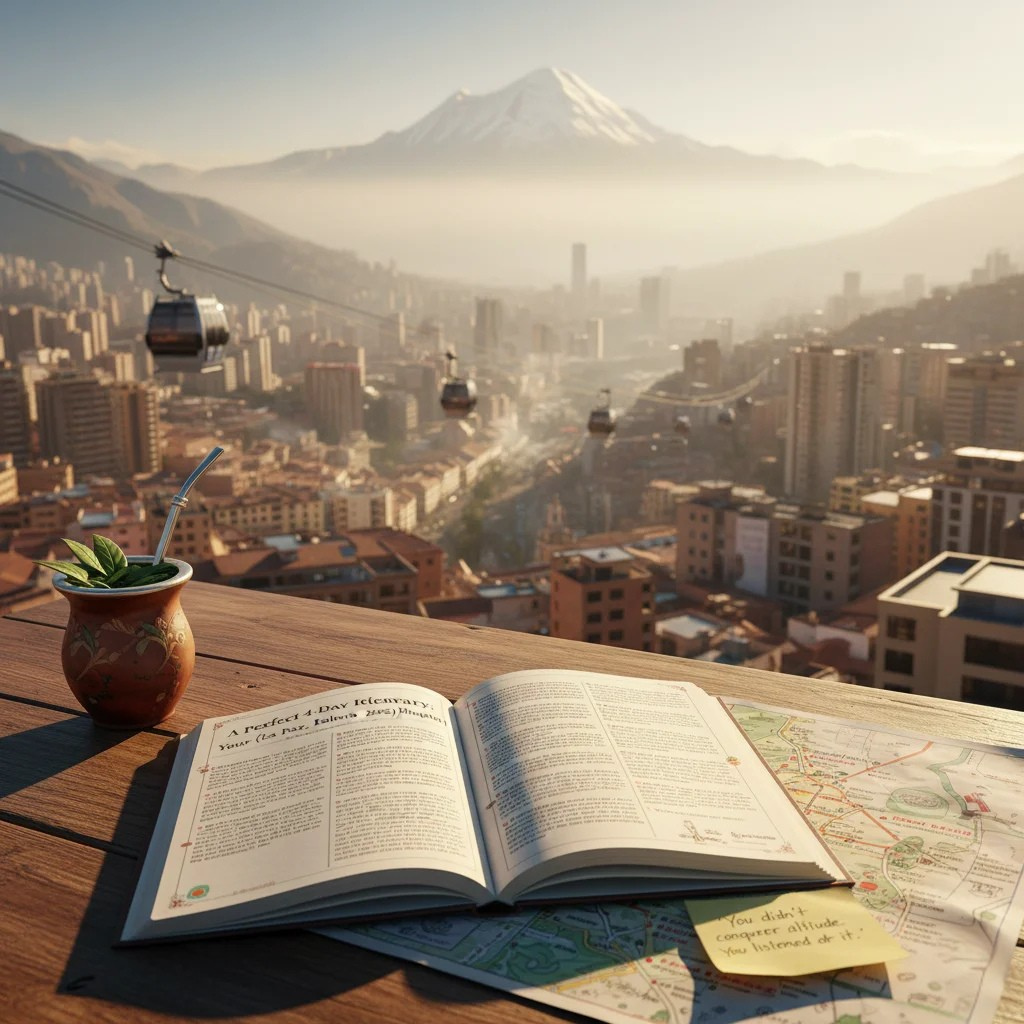
Here’s a perfect 4-day itinerary for La Paz:
- Day 1: We’ll spend this day exploring the valley. We’ll start at 9:00 AM with a visit to Murillo Square, followed by the Church of San Francisco. At 11:00 AM, we’ll head to Jaén Street to explore its features and colonial style. At 1:00 PM, we’ll have lunch at Gusto Restaurant, considered one of the best restaurants in Bolivia, staffed by local chefs who prepare delicious local dishes. Afterwards, at 3:00 PM, we’ll visit the Witches’ Market on Linares Street. Finally, we’ll have dinner at Ali Pasha Restaurant, which offers vegetarian dishes from the Andes Mountains.
- Day Two: Today, we’ll spend the day in the plateau region. We’ll start at 9:00 AM by going to the cable car station and experiencing the red line from the Mi Teleferico to El Alto. At 10:00 AM, we’ll head to the famous Mirador Kelly Kelly area to enjoy a panoramic view of La Paz. Then, at 12:00 PM, we’ll go to see a Cholita wrestling show if it’s a Sunday. At 2:00 PM, we’ll visit the Witches’ Market in El Alto, followed by a visit to the Jacha Pata Cultural center. Finally, at 7:00 PM, we’ll return to La Paz and have dinner at the Paceña La Salteña restaurant, where you can’t miss the Saltina experience.
- Day 3: This day is dedicated to exploring breathtaking natural landscapes. We begin at 8:00 AM with a visit to the Valley of the Moon, where we’ll take photos of the unique clay formations. At 11:00 AM, we’ll head to the Mirador del Montículo, which offers stunning views of the valley. At 2:00 PM, we’ll visit the National Museum of Ethnography. To conclude the day, at 6:00 PM, we’ll take the Mi Teleférico cable car (the orange line) at sunset.
- Day 4: This day is dedicated to cultural experiences. We’ll start at 10:00 AM with a guided tour of the Pachamama show. At 1:00 PM, we’ll have lunch in El Alto, where we’ll enjoy Aymara favorites. Around 3:00 PM, we’ll visit Rodríguez Market for a wonderful shopping experience, where you’ll find an excellent selection of local products and textiles. Finally, at 6:00 PM, we’ll relax at Café del Mundo in the Abi Morado district.
This itinerary prioritizes depth, reciprocity, and altitude acclimatization—key for La Paz, Bolivia 2026.
6. Culinary Ethics: Eat with Intention
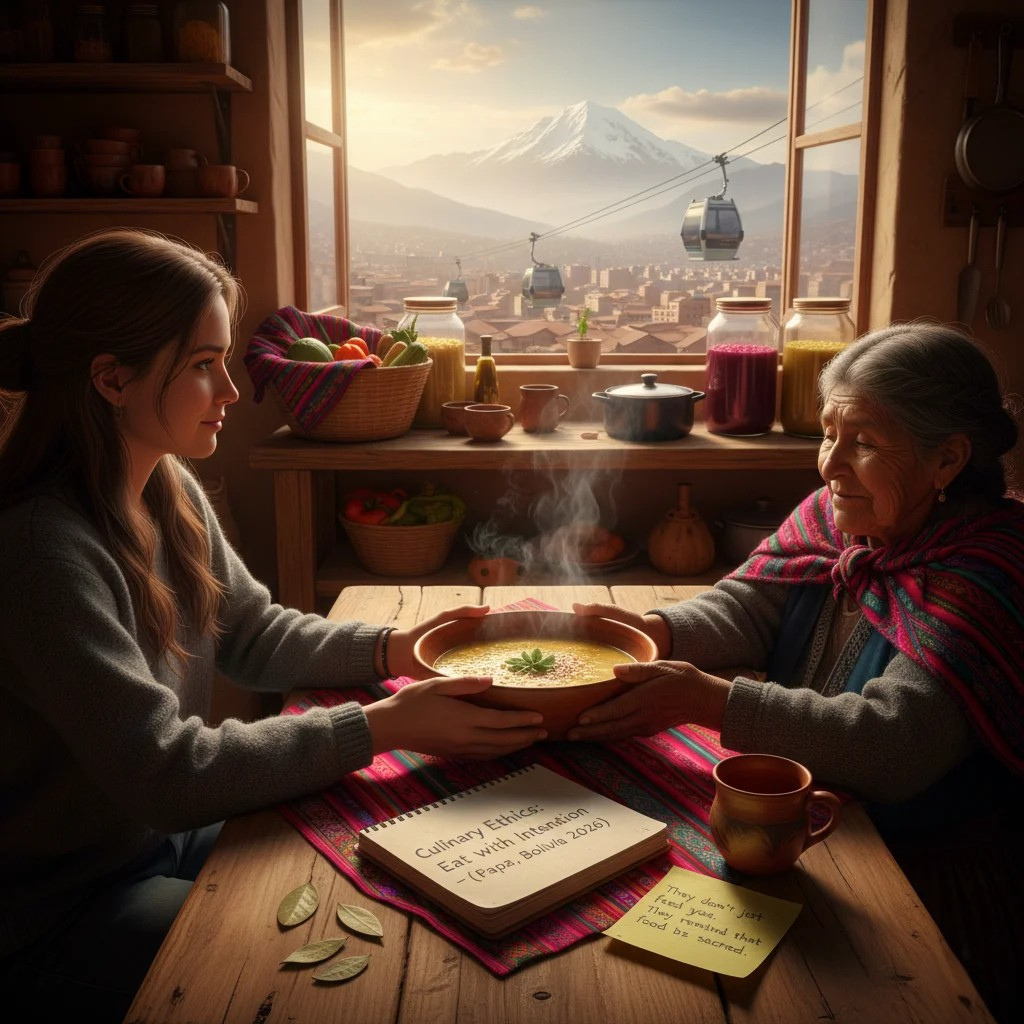
- Must-Try Dishes:
- Saltenas: These juicy and baked empanadas should always be eaten while standing, not while sitting.
- Pique a lo Macho: This is a spicy dish combining beef, eggs, and potatoes.
- Api Morado: This is a purple sweet corn drink flavored with cinnamon.
- Top Ethical Spots:
- Gustu: Gustu is a training center that takes on young indigenous students to train them to be chefs.(gustu.bo)
- Ali Pacha: Ali Pacha uses plant-based foods only and is a zero-waste restaurant.
- Mercado Lanza: You can eat chairo (Andean soup) at stall #42 in this local market.
- Avoid: Eating establishments serving jaguar or vicuna. These are prohibited animals.
Food in La Paz, Bolivia 2026 is sacred, seasonal, and sovereign.
7. Altitude & Health: Practical Tips for 2026
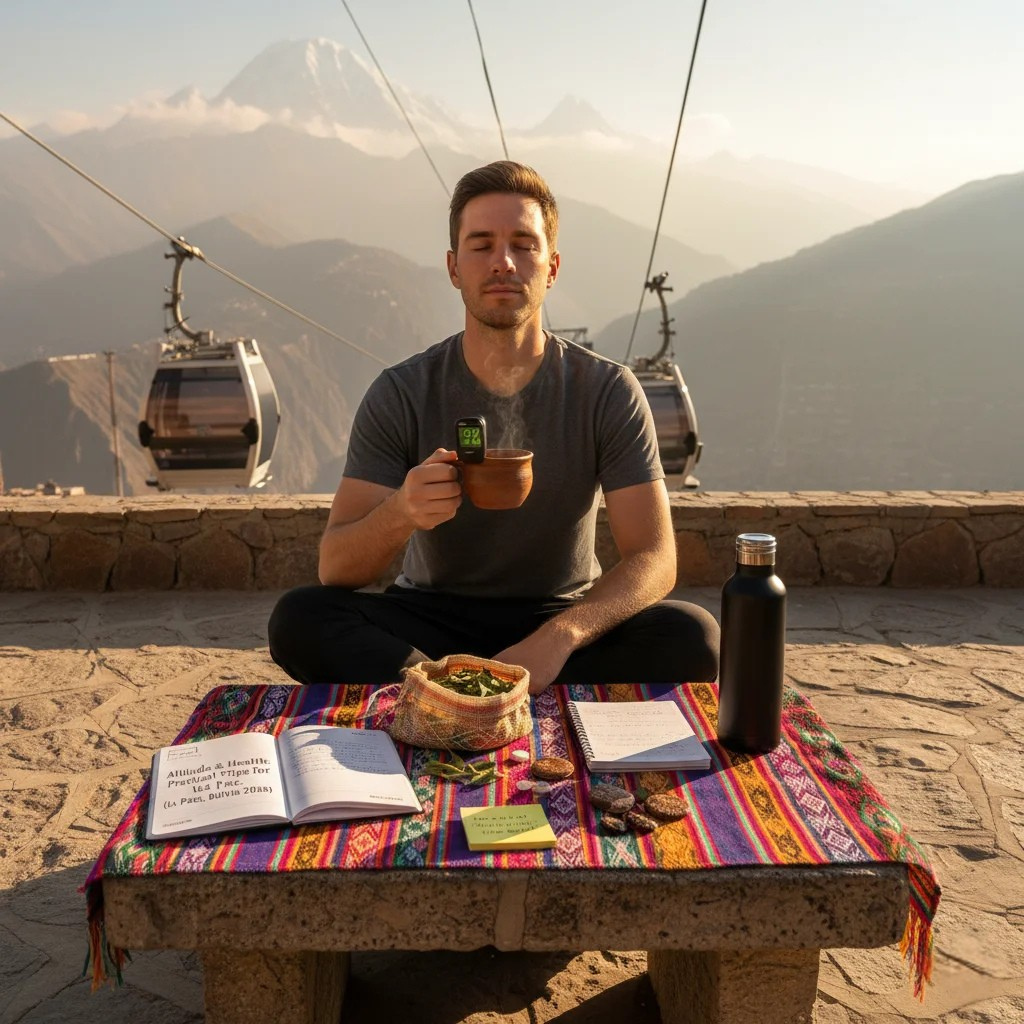
Acclimatize:
- In the first 24 hours: you should take a rest, take some coca tea, and not take any alcohol.
- Hydrate: Drink three or four liters of water every day.
Medications:
- Sorojchi pills to take which are altitude sickness medication, are available in the stores.
- Do not take sleeping pills because they slow your breathing down.
Emergency:
- Hospital del Niño: In case you are in an emergency state, the emergency department is English-speaking in the Hospital del Niño.
- Travel insurance: Make sure your travel insurance bears high-altitude evacuation.
Note: La Paz is safe, but petty theft occurs in crowded markets—use anti-theft bags.
Your health ensures a respectful La Paz, Bolivia 2026 journey.
8. Transportation: Green & Inclusive Mobility
- Take Mi Teleferico around town and do not take unmarked taxis.
- Walking when wearing good shoes is recommended since the cobblestones are uneven.
- Tours book community walks through Andean Roots or Awana Tours.
- To Uyuni, take an overnight bus (12 hours) or a short flight of one hour with Amaszonas Airlines.
Smart transport supports local economies and reduces emissions in La Paz, Bolivia 2026.
9. When to Visit La Paz, Bolivia 2026
| Season | Pros | Cons |
| May–October | Dry season, clear skies, festivals (Alasitas in January) | Cold nights (0–5°C) |
| November–April | Lush greenery, lower prices | Rainy (afternoon showers) |
Best Window: June or September—dry, stable, cultural energy.
Timing your trip honors La Paz’s Andean rhythms.
10. The Future: La Paz’s 2026–2027 Vision
- Cable Car Expansion: The purple line to connect to the Tiwanaku archaeological site.
- Translating the languages of the local population: Aymara-Spanish translators at Mi Teleférico stations.
- Zero-Waste Markets: Mercado Rodriguez to become plastic-free by 2027.
La Paz isn’t just surviving—it’s leading a decolonial tourism movement.
12. Final Reflection: Travel as Reciprocity
La Paz, Bolivia, 2026, is not an ordinary location. It is a city of inhabitants, of ghosts, of the descendants of those who settled there thousands of years ago. It is not your right to go there; it is your good fortune to be allowed to enter.
Take a look, but do not rush through it. Proceed slowly, proceed with respect. Do not look at La Paz as a city with lots of things to see and do. Perceive it as an issue of the heart and struggle. And all you have to do is give back a little of everything you are taking with you, along with the footprints.
Trusted Resources (2026)
- UNESCO – La Paz Creative City of Music: https://www.unesco.org/creativity/en/articles/promoting-cultural-and-creative-industries-city-la-paz-bolivia
2. Mi Teleférico Official Site:
3. Gustu Restaurant – Social Enterprise:
4. Andean Roots – Ethical Tours: