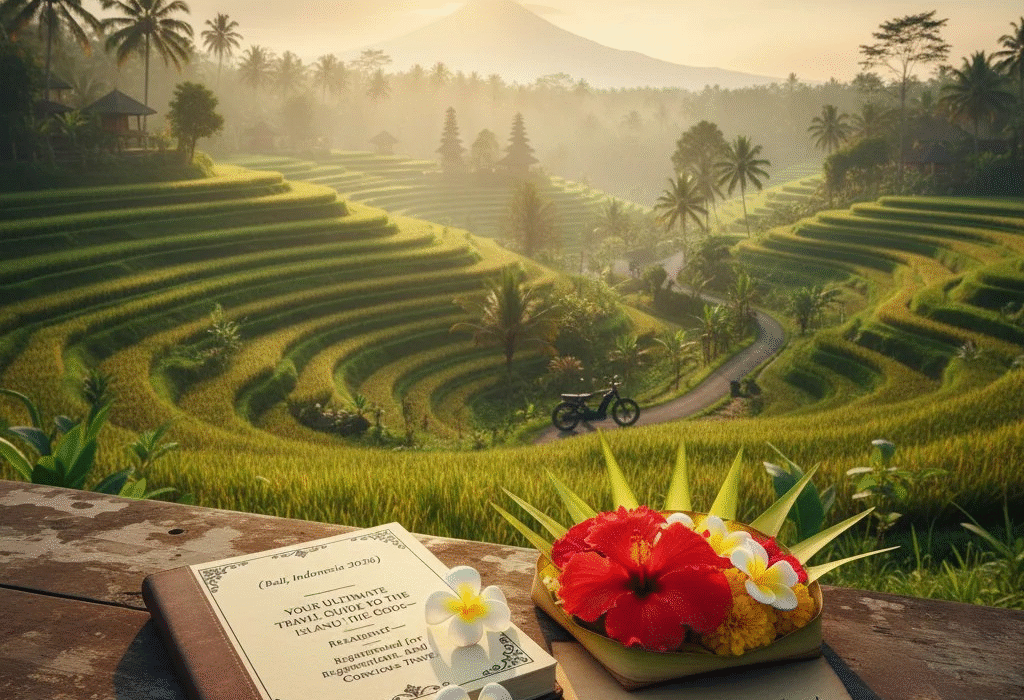
Bali, Indonesia 2026: Your Ultimate Travel Guide to the Island of the Gods—Reimagined for Regeneration, Culture, and Conscious Travel.
Posted in :

Introduction: Beyond the Postcard—Bali’s Soulful Renaissance.
Our article is about one of the most beautiful Asian destinations: Bali, Indonesia. This city combines natural beauty with religious sites of great significance, earning it the nickname “Tropical Saraswati Land.” We also acknowledge the government’s efforts to preserve this magnificent heritage, ensuring that Bali remains not just a tourist resort, but a living school of life.
Based on the ancient Balinese philosophy of “Tri Hita Karana” (harmony with God, people, and nature), the locals’ approach to visitors has evolved. Now, visitors experience a warm welcome and exceptional hospitality, offering them the opportunity to engage in a deeper exchange of respect, generosity, and renewal.
This guide, “Bali, Indonesia 2026,” provides all the information you need about the true nature of the city and how to travel there ethically and culturally. We’ll introduce you to homestays, sustainable farms, religious festivals, and hidden beaches.
This guide was prepared based on data from UNESCO, the Government of Bali, and accredited ecotourism operators during the years 2025-2026, to ensure an unforgettable trip that will make you want to come back again.
1. Why Bali, Indonesia 2026 Is a Model of Regenerative Tourism

We will discuss the reasons that have made Bali a model for sustainable tourism:
This is clearly evident in the government’s efforts and initiatives to support tourism in the city, most notably the “Clean & Green Bali” initiative, which includes:
- Plastic ban: Since 2019, single-use plastics have been banned throughout the city, and the enforcement of this ban was tightened starting in 2025.
- Tourism tax: Every foreign tourist pays 150,000 Indonesian Rupiah (approximately US$10), with the funds used for environmental conservation efforts in villages and the preservation of cultural heritage. (Bali Provincial Government, 2025).
- Hotel construction has been restricted in water-scarce areas such as Kuta and Seminyak.
- Cultural permits: Visitors must obtain permits to visit sacred sites and are expected to show respect. There is also a daily limit on the number of visitors in some areas.
Tourism must serve Bali—not the other way around.”
— I Wayan Koster, Governor of Bali, 2024
This intentional shift makes Bali, Indonesia 2026 a global leader in regenerative travel.
2. The Three Balis: Where to Go Beyond the Crowds
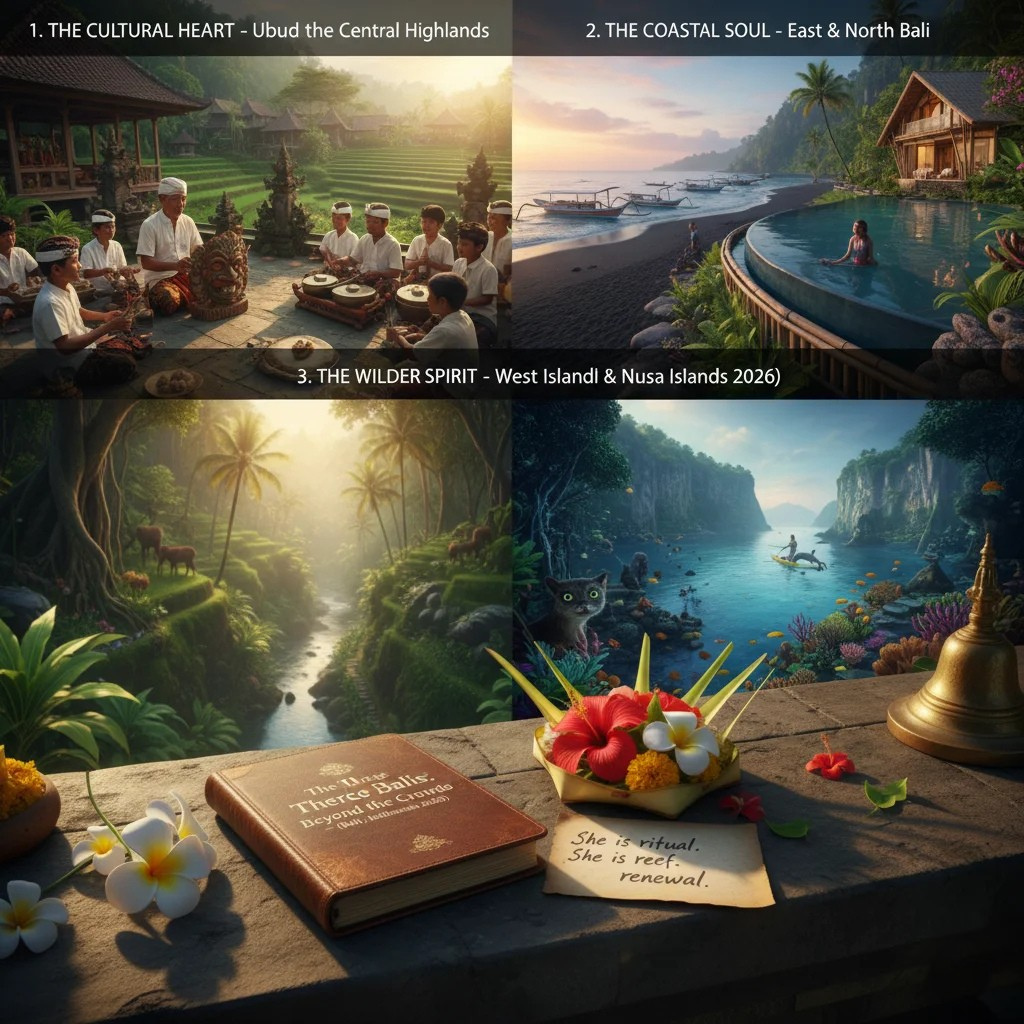
We will talk about the best and most beautiful places to visit when you go to Bali:
- First: South Bali: Known as the gateway, it is divided into three areas: Kuta, Seminyak, and Canggu. Staying in these areas is not recommended due to excessive urbanization and the constant crowds. However, it is enjoyable for short visits, where you can experience surfing.
- Important note: Sanur is an exception in South Bali. It is more stable, less crowded, and more suitable for children, with its protected beaches and good local hotels.
- Second: Central Bali: Considered the spiritual heart of Bali, it includes the areas of Ubud, Tegalalang, and Sideman. The importance of this area stems from the following:
- Ubud is the cultural center of the region, encompassing dance, arts, and therapeutic activities.
- Tegalalang is a captivating region, renowned for its terraced rice paddies. These farms are irrigated using the Subak system, a UNESCO World Heritage Site.
- Sidman is a picturesque valley dotted with stunning traditional village houses.
- These areas in Central Bali are characterized by their tranquility and unique charm, reflecting the authentic essence of Bali.
- Third: East and North Bali: These border regions of Bali include Amed, Tulamben, Lovina, and Nusa Penida. The importance of this region stems from the following:
- These are coastal cities boasting black sand beaches and excellent diving sites. One of the most spectacular diving experiences is reaching the wreck of the USS Liberty in Tulamben, an experience particularly suitable for beginner divers. Amed is also home to a large salt plantation, a major salt production center. In Nusa Penida you can enjoy Killinking Beach, which is characterized by its rocky cliffs.
Insight: The soul of Bali, Indonesia 2026 lies outside the south—in valleys, villages, and volcanic foothills.
3. Must-Experience Rituals & Cultural Immersion (2026)
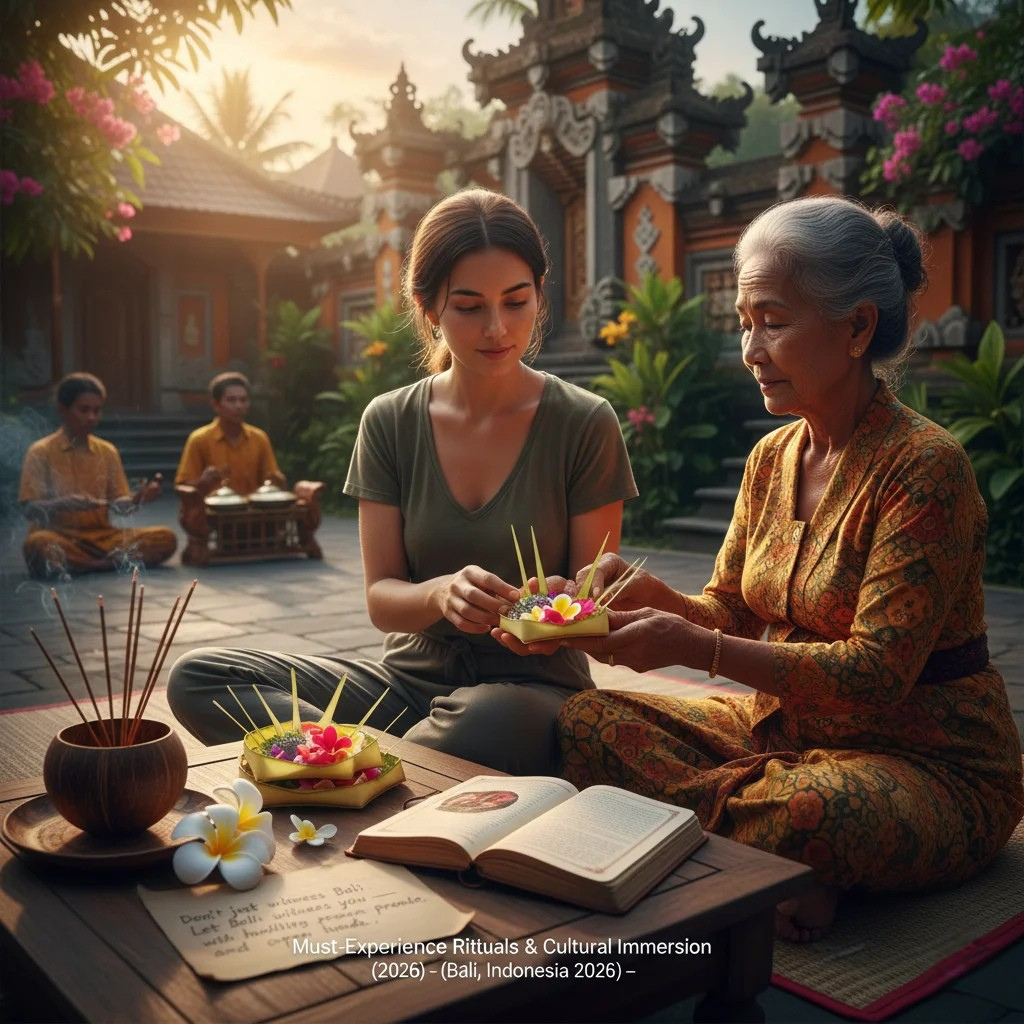
We will explore a selection of unmissable cultural experiences:
- First: Melukat: This is a Hindu religious practice in Bali aimed at releasing negative energy. It can be practiced at the Tirta Empul temple in Ubud, which features sacred spring water blessed by priests. Participants must wear the provided sarong and shawl, follow the order of the thirteen taps, and always keep the main shrine in front of them. Those wishing to experience Melukat should book in advance via this link (tirtaempul.com) to avoid crowds.
- Second: Kanang Sari Offering Workshop: This workshop teaches participants how to offer palm leaf sacrifices while preserving tradition, with the offerings being presented by local women. The workshop is located in the Threads of Life area of Ubud, which also hosts a textile fair, a fair trade fair, and other cultural events.
- Third: Traditional Balinese Dance: This wonderful experience can be enjoyed at:
- Ubud Palace: A Legong performance will be held at 7:30 PM.
- Arma Museum: A Kegak fire dance will be performed in an open-air amphitheater.
- Important Note: There are courtesy rules for attendees, including arriving early, maintaining quiet, and refraining from using flash photography.
These experiences connect you to Bali’s living culture—not just its aesthetics.
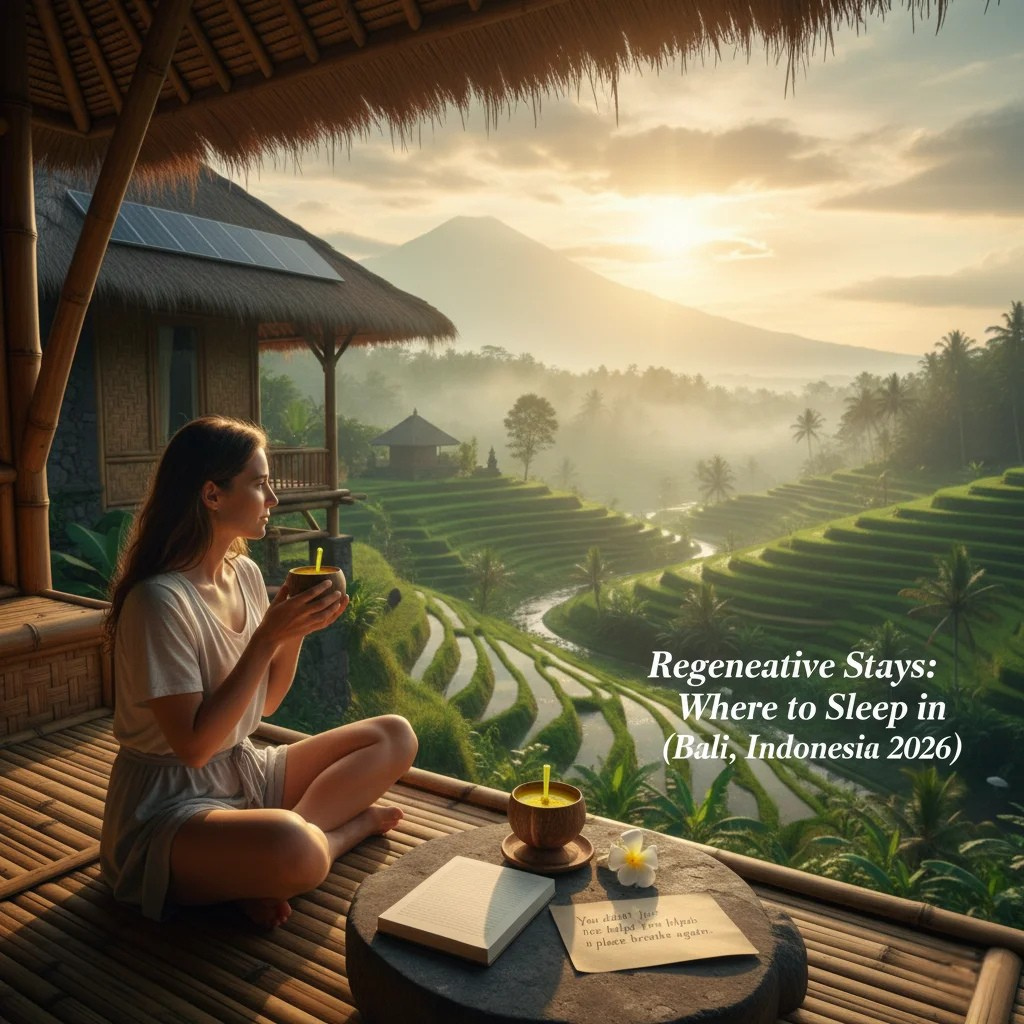
4. Regenerative Stays: Where to Sleep in Bali, Indonesia 2026
| Region | Type | Top Picks | Why It’s Regenerative |
| Ubud | Eco-Lodge | Bambu Indah, Fivelements | Bamboo architecture, riverfront, zero-waste |
| Sidemen | Village Homestay | Wapa di Ume Sidemen | Employs locals, supports rice farming |
| Amed | Beachfront | Alam Anda | Coral reef restoration, plastic-free |
| Nusa Penida | Eco-Resort | Bintang Bungalows | Solar-powered, rainwater harvesting |
Certification Tip: Look for Green Bali Certification or EarthCheck—ensures real sustainability.
Your accommodation is your greatest impact choice in Bali, Indonesia 2026.
5. A Perfect 7-Day Itinerary: Your Bali, Indonesia 2026 Blueprint
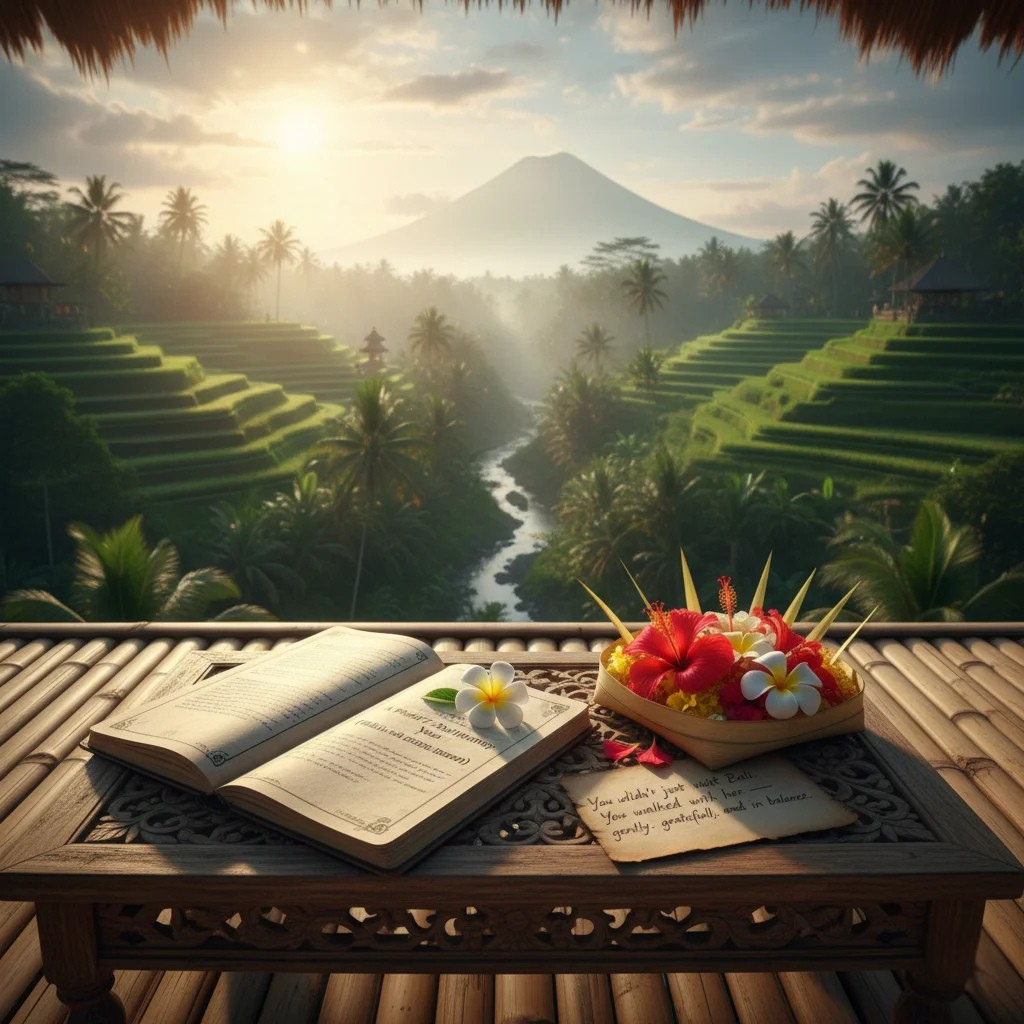
Here’s a fantastic 7-day trip plan to Bali:
- Day 1: We’ll spend this day in Ubud. After arriving in the afternoon, we’ll head to our hotel, preferably an eco-lodge, and relax. Afterwards, we’ll go to Tirta Empul for lunch, where you can try the traditional dish, Melukat. At the end of the day, we’ll enjoy a vegetarian dinner at Lokafior To Go.
- Day 2: We’ll also spend this day in Ubud. We’ll start early in the morning by visiting the Tegalalang rice fields to enjoy them and watch the sunrise over them. In the afternoon, we’ll go to Kanang Sari for a training course, followed by a visit to Threads of Life. In the evening, we’ll go to Ubud Palace to watch a Legong dance performance.
- Day 3: We’ll drive to Sideman, and after arriving, we’ll embark on a scenic hike to Mount Agung.
- Day 4: We’ll drive to Amed on the east coast and experience diving at the wreck of the Japanese ship. In the evening, we’ll head to Gemilok Bay for a wonderful sunset.
- Day 5: We’ll travel to Tulamben for a diving experience and to explore the underwater world. This includes diving at the wreck of the USS Liberty. Afterward, we’ll visit Mount Lempuyang, also known as the Gates of Heaven. Advance booking is required for both of these experiences.
- Day 6: We’ll travel to Nusa Penida Island via a 45-minute ferry ride from Sanur. Upon arrival, we’ll visit Kilinkeng Beach in the morning to avoid the crowds. In the evening, we’ll have dinner at one of the local restaurants, such as Warung.
- Day 7: This is our departure day. Beforehand, we’ll visit Sanur Beach in the morning and enjoy some time there. We’ll then depart from Ngurah Rai Airport in the afternoon.
This itinerary prioritizes depth over distance—the heart of Bali, Indonesia 2026.
6. Culinary Ethics: Eat with Intention
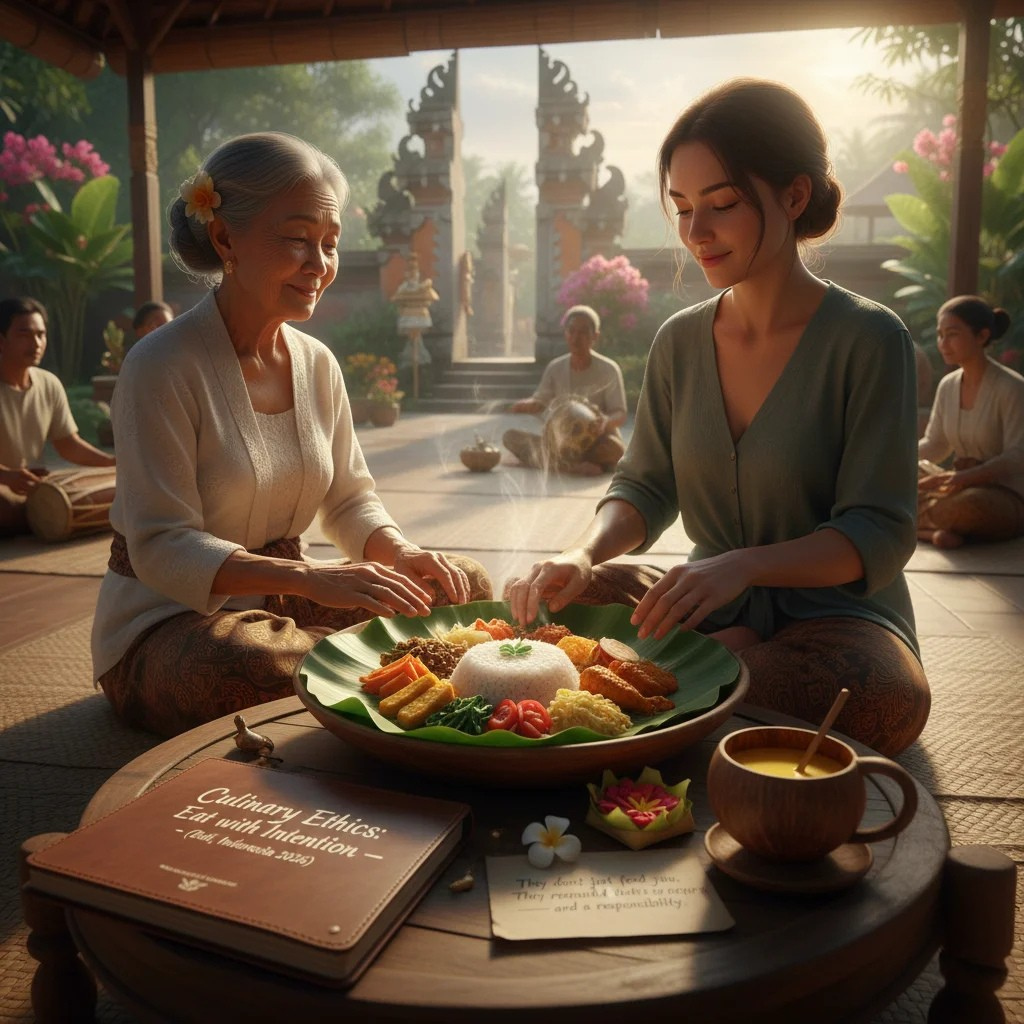
- Must-Try Dishes:
- Balinese Nasi Campur: Rice salad with vegetables of the area.
- Lawar: A customary salad of coconut, vegetables, and minced meat.
- Babi Guling: Roast piglet (available only in non-Muslim areas).
- Top Ethical Spots:
- Warung Babi Guling Ibu Oka (Ubud)_owned by a family for the past 40 years
- Warung Sopa (Ubud)_endorsing disabled youth
- Warung Pondok Tempo Dulu (Amed)_ it serves food made with local ingredients.
- Avoid: Do not eat pork in Muslim areas, and the restaurant that provides plastic straws should be avoided.
Food in Bali, Indonesia 2026 is sacred, seasonal, and local.
7. Transportation: Green Mobility in 2026
- Rent a Scooter? Only if experienced, there are many accidents, so wear a helmet.
- Between Islands: Sanur-Nusa Penida Fast Boat (Bintang, Eka Jaya)
- Eco-tip: Rentals of electric scooters (2025 pilot in Ubud).
Smart transport minimizes your footprint in Bali, Indonesia 2026.
8. When to Visit Bali, Indonesia 2026
| Season | Pros | Cons |
| April–June | Dry season, clear skies, cultural festivals | Peak period |
| September–October | Warm sea, fewer crowds, harvest time | Occasional rain |
| July–August | Long days, vibrant atmosphere | Crowded, expensive |
| Avoid: November–March | Lush greenery, lower prices | Wet season (Jan–Feb = heavy rain) |
Best Window: Late April or early September—ideal weather, cultural energy, manageable crowds.
Timing your trip honors Bali’s natural rhythms.
9. The Future: Bali’s 2026–2027 Vision
- Carbon-Neutral: by 2045 Resorts. It will be used for renewable energy.
- Digital Nomad Visa: A cultural orientation and an eco-fee are included in the Digital.
- Regenerative Agriculture: By the year 2030, 50% of food on the island It will be locally grown.
Bali isn’t just recovering—it’s leading.
10. Final Reflection: Travel as a Blessing, Not a Right
Bali, Indonesia, is not available to you in the year 2026 as a background to your story. The place has survived for thousand years because it is a living organism in which the ancestors, the spirits, and the whole ecosystem are living. What you receive is a benefit of visiting that place, not a right to see it.
Therefore, go and move slowly and do it with a humble heart. You go to see Bali as a mere destination, but see it as a teacher that teaches you the way to have balance in your life. It will remind you that the best journey you have in your life is one in which you will leave behind smaller prints and you will walk out with a bigger heart.
Trusted Resources (2026)
- Bali Provincial Tourism Office:
https://www.balitourismboard.org
2. UNESCO – Subak Cultural Landscape:
https://whc.unesco.org/en/list/1194
3. Indonesia Ministry of Tourism – Bali Guide:
4. Threads of Life – Cultural Programs: