


Introduction: The Dawn of Seamless, Personalized Urban Travel.
When you get off the airplane in a different city, before you pick up your bags, your hotel room is already set, the way to the city centre is the most efficient due to traffic, and your phone has a personalised plan? Customized to your interests, speed, and food options. The city knows that you are here and is already taking care of you without any application downloads, without confusion of maps, and without a language barrier. The city itself knows you’re here—and is already taking care of you.
The concept is not a science fiction idea. Many cities worldwide already have smart city tourism 2026, as a reality since 2026. Powered by AI and the Internet of Things, 5G networks, and consolidated city data systems, cities are transforming their passive environments into active intelligent assistants to travelers. It is not the tour operators that are redefining the traveler experience, but the urban operating systems, which include the AI concierge in Singapore and the predictive crowd management in Barcelona.
This guide explores the latest developments in smart city tourism 2026, where technology is not a substitute for human connection but more of an improvement. We will explore the leading smart cities in the world, explain how their systems are working, focus on the real benefits that travelers receive, and discuss important issues of privacy, equity, and authenticity. Supported by 2025-2026 data from the World Travel & Tourism Council (WTTC), UNWTO, and city innovation labs, this article is a complete guide to the future of urban travel.
1. What Is Smart City Tourism 2026? Beyond Apps and Wi-Fi.

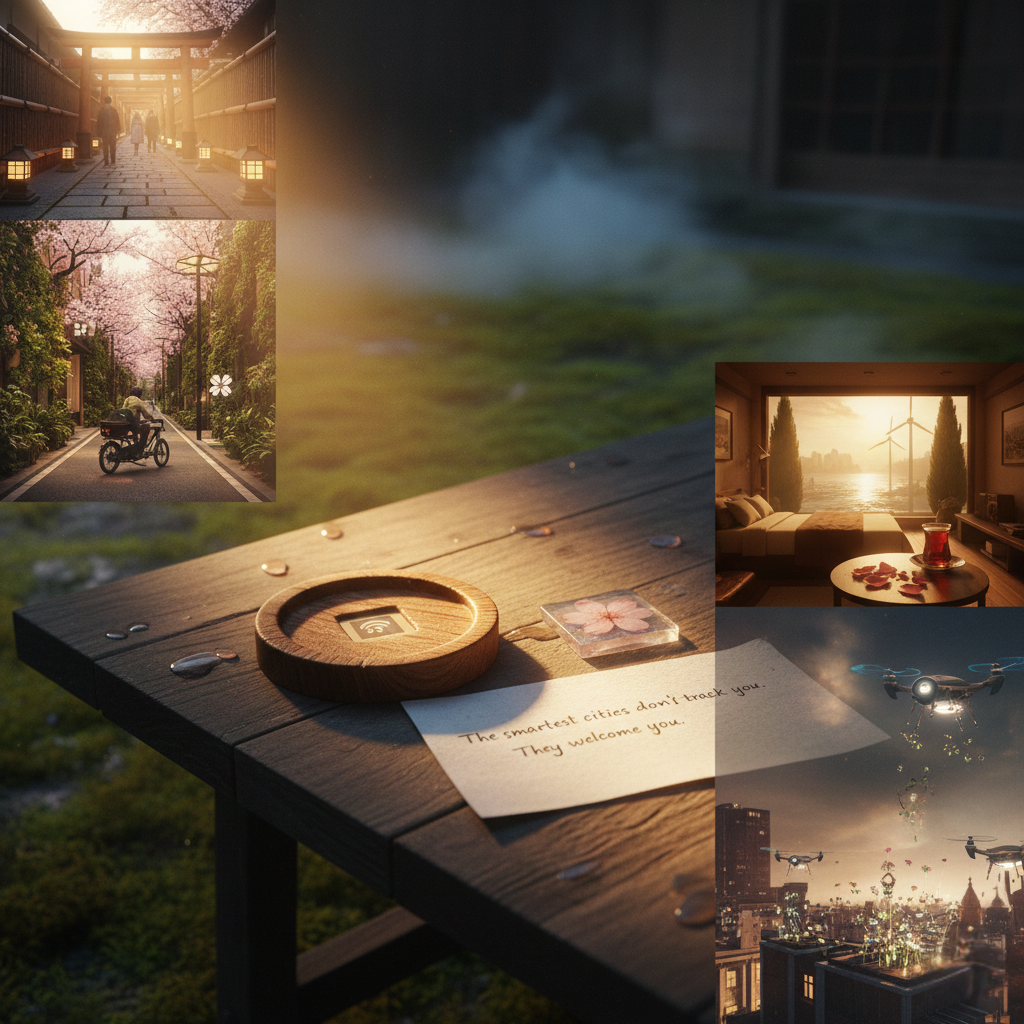
Smart city tourism in 2026 will have more features beyond complimentary Wi-Fi in public parks and QR codes at museum exhibits. The system involves several aspects that connect the infrastructure of the city, the tourist services, and the tourists through the following means:
- AI-driven personalization: Real-Time Schedule Creation with Reference to the Preferences of the user.
- IoT Sensors: Current sensors of crowd density, air quality, and of transportation time wait.
- Integrated Digital Platforms: A single-point solution to book, travel, and transact.
- Forecast Data: Planning for what will be needed in the near future; for example, advising on a hot day to go to a shade spot.
- Sustainability Integration: Helping you find low-emission areas, places to easily rent bikes, or spots that have green certifications
The smart city of 2026 doesn’t just respond to tourists—it anticipates them.”
— Dr. Lena Müller, Director, UNWTO Innovation Lab, 2025
This proactive, integrated approach defines the true essence of smart city tourism 2026.
2. The Global Leaders: 5 Cities Redefining Urban Hospitality.

A. Singapore – The AI Concierge City
- Basic Technology: Visit Singapore App and AI Travel Assistant, Jeta
- How It Works:
- On arrival, Jeta gets your e-visa (if you are okay with it) and flight information.
- It checks your interests (e.g., food, history, family-friendly activities) with the updated information of the city.
- It provides a live, flexible itinerary that will be revised according to the weather, crowd, and your pace.
- Example in the real world:
- If you stay at Marina Bay Sands, Jeta recommends the hawker centers near the area with fewer people.
- When it is raining, it rearranges any outdoor activities and recommends indoor ones to do as well.
- Facial recognition at attractions in 2026 – bypass the ticket lines, payment is automatically taken from the associated account.
Singapore’s system delivers hyper-personalization at scale, a benchmark for smart city tourism 2026.
B. Barcelona – The Data-Driven Cultural Hub
- Core Technology: Barcelona City OS is an open-data platform that combines transport, culture, and tourism.
- How It Works:
- Sensors in the Gothic Quarter track the density of human traffic, and when La Rambla has reached its maximum capacity, the app will divert you to the less crowded streets.
- The automated upkeep of public bicycles ensures a 95% availability rate.
- Augmented Reality layers in phone cameras translate street signs and display the hidden history.
- Sustainability Focus:
- The app measures the personal carbon footprint and recommends the routes that can be walked or cycled.
- When you order at environmentally friendly restaurants, you receive a discount as a reward for your environmentally friendly choice.
- A Gaud AI guide will walk you through the Sagrada Familia in 2026, explaining the symbolism of the monument as you walk through it.
Barcelona proves that smart city tourism 2026 can balance innovation with cultural preservation.
C. Dubai – The Seamless Luxury Experience
- Core Technology: “Dubai Now” App + Smart Gates
- How It Works:
- Complete biometric immigration in 10 seconds.
- The hotel is informed of your arrival in real-time, and your room is ready when you arrive at the hotel.
- The AI butler Rashid (in smart hotels) will adjust the light, temperature, and suggest activities depending on your mood.
- Transport:
- Automated taxis will be picking you up from the curb, and you will be charged using facial recognition.
- A hyperloop train will begin running in 2025, and it will take only 12 minutes to reach Abu Dhabi.
- In 2026, clients may observe holographic concierges projecting 3D maps and bookings in the air.
Dubai’s vision of frictionless luxury sets a high bar for smart city tourism 2026.
D. Helsinki – The Human-Centric Nordic Model
- Base Technology: The Service, which has as its core technology the Whim Mobility as a Service (MaaS).
- How It Works:
- Everything is included; one ticket covers the train, bus,taxis , bike, and ferry, all of them.
- The mobile app also suggests the best plans multi-modal routes like using a tram and a bike, a ferry, and provides an estimate of the time.
- The betterment of services is anonymous, with no tracking of the individual. It does not collect and store your face and uses fair law data.
- Ethical Design:
- Privacy-first: No facial recognition; data anonymized by law
- Inclusive: Voice navigation for visually impaired; real-time sign language support
- The AI Silent Guide will debut in 2026 with a pilot program. Rather than listening to museum tours, you have an audio vibration on your wristband.
Helsinki demonstrates that smart city tourism 2026 can be both efficient and ethically grounded.
E. New Alamein, Egypt – The Smart City Built from Scratch
- Main Technology- Alamein Smart City Platform (introduced in 2024).
- Explanation:
- Your airport-to-resort pick up is already preset. It will dispatch the shuttle according to your flight information.
- There is a digital image of the city, which you can visit before your visit ‘virtually’.
- This AI tourism assistant can be spoken in Arabic, English, and French. It provides cultural tips and also allows booking.
- Sustainability:
- Solar-powered streetlights with Wi-Fi and charging ports
- Water recycling in all public fountains and gardens
- 2026 Emphasis: Kid-Friendly AI: Suggest kid-friendly beaches, stroller-friendly trails, and kid-friendly restaurants.
New Alamein shows how emerging destinations are leapfrogging legacy systems in smart city tourism 2026.
3. How Smart City Tourism 2026 Works: The Behind-the-Scenes Tech.

A. The Data Ecosystem
- Sources: Records of flights, hotel check-ins, transport taps, app uses, and Internet-of-Things sensors can be used as sources.
- Integration: All are consolidated in city data lakes, e.g., the Virtual Singapore 3D model.
- Processing: Artificial intelligence pattern finding programs are used, e.g., families in a stroller avoid stairs.
B. Privacy & Consent
- Opt-in model: Individuals can manage data sharing using the MyInfo system in Singapore.
- Anonymization: Personal data is encrypted, and under anonymization, planning of the city is driven by aggregated data.
- Transparency: Users can see the transparent dashboards, which show the data in use and why.
Key Insight: The most successful smart city tourism 2026 systems prioritize trust over tracking.
C. Real-Time Adaptation
- With a museum closing earlier than planned, your planned visit will automatically be adjusted.
- Ride share services automatically reroute during large traffic.
- If you give a restaurant a good rating, you might see more places like it show up tomorrow.
This dynamic responsiveness is the soul of smart city tourism 2026.
4. Benefits for Travelers: Beyond Convenience.

A. Time Savings
- AI saves people 2.3 hours per day of time (WTTC, 2025).
- People do not have to wait in line, browse through maps, or get too many options to make a decision.
B. Personalized Discovery
- AI recommends to you the hidden attractions that you will probably like based on your preferences, as opposed to the typical top 10 lists.
- Case: A lover of food in Barcelona will be taken to a family-run bodega rather than a tourist trap.
C. Accessibility
- Visually impaired persons use voice navigation
- Wheelchair route planning is live (Helsinki’s Maas)
- Sign language kiosks have smart kiosks.
D. Sustainability
- Carbon calculators encourage you to make more green choices.
- You visit crowded places during off-peak hours and get rewarded through dynamic pricing.
These benefits make smart city tourism 2026 not just efficient, but enriching.
5. Ethical Considerations: The Fine Line Between Smart and Surveillance.

A. Data Privacy
- Hazard: Profiling, monitoring, and violation of data
- Remedy: The laws similar to GDPR (EU AI Act 2024), explicit opting-in, and reduction of data
B. Digital Divide
- Hazard: The older or less affluent travelers are lost
- Remedy: No charge for the public tablets, kiosks with human assistance, offline options .
C. Overtourism 2.0
- Hazard: AI is being used to funnel everybody to the same Hidden spots.
- Remedy: Adaptive dispersion AI distributes visitors to many sites.
Smart tourism must serve people—not just data.”
— UNWTO Ethics Code, 2025
Balancing innovation with ethics is the greatest challenge of smart city tourism 2026.
6. The Future: What’s Next After 2026?.

- Artificial Intelligence (AI) Travel Agents: These are wholly self-sufficient travel planners. As an example, you could request a 5-day foodie tour in Tokyo with a $2,000 budget.
- Emotion Recognition: Cameras are able to know your current state of mood and recommend accordingly to that. A camera may detect that you are a bit tired and suggest the viewing of a quiet park.
- Blockchain Tickets: These are tickets to attractions that are tamper-resistant and resellable.
- Metaverse Previews – You will first take a virtual look at your hotel room or museum in VR and then book your stay or visit.
The frontier of smart city tourism 2026 is not just smart—it’s sentient.
7. How to Prepare as a Traveler in 2026.

- Download the City App: Before you land (e.g., “Visit Singapore,” “Barcelona City Guide”)
- Enable Location & Notifications: For real-time alerts
- Review Privacy Settings: Opt in only to features you trust
- Keep a Human Backup: Learn a few local phrases; carry cash
- Embrace the Blend: Let AI handle logistics—use your energy for human connection
Smart tools are allies, not replacements, in smart city tourism 2026.
8. Case Study: A Day in Singapore’s Smart Ecosystem (2026).
- 6:00 AM: Flight lands at Changi. Smart Gates clear you in 10 seconds.
- 6:15 AM: “Jeta” app pings: “Welcome! Your hotel shuttle is outside Gate B.”
- 7:00 AM: Room ready at Pan Pacific Singapore; AI butler adjusted AC to your preference.
- 9:00 AM: Jeta suggests: “Hawker Centre 300m away—Michelin-starred dim sum, 5-min wait.”
- 11:00 AM: At Gardens by the Bay—AR glasses (rented via app) show plant origins and care tips.
- 2:00 PM: Rain detected—Jeta reschedules National Gallery visit and offers umbrella delivery.
- 7:00 PM: AI recommends a rooftop bar with skyline views; books table and orders your favorite cocktail.
This seamless flow exemplifies the promise of smart city tourism 2026.
9. Common Myths Debunked.
- “Smart cities are cold and impersonal.”
→ AI handles logistics; humans provide warmth (e.g., Barcelona’s neighborhood guides). - “You need to be tech-savvy.”
→ Voice assistants and kiosks make it accessible to all ages. - “It’s only for luxury travelers.”
→ Helsinki’s Whim costs €10/day—cheaper than taxis.
Clarity like this builds trust in smart city tourism 2026.
10. Final Verdict: The City as Your Co-Pilot.
In 2026, the most advanced travel companion isn’t a human guide or a travel app—it’s the city itself. Smart city tourism 2026 is not about replacing the magic of travel; it’s about removing the friction that dims it. By handling logistics, personalizing discovery, and prioritizing sustainability, smart cities free you to do what travel does best: connect, wonder, and transform.
So go. Let the city take care of the details. And focus on what matters—the joy of being there
Trusted Resources (2026).
- World Travel & Tourism Council – Tech Trends 2026:
https://wttc.org - Singapore Tourism Board – Visit Singapore App:
https://www.visitsingapore.com - Barcelona City Council – City OS Platform:
https://opendata-ajuntament.barcelona.cat - EU AI Act – Tourism Guidelines:
https://digital-strategy.ec.europa.eu
Always review privacy policies and data permissions before using city apps.
Follow us on:
Articles that might interest you :
The Best Family Travel Destinations in 2026: Places That Will Amaze Children… and Relax Mothers!.
Tourist Destinations That Support Sustainable Tourism: Travel… and Leave No Trace (Guide 2026).